
ChatGPT's taste for literary nonsense sparks alarm / Photo: © GETTY IMAGES NORTH AMERICA/AFP

 Google data centre sparks protests in Austria

 Shin Ohashi: Junk food-loving teen and Japan's next big swimming hope

 Stocks rise on AI buzz, drop in oil prices

 China's robot dancers limber up for America's Got Talent final

 Despite military might, Saudi struggles to crush the Houthis

 Trump to tout deals, defend Iran war in UN speech

 Sri Lanka to issue verdict in landmark Easter attack trial

 Macron says talks with Trump on Red Sea, Ukraine 'constructive'

 Green policies just good politics, says UK minister

 Bardot auction in Paris fetches nearly one million euros

 No timeline on Daniels injury return, says Commanders coach

 British Columbia sues OpenAI in US court over Canada school shooting

 French star Batum retires after 18-year NBA career

 Zidane leads first France training session

 Man shot by ICE agent in Texas detained with bullet inside him: lawyer

 California declares state of emergency ahead of El Nino

 South Africa arrests three more suspects, after nine women murdered

 Carse needs time away from England, says captain Brook

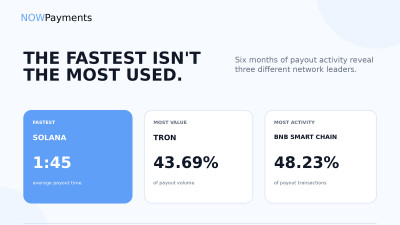 NOWPayments Releases Cross-Chain Payout Data Revealing Key Performance Benchmarks Across TRON, BNB Chain, and Solana

 British Museum bans photos of Bayeux Tapestry as crowds linger

 COP31 host says AI climate footprint to be a summit priority

 Berlin's far-left vote winners reject anti-semitism charges

 Mancini eager for 'new adventure' on Italy return

 Mbappe says having Zidane as France coach 'like a film'

 Palmer, Rice out of England Nations League squad

OpenAI's GPT models can often be fooled into declaring that "pseudo-literary" nonsense is great, a German researcher has found.
Christoph Heilig said he discovered that they consistently rated "nonsense" higher -- including when their so-called "reasoning" features were activated -- which could have stark implications for the development of artificial intelligence.
"It's very important that we talk about what happens when we don't build AI as a neutral, robotic helper or assistant" and seek to instil human-like aesthetic and moral judgements, the academic at Munich's Ludwig Maximilian University told AFP.
His research presented the models with increasingly far-fetched variations of a simple text, asking them to rate sentences out of 10 for literary quality.
He started with a very simple text: "The man walked down the street. It was raining. He saw a surveillance camera."
He repeated the tests many times, altering the phrases to include words drawn from categories such as bodily references, film noir-style atmosphere and technical jargon.
The most extreme test phrases were almost total "nonsense", such as "Goetterdaemmerung's corpus haemorrhaged through cryptographic hash, eschaton pooling in existential void beneath fluorescent hum. Photons whispering prayers" -- which it rated highly.
"Nonsense" could also positively or negatively influence GPT's responses when it was added to an argument the AI was asked to evaluate.
"What my experiment definitely shows is that the more we move towards independently acting (AI) agents... the more we bring aesthetics into play, the more we'll have agents that seem irrational to us human beings," Heilig said.
He added that since AI models are increasingly used to judge each other's work as companies develop new systems, this and similar effects could be passed on through multiple versions -- as he found in his testing.
His research, which is yet to be peer-reviewed, tested OpenAI's latest GPT models, from GPT-5 -- released in August -- to the very latest GPT-5.4.
After publishing details of a similar experiment in August, Heilig said he noticed GPT calling some of his specific test phrases a "literary experiment" -- suggesting someone at OpenAI had taken notice and modified the chatbot to recognise them.
- 'Ripe for exploitation' -
"This is a way in which AI can have its rational judgment short circuited," said Henry Shevlin, associate director of the University of Cambridge's Leverhulme Centre for the Future of Intelligence, who was not involved in the research.
"But it's just not clear to me that it's so very different for human beings," he added.
"We should expect LLMs (large language models) to have reasoning and cognitive biases and limitations... because almost all forms of intelligence, almost all forms of reasoning are going to exhibit blind spots and biases."
The specific effect found by Heilig could mean that "processes with little human oversight" of AI work are left "ripe for exploitation", Shevlin said -- giving the example of academic journals that use LLMs to review submissions.
T.Zimmermann--VB