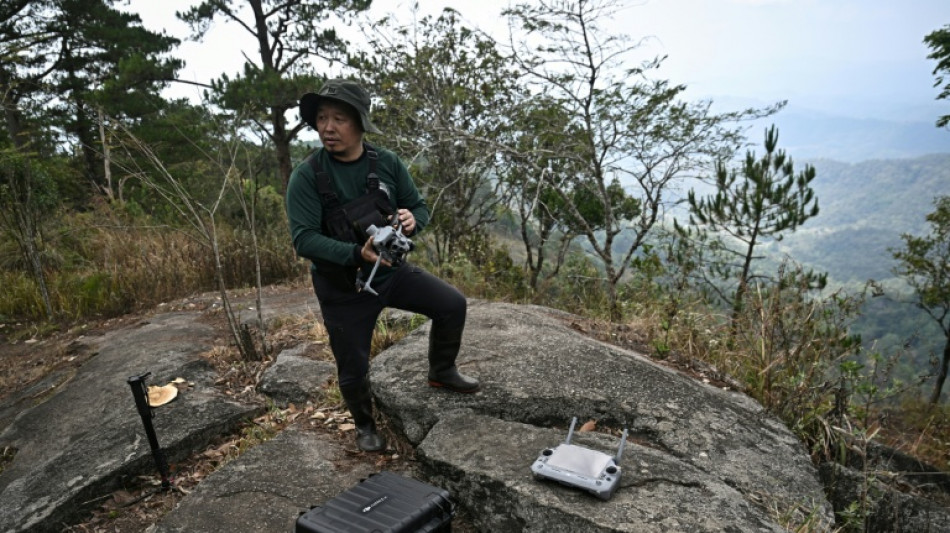
Tech-equipped Indigenous firefighters protect Thai forests / Photo: © AFP

 US House targets data centers as midterm backlash grows

 French ex-minister Dati goes on trial in Renault-Nissan corruption case

 'Being Heumann' captures joy in fight for disability rights

 Retired great Nadal to play in exhibition matches

 IR-MED and Dice Technologies Announce collaboration to Evaluate and Advance Pressure-Injury Prevention Platform in Japan

 Watts, Pitt, Cruz to light up Spain's top film festival

 Sweden expels Iran embassy employee over anti-Jewish threats
 Toogood Gold's Table Mountain Sits in the Shadow of a Nevada Gold Rush

 MEXC July–August Security Report: 38.66M USDT in Risk Funds Intercepted, Futures Insurance Fund Hits 792M USDT

 'Breathing toxin every day': Indonesians choked by haze feel helpless

 Stocks edge higher ahead of US Fed rate call

 Philippines ex-leader Duterte makes first in-person ICC appearance

 2027 Formula One calendar includes Monaco sprint race

 Palestinians are the real victims, Thunberg tells Ed Sheeran

 Hashim Thaci: From 'George Washington of Kosovo' to Hague convict

 Amnesty says Iran committed 'crimes against humanity' in crackdown on 2022 protests

 EU to ban social media for under 13s, curb access until 15

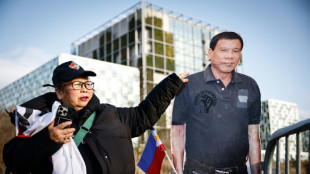 Philippines ex-leader Duterte makes first appearance at ICC
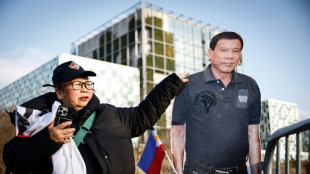
 EU chief pitches 'associate member' status for Canada

 English village votes to 'secede' from UK over asylum centre plan

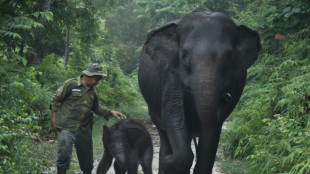 Wildfires push endangered Sumatran elephants to brink: Indonesian NGO

 Stocks head higher as traders prepare for Fed decision

 English village votes to 'secede' from UK over asylum centre
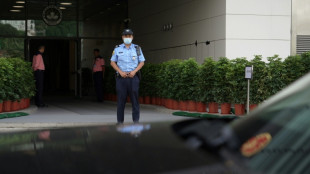
 Hong Kong unveils plan to align economy with China's goals

 Brazilian voters the latest to eye Bukele security model with envy

In the dry-season heat of northern Thailand, Hmong villagers zip through forested slopes, blasting tinder with leaf blowers and cutting through brush with machetes, while others scan for smoke on live feeds from their phones.
Across about a dozen villages in the hills of Doi Suthep-Pui National Park, just above the city of Chiang Mai, Indigenous volunteers patrol on foot and clear firebreaks while also deploying drones and treetop cameras -- all to detect blazes early and defend Thailand's second-largest city from wildfire smoke.
"The forest we protect is part of the national park -- the lungs of Chiang Mai," said Mathaphan Phuchakritdapa, who started the firefighting volunteer force a decade ago and is chief of Suthep subdistrict.
"If it burns, the city's lungs are destroyed. That's why we have to take care of it as best we can."
He and his team shifted to tech-driven firefighting after devastating wildfires in 2020 tore through the mountains above the tourism-dependent city.
The blazes lasted weeks in March and April that year, killing at least five people and injuring and displacing residents and wildlife.
The thick smoke from fires then and since has regularly pushed Chiang Mai to the top of global air pollution rankings.
- 'Worst in my life' -
Satellite imagery from the peak of the 2020 crisis showed northern Thailand blanketed by dense clusters of fire hotspots, with nearly 400 recorded in Chiang Mai province in a single day.
"It was the worst fire I've seen in my life," said Mathaphan, adding it took more than 40 days to bring it under control.
The hotter, drier weather caused by climate change creates the conditions for more frequent and destructive fires, and accumulated dry leaves can intensify them and accelerate their spread.
Outbreaks are often linked to human activities such as clearing forest and brush for foraging, hunting and agriculture.
To control air pollution, Chiang Mai authorities announced a strict five-month ban on open burning from the beginning of this year.
Authorities often blame local "hill tribes", while those communities say fires are set by outsiders for commercial purposes.
Data from NASA's fire monitoring service shows far fewer fires in the region in mid-March this year compared to the same period in 2020.
"Both local communities and state agencies are taking the issue more seriously, leading to tighter controls over burning and fire outbreaks," Mathaphan told AFP.
The Hmong, an Indigenous ethnic group originally from the mountains of southern China, have lived on these slopes in northern Thailand since migrating in the mid-20th century.
Volunteer teams roar through the hills on motorbikes, blasting away leaves with blowers and drowning out the buzz of a drone capturing footage of the blaze-prone landscape.
- 'Giving back' -
Mongkol Yingyotmongkolsaen, a 47-year-old Hmong volunteer, returned from the city three years ago and began applying his skills as a photographer to firefighting.
He installed low-cost, internet-connected video cameras high among treetops that share live feeds with villagers who can remotely monitor conditions in real time.
Mongkol also flies standard and infrared drones to monitor for fires from above, track any flames that are spreading and detect heat at night.
This allows teams to identify hotspots earlier, plan safer routes and contain fires more quickly, he said, making their work much easier.
"This is my way of giving back to my community," he added.
Across the subdistrict, each household contributes a volunteer, forming a network of about 270 people managing nearly 1,600 hectares of forest.
Monitoring this vast area requires about 1.5 million baht ($45,000) a year to cover the cost of food, fuel and equipment maintenance.
But the community receives only around 50,000 baht annually in government funding -- an amount the local chief, Mathapan, said is insufficient.
Still, their volunteer-based approach to fire prevention has become a model for other communities, he said -- helping shift perceptions of Hmong villagers who are often blamed for deforestation and "destructive" farming practices.
"We are not destroying the forest," Mathaphan said. "We are protecting it."
R.Flueckiger--VB