
-
 Oil falls further on Mideast deal, but Fed outlook knocks equities
-
Mexico, Korea eye World Cup knockout berths

-
 Range raises $8.3M Series A to unify treasury, risk and compliance across stablecoins and fiat
-
IAEA ready to help define 'concrete steps' to implement US-Iran deal
-
 Ibrahima Konate signs four-year deal with Real Madrid
-
Hegseth tells NATO US will review force presence in Europe
-
 Innovations on show at Paris Vivatech fest
-
Ukraine sets Moscow refinery ablaze in biggest attack in years
-
 Bird flu kills 13,000 seal pups on remote Australian island
-
Oil prices sink further as Trump signs deal to reopen Hormuz
-
 South Korean lawmakers launch probe into ballot paper shortages
-
Starmer rival seeks win in UK poll pivotal to PM's fate

-
 Taiwan president says hopes for $14 bn US arms sale 'as soon as possible'
-
Why are Kenyan kids burning schools and killing their classmates?

-
 New wave of anti-LGBTQ laws sweeps Africa
-
Ukraine hopes renewables can Russia-proof power grid
-
 Jubilant New York on guard for Knicks parade
-
What we learned after the first round of World Cup games

-
 New Zealander Manu has 'no fear' of Toulouse before Top 14 semi
-
Drastic restrictions on public transport take effect in Cuba
-
 Pain-riddled South Korean man fights for right to die
-
Cuba approves economic reforms to boost private sector, investment: state TV
-
 India learns to live with hotter summers
-
'Retired' Wallaby Slipper, 37, set for shock international comeback

-
 EU wrestles over how to tackle China export flood
-
Tartan Army takes over Boston as Scotland fans relish World Cup return

-
 Comedian Jordan Klepper wishes satire was harder in age of Trump
-
Robots pour cocktails and run marathons, but still can't multitask
-
 Birthright citizenship helps spark US World Cup run
-
Ghana beat Panama 1-0 in World Cup opener after injury-time winner
-
 Castro gives crucial backing to Cuba reforms
-
Tuchel team talk transformed 'nervy' England in World Cup win

-
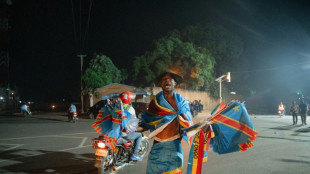 Historic World Cup goal brings rare joy to DR Congo Ebola epicentre
-
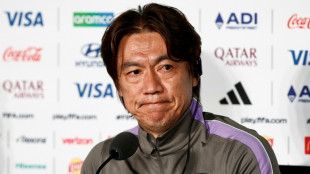
Korea coach slams 'unfortunate' drone incident at training
-
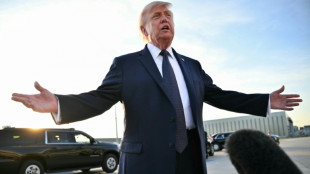 Trump, Iran's president sign deal to end Mideast war
-
Kane double fires England World Cup bid as Ronaldo's Portugal stumble

-
 Casemiro, Ancelotti's lieutenant and symbol of Brazil troubles
-
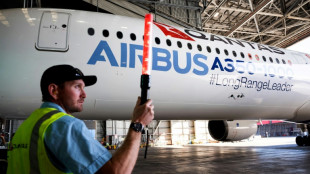
Qantas to launch non-stop Sydney-London flights in October 2027
-
 Kane scores twice as England beat Croatia to launch World Cup charge
-
Danilo backs Brazil to get over World Cup 'fright'

-
 Iran to dilute its enriched uranium under accord with US to end Mideast war
-
South Africa's Broos hits out at 'trash' talk, targets World Cup redemption
-
 US Fed chair Warsh vows reforms as central bank signals rate hikes on horizon
-
US stocks fall, dollar rallies as Fed raises inflation forecast
-
 No split loyalties for US star 'Jedi' Robinson
-
Czechs eye World Cup liftoff against South Africa

-
 Lula jokes he is thinking of 'signing Messi' for Brazil
-
Borthwick plans to rest Itoje for England tour

-
 Prince Harry and family to visit UK in July: media
-
Barbarians pick Vakatawa for South Africa match

NYSE - LSE
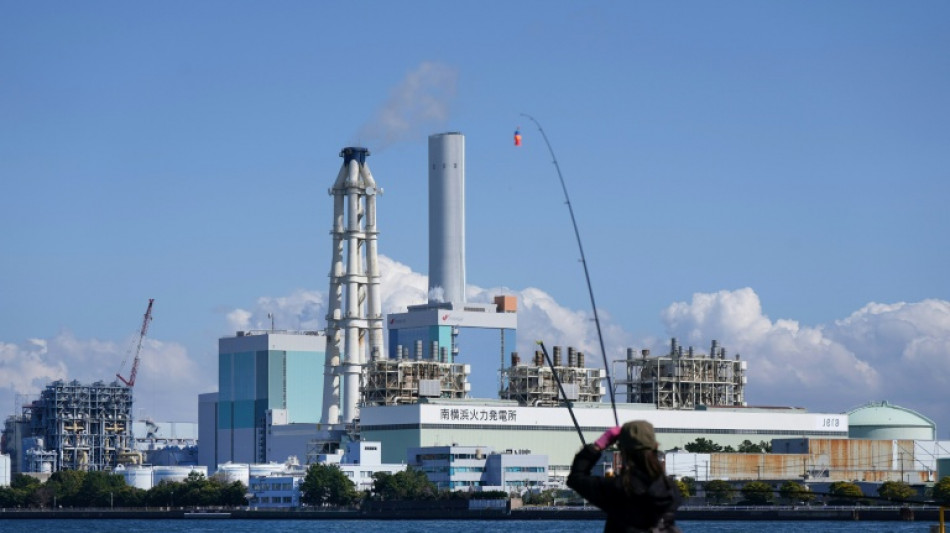
Japan to boost coal-fired power as Mideast war causes energy turmoil
Japan's government plans to temporarily lift restrictions on coal-fired power plants as it seeks to ease an energy crunch caused by the Middle East war, officials said on Friday.
Officials presented the plan at a meeting of a panel of experts, who approved the proposal, the industry ministry said on its website.
"Given the current situation in the Middle East affecting fuel prices, we believe that uncertainty regarding future LNG procurement is increasing," an industry ministry official said at the meeting, which was broadcast online.
"We think it will be necessary, by increasing the operation of coal-fired power plants, to... ensure the reliability of stable supply," he said.
Power suppliers have previously been required to keep the operating rate of coal-fired thermal power stations that emit large amounts of carbon dioxide at or below 50 percent.
But the government now intends to allow the full operation of older, less efficient coal-fired plants, for a year from the new fiscal year starting April, according to the plan presented at the meeting.
Japan relies on thermal power plants to generate around 70 percent of its electricity needs, with coal constituting 30 percent of their fuel.
Liquefied natural gas (LNG) accounts for another 30 percent, and oil comprises seven percent.
The emergency measure to boost reliance on coal is estimated to "result in an LNG savings effect of approximately 500,000 tonnes", the official added.
But Yoko Mulholland of climate think-tank E3G told AFP that the plans to lift coal power restrictions "deepen the risk that Japan will not meet its goal of phasing out inefficient coal plants by 2030".
Not only threatening climate health, the move can also "lock Japan into a vicious cycle of fossil-fuel dependence" and delay progress toward Prime Minister Sanae Takaichi's stated goal of 100 percent domestic energy self-sufficiency, she said.
"This crisis has laid bare the risks of relying on imported fossil fuels, and now is the time for Japan to shift course to fully embrace renewable energy as a strategic national asset."
Since the Middle East war prompted Iran to partially close the crucial Strait of Hormuz trade route and target energy facilities in the Gulf, many Asian nations have pivoted towards coal to power their economies.
South Korea plans to lift a cap on coal-powered generation capacity while also increasing nuclear plant operations.
The Philippines also intended to boost the output of its coal-fired power plants to keep electricity costs down as the war wreaks havoc with gas shipments.
Japan is the fifth-biggest importer of oil with more than 90 percent of it coming from the Middle East.
Around 10 percent of its LNG imports are also from the region.
Tokyo purchases nearly 80 percent of its coal imports from Australia and Indonesia, according to the Agency for Natural Resources and Energy.
Japan on Thursday said it had also started to release another part of its strategic oil reserves, as it faced supply challenges to its oil imports.
C.Bruderer--VB