
-
 Wahi denied Canadian visa for Ivory Coast World Cup clash with Germany
-
Swiss central bank holds interest rates, with eye on currency risks
-
 S.African sentenced in 'world's largest' rhino trafficking case
-
Bank of England follows Fed in holding interest rate
-
 Bittersweet World Cup for Gaza's football fans
-
Trump defends Iran deal from critics he calls 'fools'

-
 New heatwave disrupts trains, schools in France
-
German chemical company to cut 3,200 jobs as crisis worsens

-
 Starmer's Labour rival eyes win in UK poll key to PM's fate
-
Oil falls further on Mideast deal, but Fed outlook knocks equities

-
 Mexico, Korea eye World Cup knockout berths
-
Range raises $8.3M Series A to unify treasury, risk and compliance across stablecoins and fiat
-
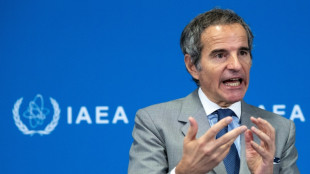 IAEA ready to help define 'concrete steps' to implement US-Iran deal
-
Ibrahima Konate signs four-year deal with Real Madrid

-
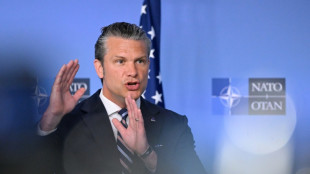 Hegseth tells NATO US will review force presence in Europe
-
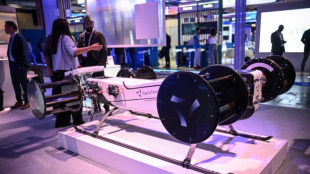
Innovations on show at Paris Vivatech fest
-
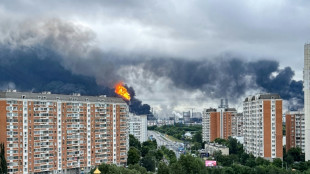 Ukraine sets Moscow refinery ablaze in biggest attack in years
-
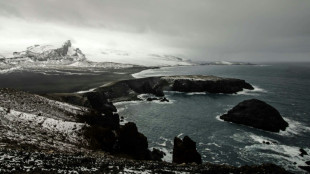
Bird flu kills 13,000 seal pups on remote Australian island
-
 Oil prices sink further as Trump signs deal to reopen Hormuz
-
South Korean lawmakers launch probe into ballot paper shortages

-
 Starmer rival seeks win in UK poll pivotal to PM's fate
-
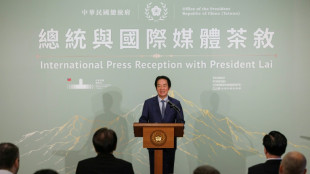
Taiwan president says hopes for $14 bn US arms sale 'as soon as possible'
-
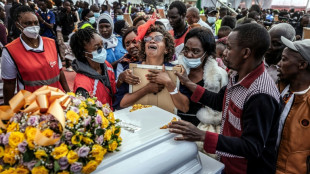 Why are Kenyan kids burning schools and killing their classmates?
-
New wave of anti-LGBTQ laws sweeps Africa

-
 Ukraine hopes renewables can Russia-proof power grid
-
Jubilant New York on guard for Knicks parade

-
 What we learned after the first round of World Cup games
-
New Zealander Manu has 'no fear' of Toulouse before Top 14 semi

-
 Drastic restrictions on public transport take effect in Cuba
-
Pain-riddled South Korean man fights for right to die
-
 Cuba approves economic reforms to boost private sector, investment: state TV
-
India learns to live with hotter summers
-
 'Retired' Wallaby Slipper, 37, set for shock international comeback
-
EU wrestles over how to tackle China export flood

-
 Tartan Army takes over Boston as Scotland fans relish World Cup return
-
Comedian Jordan Klepper wishes satire was harder in age of Trump
-
 Robots pour cocktails and run marathons, but still can't multitask
-
Birthright citizenship helps spark US World Cup run

-
 Ghana beat Panama 1-0 in World Cup opener after injury-time winner
-
Castro gives crucial backing to Cuba reforms

-
 U.S. Polo Assn. Unveils Spring-Summer 2027 Collection at the 110th Edition of Pitti Immagine Uomo
-
Tuchel team talk transformed 'nervy' England in World Cup win

-
 Historic World Cup goal brings rare joy to DR Congo Ebola epicentre
-
Korea coach slams 'unfortunate' drone incident at training

-
 Trump, Iran's president sign deal to end Mideast war
-
Kane double fires England World Cup bid as Ronaldo's Portugal stumble

-
 Casemiro, Ancelotti's lieutenant and symbol of Brazil troubles
-
Qantas to launch non-stop Sydney-London flights in October 2027
-
 Kane scores twice as England beat Croatia to launch World Cup charge
-
Danilo backs Brazil to get over World Cup 'fright'
NYSE - LSE
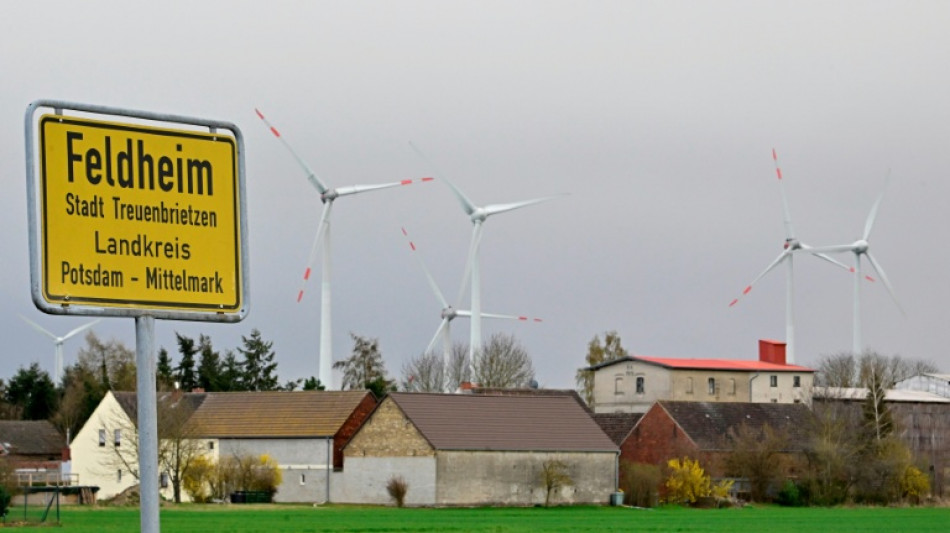
German 'green village' rides out Mideast energy storm
While the world frets about surging energy prices pushed up by the Middle East war, one small German village has been reaping the benefits of its turn to climate-friendly renewables.
Surrounded by wind turbines and studded with solar panels, Feldheim, population 130, boasts its own electricity and heating networks, supplied entirely by cheap local energy, also including biogas.
When it comes to keeping the lights on, "what's happening in the rest of the world doesn't really interest us," 56-year-old Michael Knape, who served as Feldheim mayor for almost a quarter-century, told AFP.
Feldheim, 80 kilometres (50 miles) southwest of Berlin, started its move towards clean renewables in the 1990s after German unification and by 2010 was boasting of its "energy self-sufficiency".
The small village has since attracted attention from across the world as an example of Germany's decades-old energy transition project away from fossil fuels and nuclear power.
The process has benefited from unique local conditions and significant investments.
Like much of the eastern state of Brandenburg where it is located, Feldheim sits on a flat, windswept plain, meaning the tens of nearby wind turbines generate plenty of energy.
While one of them provides enough power for the whole village, the others earn it money through taxes and charges levied on the operators.
As for heating, a biogas plant runs on slurry and leftover grain from an agricultural cooperative. On very cold evenings, the village gets a boost from a woodchip-fired heating plant.
Excess energy is stored in a battery for use in periods with little sun or wind, so-called "dark lulls".
"We hope it always stays like this, this model makes us happy," said Petra Richter, 62, a long-time resident of Feldheim.
Like her neighbours, she pays an average of 12 cents before tax per kilowatt hour of electricity, less than half the price usually paid elsewhere in Germany.
Her oil-powered boiler was replaced 15 years ago with pipes carrying communal hot water and a heat exchanger, and the same system has been in place ever since.
- 'Economically it works' -
According to Knape, who has just handed over the mayor's post, the municipality saves several hundred thousand euros a year by doing without fossil fuels.
"Obviously I can't compare a small village with a big city, but economically it works," he said.
The Middle East war has once again highlighted Germany's dependence on foreign energy imports, with the government taking steps to limit price rises at petrol stations.
Europe's top economy is still suffering from the cut-off of plentiful and cheap Russian gas imports after the 2022 full-scale invasion of Ukraine.
In this context, Knape argued, Feldheim could become "a successful export product" for Germany, just as the mighty automobile once was.
The village has made energetic efforts to publicise its model, attracting visitors including former chancellor Olaf Scholz but also professionals and politicians from the United States, India and even North Korea.
An information centre welcomes more than 3,000 people a year, schoolchildren come from across the state, and the technically curious can explore the inner workings of a wind turbine.
However, even in Feldheim, there are limits to how far residents can be truly insulated from the global energy shock.
Although the village has an e-car charging station, Richter is among the locals who do not have an electric vehicle and for whom petrol remains a crucial resource.
"We have to use the car every day," she said, adding that the spike in prices at the pump was "no longer bearable".
Richter pointed out that the village's energy independence may not be guaranteed in the long term, with the biogas plant nearing the end of its service life.
"We have to think about new solutions," she said.
G.Frei--VB