Trump-backed panel sows doubt over Covid-19 shots / Photo: © GETTY IMAGES NORTH AMERICA/AFP

 South Africa arrests three more suspects, after nine women murdered
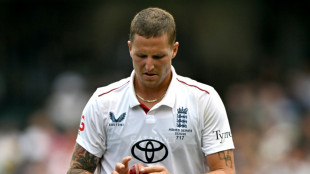 Carse needs time away from England, says captain Brook
 NOWPayments Releases Cross-Chain Payout Data Revealing Key Performance Benchmarks Across TRON, BNB Chain, and Solana

 British Museum bans photos of Bayeux Tapestry as crowds linger
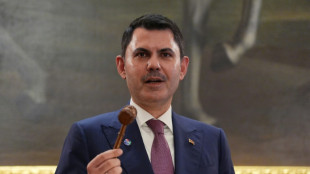 COP31 host says AI climate footprint to be a summit priority

 Berlin's far-left vote winners reject anti-semitism charges

 Mancini eager for 'new adventure' on Italy return

 Mbappe says having Zidane as France coach 'like a film'

 Palmer, Rice out of England Nations League squad
 German auto workers stage mass protests in bid to save jobs

 Embattled Merz vows to keep ruling for 'democratic future' of Germany

 Merz vows to keep ruling coalition together for 'democratic future' of Germany
 Spain coach De la Fuente gets new deal after World Cup success

 Pressure grows on Germany's Merz after election defeats

 China's Zhang beats Japan rivals to Asian Games gymnastics gold
 Samlingen Haupt: Vad pengar avslöjar om oss människor

 Tens of thousands of German auto workers protest to save jobs

 हॉप्त् कलेक्शन: पैसा हमारे बारे में एक इंसान के रूप में क्या प्रकट करता है

 Συλλογή Haupt: Τι αποκαλύπτει το χρήμα για εμάς τους ανθρώπους

 TradersYard Shifts Focus to Futures Trading

 ハウプト・コレクション:お金が人間について明かすこと

 하우프트 컬렉션: 돈이 우리 인간에 대해 드러내는 것

 Indonesia doing 'everything' but struggling to curb fires
 Sbírka Haupt: Co o nás lidech prozrazují peníze

 North and South Korea fight out draw in niggly Asian Games clash
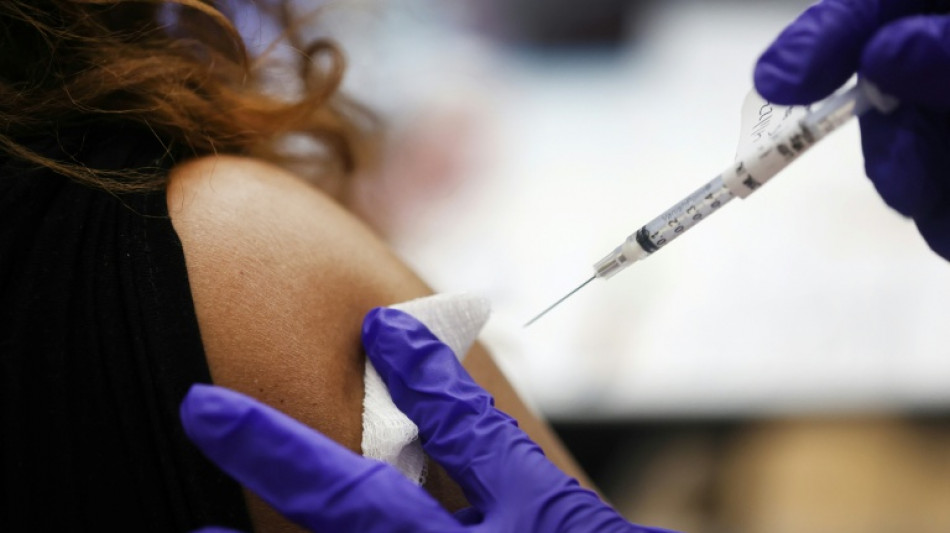
A Trump-backed health panel questioned Friday the efficacy and safety of Covid-19 vaccines -- and declined explicitly to recommend them -- in an argument some experts said center on "myths" and "anecdotes."
The Advisory Committee on Immunization Practices (ACIP) -- a panel stacked with members handpicked by controversial US health secretary and anti-vaccination advocate Robert F. Kennedy Jr -- said obtaining a Covid-19 shot should be based on individual choice in consultation with a medical professional.
The panel also approved language recommending that the Centers for Disease Control and Prevention urge health care providers to more strongly warn about alleged risks from vaccinations.
Many medical and scientific organizations have cited evidence of the Covid shot's safety and its record of providing strong protection against severe illness or death.
Calling the committee's actions "extraordinarily vague," Sean O'Leary of the American Academy of Pediatrics said "this was like nothing I've ever seen."
"What it looked like to me was a lot of clear efforts to sow distrust in vaccines, to instill fear," he told AFP.
"The focus of a lot of the discussion that we saw today around Covid vaccines was around myths, anecdotes, case series, case reports," O'Leary said. "They were not focused at all on the actual science."
Those comments mirrored criticisms leveled by non-voting observers who attended the meeting.
"It's troubling to see the erosion of the committee's integrity," said Sandra Fryhofer of the American Medical Association.
President Donald Trump's Food and Drug Administration has already narrowed approval for Covid shots -- which all Americans could once get with relative ease -- to the elderly and people with underlying conditions.
That followed Kennedy's spring announcement that the United States would no longer recommend the shots for children and healthy pregnant women.
Public health experts have warned these shifts could muddle access for people seeking boosters both in terms of cost and availability, amid a resurgence in cases and hospitalizations.
The ACIP committee considered whether to require that any person seeking a Covid vaccine first obtain a prescription -- but that measure narrowly failed by a tiebreak vote.
"The segment of the population that is under-insured, has lack of access to health care -- they're going to be unable to get a prescription. And those are the people that are at highest risk," said ACIP member and epidemiologist Catherine Stein in her dissent.
- Confusion -
The ACIP meeting's first day ended in confusion and contradiction. The committee recommended no child under four should receive the combination MMRV shot, which covers measles, mumps, rubella and varicella.
But they also declared that a federal children's vaccine program should still pay for it -- and in a chaotic twist, they reversed that decision in a second vote Friday morning.
Parents will still be offered separate MMR and chicken pox injections for their children younger than four. The combination shot has a small risk of causing temporary, non-life-threatening febrile seizures.
Members also were meant to decide whether to recommend against the longstanding practice of immunizing newborns against Hepatitis B within the first 24 hours of life.
Public health experts have met the prospect of that move with widespread alarm.
Swift vaccination has proven the best way to prevent any maternal transmission of the incurable, highly contagious disease that can cause severe liver damage and cancer later in life, said Adam Langer, a CDC scientist who presented to the voting members.
Ultimately the committee decided more debate was needed.
Many respected members of medical institutions have criticized the redesigned ACIP panel.
"What we're seeing is what happens when individuals who have don't have a basic understanding about how vaccines are delivered are making these crucial policy decisions for the American public," O'Leary said.
H.Kuenzler--VB