RFK Jr panelists make initial changes to childhood vaccine schedule / Photo: © AFP/File

 South Africa arrests three more suspects, after nine women murdered
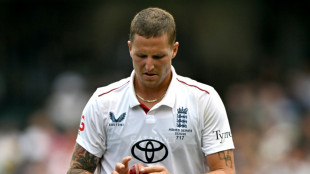 Carse needs time away from England, says captain Brook

 NOWPayments Releases Cross-Chain Payout Data Revealing Key Performance Benchmarks Across TRON, BNB Chain, and Solana

 British Museum bans photos of Bayeux Tapestry as crowds linger

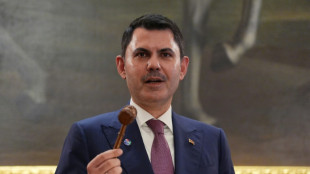 COP31 host says AI climate footprint to be a summit priority

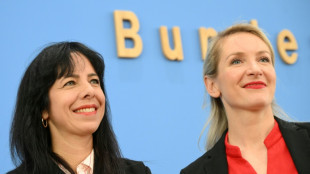 Berlin's far-left vote winners reject anti-semitism charges

 Mancini eager for 'new adventure' on Italy return

 Mbappe says having Zidane as France coach 'like a film'

 Palmer, Rice out of England Nations League squad
 German auto workers stage mass protests in bid to save jobs

 Embattled Merz vows to keep ruling for 'democratic future' of Germany

 Merz vows to keep ruling coalition together for 'democratic future' of Germany
 Spain coach De la Fuente gets new deal after World Cup success

 Pressure grows on Germany's Merz after election defeats

 China's Zhang beats Japan rivals to Asian Games gymnastics gold
 Samlingen Haupt: Vad pengar avslöjar om oss människor

 Tens of thousands of German auto workers protest to save jobs

 हॉप्त् कलेक्शन: पैसा हमारे बारे में एक इंसान के रूप में क्या प्रकट करता है

 Συλλογή Haupt: Τι αποκαλύπτει το χρήμα για εμάς τους ανθρώπους

 TradersYard Shifts Focus to Futures Trading

 ハウプト・コレクション:お金が人間について明かすこと

 하우프트 컬렉션: 돈이 우리 인간에 대해 드러내는 것

 Indonesia doing 'everything' but struggling to curb fires

 Sbírka Haupt: Co o nás lidech prozrazují peníze

 North and South Korea fight out draw in niggly Asian Games clash
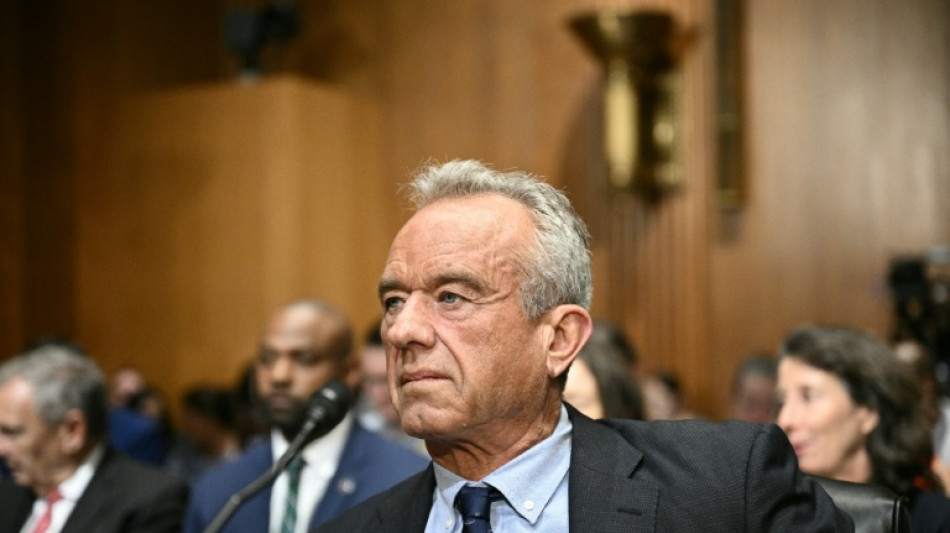
A US medical panel handpicked by President Donald Trump's health secretary made its first alteration to the standard childhood vaccine schedule on Thursday, as public health experts fear more changes that flout prevailing medical advice are in the pipeline.
The Advisory Committee on Immunization Practices (ACIP) was revamped to reflect anti-vax advocate Robert F. Kennedy Jr.'s ideals -- and among its initial moves was voting to advise that no child under four should receive the combination MMRV shot, which covers measles, mumps, rubella and varicella.
Parents should instead be offered the alternative of separate MMR and chicken pox injections for their children, members decided.
The combination shot has a small risk of causing temporary, non-life-threatening febrile seizures.
But in a call with journalists, Sean O'Leary, chair of the American Academy of Pediatrics Committee on Infectious Diseases, said the debate was settled years ago and that today parents already have a choice of both options.
"I'm still puzzled by why this came back as a point of discussion," he said. "The only thing I can think of is it's another strategy to scare parents."
Kennedy has spent decades promoting vaccine misinformation, including the widely debunked claim that the MMR shot causes autism.
After his appointment to the federal government, he sacked every person from ACIP, and replaced them with figures whose anti-vaccine views track more closely with his own.
That skepticism bled into Thursday's discussion: the committee's methods were scrutinized by medical professionals in attendance who can't vote but can offer input.
"You're not looking at all of the aspects of how we evaluate vaccine implementation," said Jason Goldman, president of the American College of Physicians.
"You're looking at very small data points and misrepresenting how it works in the real world and how we take care of our patients."
- 'Illegitimate' -
Following much head-scratching over language, the committee voted that the combination shot would still be covered under the Vaccines for Children federal program -- which helps fund many immunizations in the United States -- even though they were no longer recommending that shot for kids under four.
A couple of members abstained -- because they said they weren't sure what they were voting for.
The decision means some federal programs will cover the shot but others won't, creating a patchwork system that public health experts fear could sow widespread confusion among parents.
"Parents like me depend on a childhood vaccine schedule built on science and trust. Every change should strengthen, not weaken, the safety net -- that keeps our kids healthy," epidemiologist Syra Madad told AFP.
She said Thursday's committee discussions "risk eroding protections we know work."
Committee members put off until Friday a closely watched vote on whether to scrap the longstanding standard of immunizing newborns against Hepatitis B within the first 24 hours of life.
That move has been met with widespread alarm by public health experts, including from some voices on the panel.
Swift vaccination has proven the best way to prevent any maternal transmission of the incurable, highly contagious disease that can cause severe liver damage and cancer later in life, said Adam Langer, a CDC scientist who presented to the panel.
Amending the advice could amount to a "devastating decision," said O'Leary of the AAP, a body that did not attend the committee meeting despite a past history of collaboration.
"This is in the midst of a growing wave of what we're seeing with rumors, falsehoods, inaccurate information surrounding our country's immunization efforts," he said.
"This committee is illegitimate."
In opening the two-day meeting, ACIP chair and biostatistician Martin Kulldorff insisted that the panel was, despite much criticism and fear to the contrary, "pro-vaccine" and will "welcome scientific critique of any of our votes, as there are gray areas."
But Wilbur Chen, an infectious disease physician, cast that defensiveness as disingenuous.
"They do not intend to debate using sound, rigorous, reproducible science; they are echoing poor and falsified information," he told AFP.
Along with the Hepatitis B vote on Friday, the committee will reconvene and consider this season's Covid-19 shot, including who should get it and who should pay for it.
T.Germann--VB