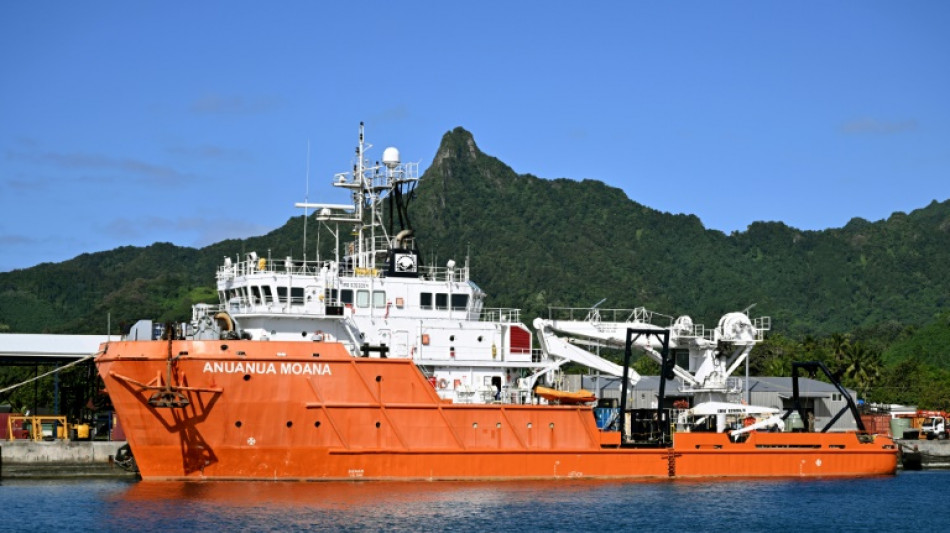
International treaty protecting world's oceans to take effect / Photo: © AFP

 Russian teen Liutova wins WTA Memphis title

 Zverev remains wary of 12-day Masters events

 Wimbledon champ Noskova ready for 'new opportunity'

 Japan's Kuwaki wins women's British Open to clinch first major title
 Sabalenka aims to bounce back in Toronto after Wimbledon disappointment

 Iran says close to Hormuz deal with Oman, after US suspends attack plan

 'Spider-Man' soars to huge $355 million opening in North America

 Handbag tosses and high-heeled sprints: Amsterdam celebrates Drag Olympics

 Trump's on-again-off-again war against Iran: in his own words

 Dodgers land Tigers pitching ace Skubal in MLB trade deadline blockbuster

 Infantino struggling to survive, says former IOC marketing chief
 OPEC+ boosts September production by 188,000 barrels/day

 Rescuers recover climber Nirmal Purja's body after avalanche disaster

 Fire toll mounts in Greece as blazes spread

 Sri Lanka deploys troops after prison riot

 Baltics transform from Soviet stagnation to startup hubs

 AI keeps consumer prices high in 'RAMaggedon' chip crunch

 Dressel, Walsh win 50m free titles at US Swimming Championships
 OPEC+ tipped to raise production again but new quotas loom

 De Zerbi unsure over Richarlison's future at Spurs

 Tottenham manager De Zerbi 'happy' with pre-season progress

 Brazil's Lula launches fourth term bid as Trump looms over campaign

 Alonso welcomes Mudryk's Chelsea return after doping ban

 'Damn hot': Last summer for Japan cosplay extravaganza

 Auger-Aliassime playing for hometown pride at Montreal Masters

A multinational treaty to protect vast expanses of the world's oceans is finally set to become law in January 2026, with environmentalists hailing its enactment Friday as crucial to safeguarding the marine ecosystems.
The move by Morocco and Sierra Leone to join the UN treaty on the high seas clinched the threshold of at least 60 ratifications needed to enact it as international law.
The law aims to protect biodiverse areas in waters worldwide that lie in waters beyond countries' exclusive economic zones.
Teeming with plant and animal life, the oceans are responsible for creating half of the globe's oxygen supply and are vital to combatting climate change, conservationists say.
But those same waters are threatened by pollution and overfishing. They also face growing challenges from deep-sea mining, with an emerging industry plumbing previously untouched seabeds for commodities including nickel, cobalt and copper.
"Covering more than two-thirds of the ocean, the agreement sets binding rules to conserve and sustainably use marine biodiversity" United Nations Secretary-General Antonio Guterres said.
The law aims to protect international waters that make up around 60 percent of the oceans. Until now, only one percent of high seas waters have had such legal safeguards.
The agreement will take effect in 120 days. However, Lisa Speer, who oversees the International Oceans Program at the US-based Natural Resources Defense Council, said it won't be before late 2028 or 2029 that the first protected areas are set up.
- Valuable, fragile marine areas -
Environmentalists say marine ecosystems in the high seas must be protected because they are sources of oxygen and limit global warming by absorbing a significant portion of carbon dioxide emitted through human activities.
Once the treaty becomes law, a decision-making body will have to work with a patchwork of regional and global organizations already overseeing different aspects of the oceans.
These include regional fisheries bodies and the International Seabed Authority -- the forum where nations are jousting over proposed rules on the environmentally destructive deep-sea mining industry.
No licenses have been issued yet for commercial mining in high seas waters but some countries have launched or are preparing to launch exploration in waters within their own exclusive economic zones.
The treaty also establishes principles for sharing the benefits of so-called marine genetic resources collected in international waters -- a sticking point in the drawn-out negotiations.
Developing countries, which often lack money for research expeditions, have fought for benefit-sharing rights. They hope not to be left behind in what many see as a huge future market for genetic resources coveted by pharmaceutical and cosmetic companies.
- Towards 'global ratification'-
As of mid-September, 143 countries had joined the treaty and ocean conservationists are pressing for more to ratify.
"It's really important that we move towards global or universal ratification for the treaty to be as effective as possible," said Rebecca Hubbard, who heads the High Seas Alliance coalition, urging small island states, developing countries and even landlocked countries to join.
Such efforts may encounter push-back from sprawling maritime and industrial powers such as Russia under President Vladimir Putin and the United States under President Donald Trump.
Moscow, which has neither signed nor ratified the treaty, deemed some of its elements as unacceptable. Washington signed off on the treaty under then-president Joe Biden but the second Trump administration is unlikely to ratify it.
D.Schaer--VB