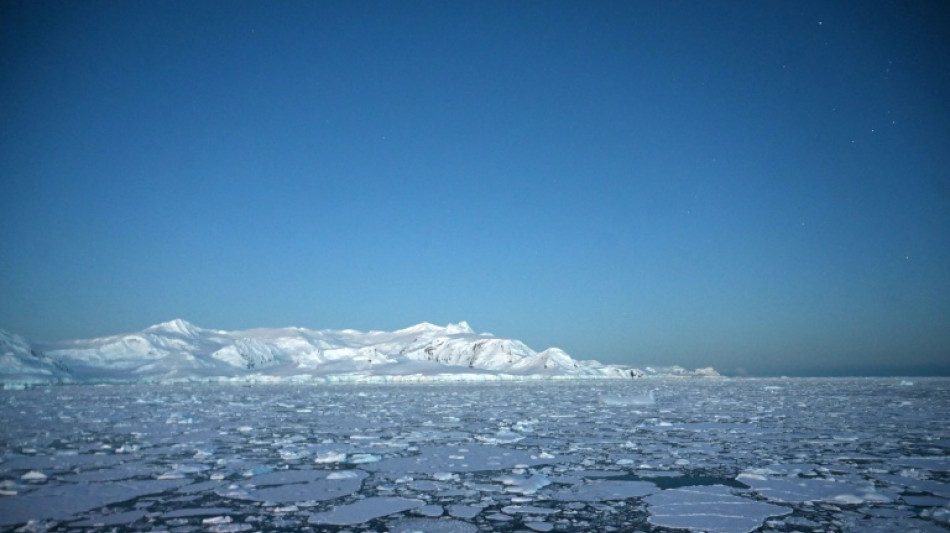
Antarctic sea ice improves after four years of extreme lows: US scientists / Photo: © AFP/File

 IR-MED and Dice Technologies Announce collaboration to Evaluate and Advance Pressure-Injury Prevention Platform in Japan

 Watts, Pitt, Cruz to light up Spain's top film festival
 Sweden expels Iran embassy employee over anti-Jewish threats

 Toogood Gold's Table Mountain Sits in the Shadow of a Nevada Gold Rush

 MEXC July–August Security Report: 38.66M USDT in Risk Funds Intercepted, Futures Insurance Fund Hits 792M USDT

 'Breathing toxin every day': Indonesians choked by haze feel helpless

 Stocks edge higher ahead of US Fed rate call

 Philippines ex-leader Duterte makes first in-person ICC appearance

 2027 Formula One calendar includes Monaco sprint race

 Palestinians are the real victims, Thunberg tells Ed Sheeran

 Hashim Thaci: From 'George Washington of Kosovo' to Hague convict

 Amnesty says Iran committed 'crimes against humanity' in crackdown on 2022 protests

 EU to ban social media for under 13s, curb access until 15

 Philippines ex-leader Duterte makes first appearance at ICC

 EU chief pitches 'associate member' status for Canada

 English village votes to 'secede' from UK over asylum centre plan

 Wildfires push endangered Sumatran elephants to brink: Indonesian NGO

 Stocks head higher as traders prepare for Fed decision

 English village votes to 'secede' from UK over asylum centre

 Hong Kong unveils plan to align economy with China's goals

 Brazilian voters the latest to eye Bukele security model with envy

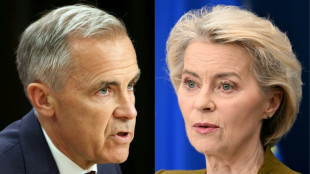 EU chief hosts Canada's Carney in push to 'deepen' alliance

 EU chief to unveil social media, gaming curbs for under-15s

 Saudi says Houthis target Mecca, warn of 'red line'

 Asian stocks stutter as traders prepare for Fed decision
Antarctic sea ice coverage has likely rebounded this year, coming closer to its annual summer average after four years of extreme lows, US scientists said Monday.
The area covered by Antarctic sea ice likely reached its annual minimum level at 2.58 million square kilometres (996,000 square miles) on February 26, according to scientists at the National Snow and Ice Data Center (NSIDC) at the University of Colorado Boulder.
Every year Antarctic sea ice reaches a minimum level during the southern hemisphere's summer, so this is the point that scientists measure it for annual readings.
This year's level ranks as the 16th smallest since satellite measurements began in 1979.
The 2026 minimum sea ice extent is closer to average than in the past four years, and 730,000 square kilometres above the record low set in February 2023, the scientists said.
But it was still 260,000 square kilometres below the 1981-2010 average.
"Through most of the year, Antarctic sea ice was well below the daily average," said Ted Scambos, senior research scientist at the Cooperative Institute for Research in the Environmental Sciences (CIRES).
"Then in January and February, strong winds from the south pushed sea ice outward in the Weddell Sea. This slowed the overall decline in extent, leading to a near-average minimum," Scambos said.
The NSIDC cautioned that the 2026 figure is preliminary, noting that "continued melt conditions or strong onshore winds could still push the ice extent lower".
"This year's return to less extreme conditions is not unexpected given the large year-to-year variation of Antarctic sea ice seen in the satellite record," said Walt Meier, scientist at the NASA NSIDC Distributed Active Archive Center.
G.Haefliger--VB