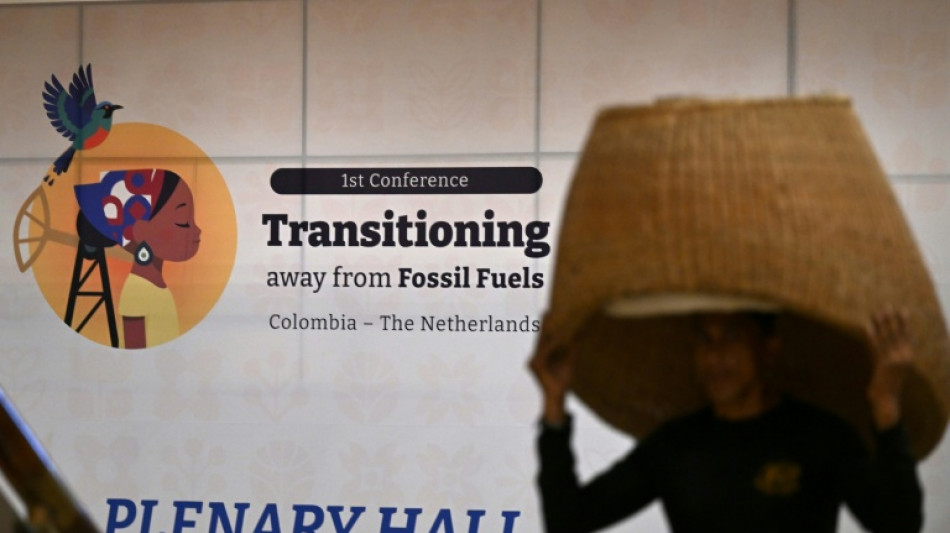
Key points from the first global talks on phasing out fossil fuels / Photo: © AFP

 US House targets data centers as midterm backlash grows

 French ex-minister Dati goes on trial in Renault-Nissan corruption case

 'Being Heumann' captures joy in fight for disability rights

 Retired great Nadal to play in exhibition matches

 IR-MED and Dice Technologies Announce collaboration to Evaluate and Advance Pressure-Injury Prevention Platform in Japan

 Watts, Pitt, Cruz to light up Spain's top film festival
 Sweden expels Iran embassy employee over anti-Jewish threats
 Toogood Gold's Table Mountain Sits in the Shadow of a Nevada Gold Rush

 MEXC July–August Security Report: 38.66M USDT in Risk Funds Intercepted, Futures Insurance Fund Hits 792M USDT

 'Breathing toxin every day': Indonesians choked by haze feel helpless

 Stocks edge higher ahead of US Fed rate call

 Philippines ex-leader Duterte makes first in-person ICC appearance

 2027 Formula One calendar includes Monaco sprint race

 Palestinians are the real victims, Thunberg tells Ed Sheeran

 Hashim Thaci: From 'George Washington of Kosovo' to Hague convict

 Amnesty says Iran committed 'crimes against humanity' in crackdown on 2022 protests

 EU to ban social media for under 13s, curb access until 15

 Philippines ex-leader Duterte makes first appearance at ICC

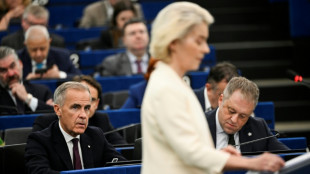 EU chief pitches 'associate member' status for Canada

 English village votes to 'secede' from UK over asylum centre plan

 Wildfires push endangered Sumatran elephants to brink: Indonesian NGO

 Stocks head higher as traders prepare for Fed decision

 English village votes to 'secede' from UK over asylum centre

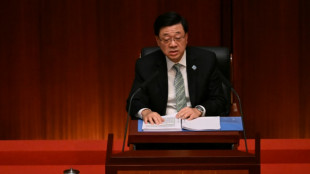 Hong Kong unveils plan to align economy with China's goals

 Brazilian voters the latest to eye Bukele security model with envy

The first global conference on transitioning away from fossil fuels wrapped up on Wednesday -- but what progress was made in Santa Marta, a coal port on the Caribbean coast?
Here are a few takeaways:
- Roadmaps -
France made headlines on the opening day of the conference when it published a "roadmap" detailing its path to eliminating the use of all fossil fuels for energy by 2050.
Analysts said no other country had published such a clear and comprehensive phaseout plan and it sent an important signal from a major economy about its direction on fossil fuels.
The splash caused some grumbling in Santa Marta as some pointed out that France was not announcing new policy but existing pledges under a different title.
Other nations contested that there was no widely accepted definition of a roadmap, and that they too had timelines to phase out coal and other planet-heating fuels, as well as renewable energy targets and plans for decarbonizing heavy industry.
Leo Roberts from the E3G climate change think tank said a roadmap should be guided by science and make a fossil fuel phaseout a "central planning principle" around which other policies gravitate.
- 'Spaghetti' science -
One of the key outcomes was the creation of an expert scientific panel to advise governments, cities or regions in planning their own pathways away from fossil fuels.
Carlos Nobre, a Brazilian climate scientist and one of the driving forces behind the panel, told AFP: "It will provide all the solutions -- to implement them, and to finance them."
The Scientific Panel for the Global Energy Transition was amusingly dubbed the "Spaghetti" group because of its acronym -- SPGET.
- Fossil Free Zones -
Popular among grassroots movements, the concept of "Fossil Free Zones" is slowly gaining traction in international meetings and found fertile ground in Santa Marta.
These zones aim to encompass territories that -- due to their ecological importance, from the Amazon to the Congo Basin and Indonesian rainforest -- are protected by governments that prohibit all hydrocarbon exploration and extraction within them.
The Earth Insight expert group estimates that there are 58 such protected areas worldwide.
Colombia, for example, banned the extraction of fossil fuels and minerals in the Colombian Amazon last year to "stop the expansion of the extractive frontier," said Colombia's Environment Minister Irene Velez Torres, host of the Santa Marta conference.
- New hosts -
Colombia passed the baton to Tuvalu, a tiny island nation in the Pacific Ocean that will host the next fossil fuel phaseout conference in 2027.
The low-lying island is seriously threatened by rising sea levels, and has been a strong voice on the international stage for impoverished countries imperiled by climate change.
"This journey that began here in a coal port of the Caribbean Sea, now voyages to the Pacific Ocean," said Tuvalu's Climate Minister Maina Talia.
Activists urged countries to turn up in numbers, despite the distance.
"I think the fact that the Pacific is far away cannot be an excuse," Nikki Reisch, from the Center for International Environmental Law, told AFP in Santa Marta.
"The Pacific Island countries are constantly bearing the burden of coming to other fora and trying to get their voice heard."
C.Koch--VB