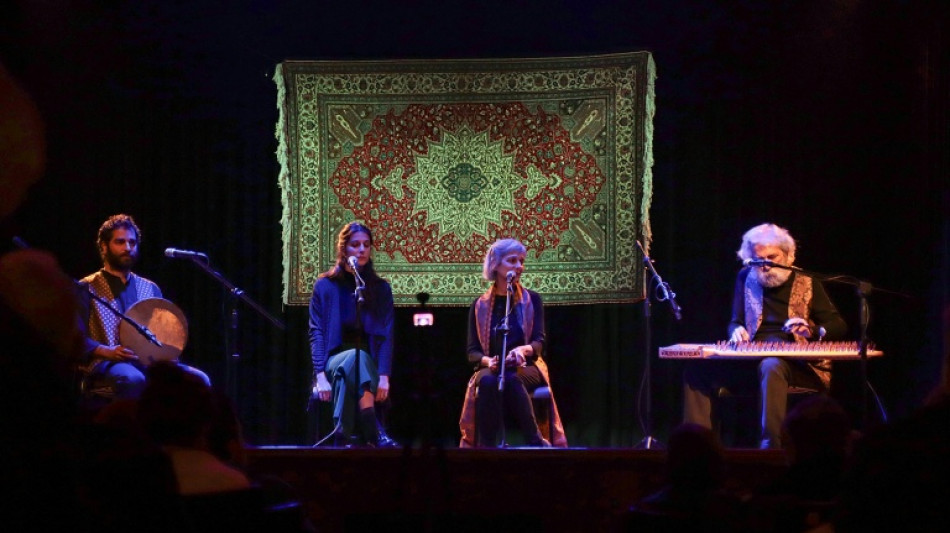
Under threat of dying out, Turkish Armenian evolves through art / Photo: © AFP

 Google data centre sparks protests in Austria

 Shin Ohashi: Junk food-loving teen and Japan's next big swimming hope
 Stocks rise on AI buzz, drop in oil prices
 China's robot dancers limber up for America's Got Talent final

 Despite military might, Saudi struggles to crush the Houthis
 Trump to tout deals, defend Iran war in UN speech
 Sri Lanka to issue verdict in landmark Easter attack trial
 Macron says talks with Trump on Red Sea, Ukraine 'constructive'

 Green policies just good politics, says UK minister
 Bardot auction in Paris fetches nearly one million euros
 No timeline on Daniels injury return, says Commanders coach

 British Columbia sues OpenAI in US court over Canada school shooting
 French star Batum retires after 18-year NBA career

 Zidane leads first France training session
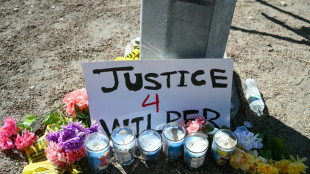 Man shot by ICE agent in Texas detained with bullet inside him: lawyer

 California declares state of emergency ahead of El Nino
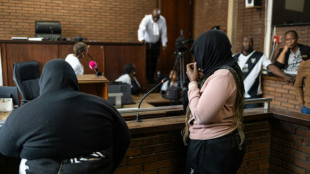 South Africa arrests three more suspects, after nine women murdered

 Carse needs time away from England, says captain Brook

 NOWPayments Releases Cross-Chain Payout Data Revealing Key Performance Benchmarks Across TRON, BNB Chain, and Solana

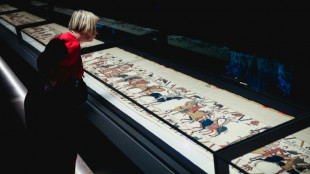 British Museum bans photos of Bayeux Tapestry as crowds linger
 COP31 host says AI climate footprint to be a summit priority

 Berlin's far-left vote winners reject anti-semitism charges

 Mancini eager for 'new adventure' on Italy return

 Mbappe says having Zidane as France coach 'like a film'

 Palmer, Rice out of England Nations League squad
Once spoken by two million people across the Ottoman Empire, Turkish Armenian has shrunk to the point of becoming an endangered language following a century marked by massacres and mass emigration.
Yet defenders of Western Armenian, a language essentially spoken only by Turkey's now-miniscule Armenian minority, are refusing to let their native tongue become a historical curiosity.
"We live within this language; our very existence is intimately bound up with it," said Vahakn Keshishian, whose Yeseyan cultural association has organised an Istanbul festival celebrating the language.
Up until the end of March, the Hantibum (Face to Face) festival will feature concerts, workshops and film screenings showcasing Western Armenian.
Classified by UNESCO as an endangered language, it differs in both grammar and pronunciation from the Armenian spoken in modern-day Armenia proper.
"Western Armenian is certainly under threat, but it is far from being a museum piece," said Keshishian. "It remains alive, carried by music, theatre and the publication of newspapers and books."
Yet today, the language is spoken by fewer than 100,000 people of Turkey's 86 million population, as well as the descendants of the worldwide diaspora, following what most scholars agree was the Ottoman Empire's genocide of the Armenians.
The Armenians are seeking international recognition for the massacres, which they say killed 1.5 million people between 1915 and 1917.
Turkey strongly denies the accusation of genocide, saying that both Armenians and Turks died as a result of the First World War.
- 'Invisible' -
The task of passing on Armenian culture through the language has been hindered by the decline in people learning and speaking it.
"Western Armenian is spoken less and less at home because it is no longer the language of everyday life.
To break this trend, we are organising workshops for young people," explained Betul Bakirci of Aras Publishing, which prints books in both Turkish and Western Armenian.
"Books in Eastern Armenian are far more widely distributed and available. By contrast, to get hold of a book in Western Armenian, you have to make an effort. Our publishing house fills that role," she added.
While Istanbul is still home to some 15 schools teaching Western Armenian to nearly 3,000 students, enrolment has been on the decline for years.
"The political and economic situation in Turkey is pushing young people to imagine their future elsewhere. Many families also prefer to enrol their children in schools that teach Western languages rather than Armenian," said Pakrat Estukyan of Agos, a bilingual Armenian-Turkish weekly newspaper.
Estukyan argued that due to their history, "Armenians prefer to make themselves invisible when the political climate becomes tense."
- 'Democratise access' -
Estukyan saw a glimmer of light in the rising interest from young readers in the Western Armenian-language pages of his newspaper, whose print runs number 5,000 copies.
For Keshishian, the festival organiser, digital tools have also given Turkey's branch of Armenian a new lease of life.
"The possibilities offered by new technologies have been extremely beneficial. Online courses and artificial intelligence have helped democratise access to the language," he explained.
In any case, Keshishian argued that Western Armenian speakers had learnt how to reinvent themselves during periods of crisis, and the diaspora had an important role to play in keeping the language alive.
"Wars in the Middle East might have led to the dispersal of Armenians across the region, but they also gave birth to new Armenian-speaking communities across the world."
C.Kreuzer--VB