Nations divided ahead of decisive week for shipping emissions / Photo: © AFP

 UEFA's Ceferin tells Infantino to go, but 'not interested' in replacing him

 Oil falls as Trump pledges economic war on Iran

 Yamashita marches to nine-shot win in LPGA Canadian Women's Open

 Gauff powers past Pegula to win US Open warm-up in Cincinnati

 Japan's Olympic figure skating heroes to wed

 Cummins eyes ODI return ahead of 'big' South Africa Test series

 India police used excessive force during protests: Amnesty

 Rookie La Sasso wins LIV season-ender as tour's future in doubt

 Fils tops Tiafoe to claim first ATP Masters title in Cincinnati bb/amz

 Clark fends off McIlroy to win BMW Championship

 Raphinha, Lopez hit braces as Barcelona trounce Elche

 Macron hosts Saudi crown prince for visit ranging from esports to Mideast

 Jamieson gets Trump call after ending 14-year golf title drought

 Norwegian King Harald's health has 'deteriorated': palace

 Man City snatch late win in Maresca debut, Iraola's Liverpool rescue dramatic draw

 Trump takes starring role at Washington's IndyCar debut

 Villa boss Emery says it's down to Watkins to explain absence

 Duplantis labours to 'super difficult' pole vault win at Silesia Diamond League

 Max smash at zany Zandvoort: Three stories from the Dutch GP

 Brennan sprints to Vuelta stage two victory, Pogacar keeps red

 Duplantis conquers pole vault at Silesia Diamond League

 France's badminton gold winners set for obscurity back home

 Brighton start Premier League season with rout of 10-man Villa

 Maresca makes winning start with Man City after dramatic fightback

 Mo'unga returns for All Blacks against Johannesburg Lions
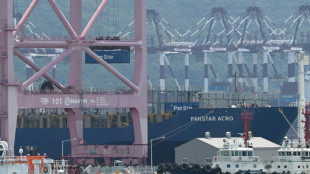
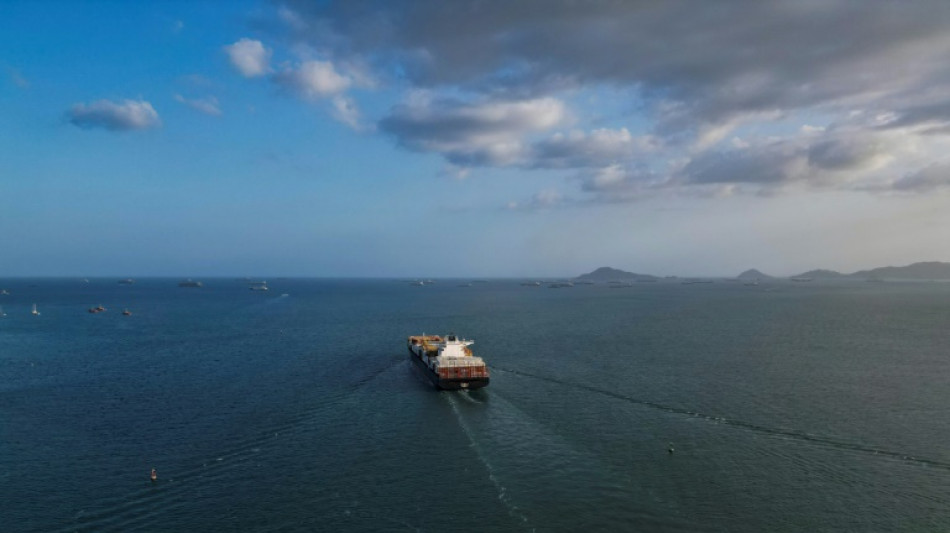
Members of the International Maritime Organization (IMO) are divided over whether to approve a carbon tax on international shipping, ahead of a meeting starting on Monday to finalise emissions-reduction measures.
The carbon tax, the most ambitious measure on the table, would make it more expensive for shipping companies to emit greenhouse gases, encouraging them to curtail emissions.
But some member states, including China and Brazil, are proposing other measures, arguing the carbon levy would increase the cost of goods and contribute to food insecurity.
The IMO expects to come to an initial agreement by Friday next week on which mechanism to adopt to help reach carbon neutrality in shipping by 2050.
The stakes are high as shipping accounts for nearly three percent of global greenhouse gas emissions, according to the IMO.
"(It is) difficult to say what will happen next week," Fanny Pointet, sustainable shipping manager at European advocacy group, Transport and Environment, told AFP.
The United States has been notably quiet about the issue, having not commented since President Donald Trump returned to the White House.
The Pacific and Caribbean island states are leading the group pushing for a carbon tax, with support from other countries including the UK.
They argue that funds raised from a levy could be redistributed to nations most vulnerable to climate change to help adapt and mitigate its effects.
"Climate change is a terrifying lived reality for my country," said Albon Ishoda, the Marshall Islands' representative to the IMO.
- 'Terrifying lived reality' -
However, around 15 countries strongly oppose the carbon levy, arguing it would exacerbate inequalities between nations and raise the costs of goods such as palm oil, cereals and corn.
Concerns are also mounting that the European Union, once a supporter of a carbon tax, could water down the measure in favour of a carbon credit system.
Such a system would allow companies or countries to buy and sell credits representing the right to emit a certain amount of carbon dioxide.
According to University College London research, the option of no levy presents the biggest risk to meeting the shipping sector's climate goals.
It could also distort fuel prices and create an uneven playing field, favouring states with strong industrial polices, such as China, researchers said.
"The fastest and cheapest energy transition is brought about by a strong levy," combined with a global fuel standard to reduce the carbon intensity of fuels used by ships, they added.
Challenges also remain with the fuel standard system, particularly the risk of using alternative fuels such as palm oil and soybean oil, which indirectly contribute to emissions through deforestation, Pointet explained.
While Brazil defends the key role of these biofuels, more than 60 environmental protection NGOs have raised objections to their inclusion in the future shipping fuel mix.
Other potential solutions include synthetic hydrogen-based fuels, currently very expensive to produce, or the installation of wind-powered propulsion systems onboard ship.
P.Keller--VB