
S.Africa court rules ANC leader Luthuli was killed in apartheid 'assault' / Photo: © AFP/File

 Malawi's fuel shortages, record prices deepen economic crisis

 Rubio hosts G20 ministers as Iran, Ukraine wars divide members

 From minerals to AI, EU and Canada to forge new alliance

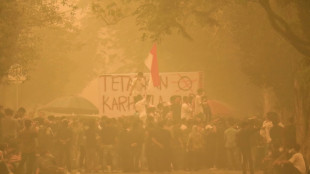 Fire pollution killed 3,560 people in Indonesia in September: report

 Ian Wright and Jamie Carragher split on Liverpool-Arsenal prediction

 The Duskbloods delayed as Nintendo Switch 2 release moves to 2027
 Russia turns to NATO countries for prosthetics amid war-related shortages

 Researchers on island encounter giant spider legs emerging from a burrow

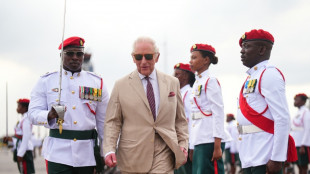 Britain's King Charles lands in ex-colony Guyana

 Arsenal assess Bukayo Saka fitness concerns before Liverpool meeting

 £10,000 garden project transforms a UK home into a miniature Greece

 Forest destruction tests Armenia-Azerbaijan peace push

 Deal still eludes nations on final day of UN nature talks

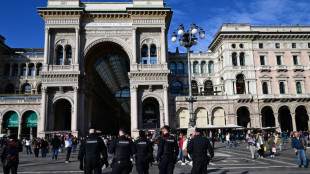 Teen rallies take to the streets across Italy

 Netanyahu bloc finishes ahead in Israel vote, but well short of majority

 Rural US hospitals, collateral victims of Trump politics
 How Trump could interfere in US midterm elections

 As Republicans downplay abortion for midterms, four US states to vote

 No. 4 Indiana looks to revive offense against improving Minnesota
 Police close investigation into Hayden Panettiere death after coroner ruling

 Australian mushroom killer loses appeal, has sentence extended

 Lethbridge students learn how city transit and transportation systems work

 India highlights defence ties with Japan and Australia at Cebu meetings

 Horoscope for October 30, 2026: communication and patience shape the day

 Amazon cloud business accelerates but shares drop on profit miss

A South African court ruled Thursday that the 1967 death of ANC leader and Nobel prize winner Albert Luthuli was due to "assault" by apartheid policemen, overturning a finding that he was struck by a train.
A formal inquest by the apartheid government claimed in 1967 that Luthuli -- who in 1960 became the first African to win the Nobel Peace Prize -- had died after being hit by a goods train while walking on a railway line.
But activists and his family had long cast doubt on the findings, and South Africa's government this year reopened inquests into the deaths of several political activists in the struggle against the white-minority apartheid regime, which was removed in 1994.
"It is found that the deceased died as a result of a fractured skull, cerebral haemorrhage and concussion of the brain associated with an assault," Judge Nompumelelo Hadebe ruled.
The judge said Luthuli's death was attributable to "assault by members of the security special branch of the South African police, acting in concert and in common purpose with employees of the South African Railway Company".
She set aside the findings of the 1967 inquest and named seven men, whose whereabouts could "not be ascertained", as having committed or being complicit in the murder.
They included a locomotive driver, a fireman, a station master and two railway police officers.
- Calls for justice -
Luthuli served as president-general of the African National Congress (ANC) from 1952 until his death and led the anti-apartheid movement during one of its most challenging periods, including its banning by the apartheid government.
During his Nobel Prize acceptance ceremony in Oslo in 1961, he made a passionate plea for non-violence.
The ANC in a statement Thursday welcomed a "historic judgement" that "corrects a long-standing distortion of history" by recognising that Luthuli was "a victim of state-sanctioned murder".
"It is a moral victory not only for his family but for all martyrs of our struggle whose lives were cut short by the cruelty of apartheid," the party said.
Luthuli's grandson Sandile Luthuli told local television EWN that the family were "elated" with the judgement.
"The prosecution's team very meticulously pointed to the institutionalisation of apartheid and the role that those institutions played in the cover-up of the murder of Chief Albert Luthuli," he said outside the court, indicating they would consider next steps.
The National Prosecuting Authority announced in April it would reopen inquests into the deaths of Luthuli and another anti-apartheid activist, lawyer Mlungisi Griffiths Mxenge, in an "endeavour to address the atrocities of the past".
A Truth and Reconciliation Commission (TRC) was created in 1996 to expose crimes committed under apartheid. It held 2,500 hearings over two years with the possibility of offering amnesty.
The process only resulted in a few trials, and rising calls for justice pushed the government to reopen investigations into several cases this year.
O.Schlaepfer--VB