Trump's Iran war violates international law, experts say / Photo: © AFP/File

 Relieved Russell says Mercedes have solved his power problems mystery

 Oil soars above $100 as Middle East fears grow
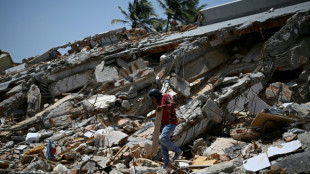 Venezuelans turn to scrap collecting in quake-hit beach 'paradise'

 Heptathlon champion Johnson-Thompson joins list of Commonwealth Games absentees

 Nigeria's Dangote raises $2.5bn to expand Africa's largest refinery

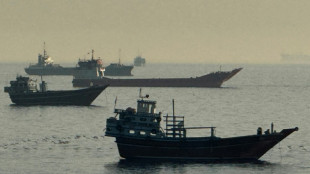 Oil soars to $100 on fresh Mideast attacks
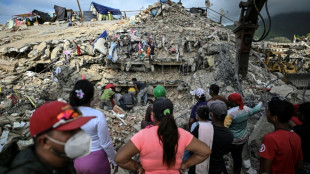
 Coal-fired power generation rising globally on Mideast war: IEA

 Premier League champions Arsenal sign Greece winger Tzolis from Brugge

 French Jewish DJ sues after activists disrupt gig: lawyer

 Venice film festival promises Pattinson, Oasis and Musk doc

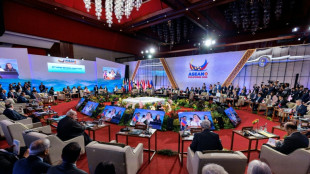
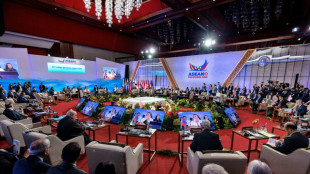 ASEAN calls for open straits as US-Iran war casts shadow

 Ford and Geely to form joint venture at struggling Spain plant

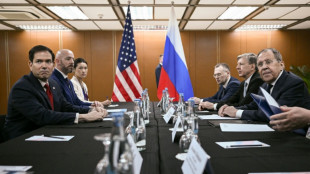 Russia warns US against Ukraine arms sales in Manila meeting

 New UK PM announces tax cut for struggling pubs

 Supporters flood India's 'cockroach' protesters with food

 Modi vows punishment for exam leaks fuelling India protests

 Norway set to make formal complaint to FIFA over Balogun red card saga
 Floods in northeast India kill at least 41

 Nestle siphons off bottled water business into joint venture

 Hundreds hospitalised in Japan heatwave 'disaster'

 Renault says sales stalled in first half

 EasyJet says profits nosedive on Mideast war

 Modi vows punishment for exam fraud fuelling India protests
 Six candidates in race to lead UN set for televised debate

 Comic-Con kicks off with Marvel's return
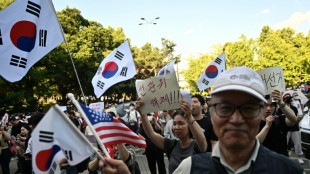
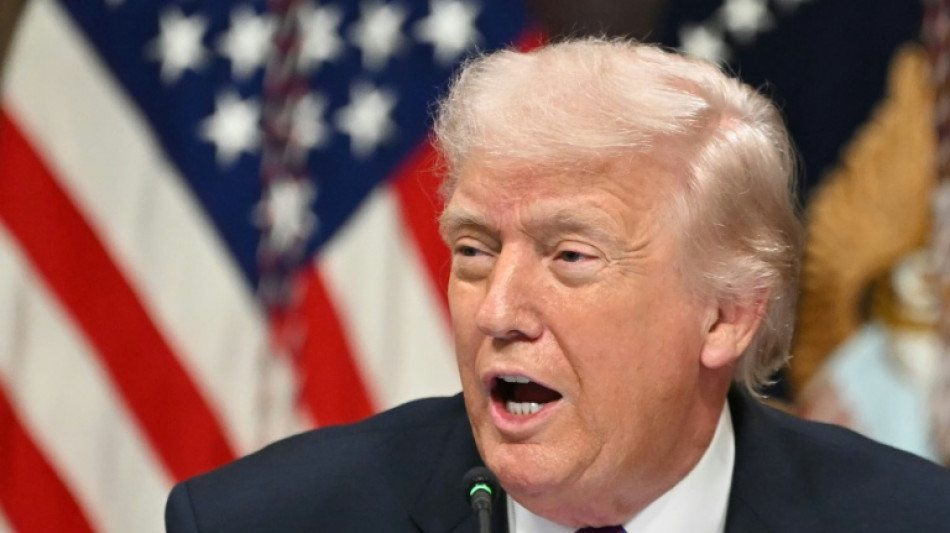
The United States insists it attacked Iran to curb "direct threats" from the Islamic republic, but legal experts say the dangers cited by Washington do not justify war under international law.
US and Israeli forces launched a massive air campaign against Iran on February 28, with Washington saying it aimed to curb nuclear and missile threats from Tehran. Yet the war has also decapitated the country's government, and President Donald Trump is now demanding "unconditional surrender."
The White House laid out Washington's justification for the war during a news conference this week.
"This decision to launch this operation was based on a cumulative effect of various direct threats that Iran posed to the United States of America, and the president's feeling, based on fact, that Iran does pose (an) imminent and direct threat," Press Secretary Karoline Leavitt said Wednesday.
She went on to cite Iranian sponsorship of "terrorism," its ballistic missile program and its alleged efforts to "create nuclear weapons and nuclear bombs."
But Mary Ellen O'Connell, a professor at the University of Notre Dame, said the attack on Iran "had no justification under international law."
"The law is clear that international disputes are to be resolved using peaceful means -- negotiation, mediation, the intervention of international organizations," said O'Connell, an expert in international law on the use of force and international legal theory.
The Trump administration has offered "vague mentions of imminent attacks by Iran and to prevent Iran from acquiring a nuclear weapon," while the UN Charter "requires, at the least, that evidence of a significant attack by Iran be underway," she said.
- 'Even less plausible' -
"No shred of such evidence has been provided. Nor is there any right whatsoever to start a war over a weapons program."
While Leavitt cited threats from missiles and militants, US Secretary of State Marco Rubio offered a different justification for the war earlier in the week: fears that an Israeli attack would trigger reprisals against US forces.
Brian Finucane, senior adviser for the International Crisis Group's US Program, said there were several issues with Rubio's explanation, including that the Trump administration has since offered other rationales for the war.
"The US probably could have prevented any Israeli attack on Iran by virtue of the leverage afforded by critical US military support," said Finucane, who previously worked in the Office of the Legal Adviser at the US Department of State.
The Iran war is not the only legally dubious military intervention by the Trump administration.
In early September, the United States began carrying out strikes on alleged drug-smuggling boats in the Caribbean and later the eastern Pacific -- a campaign that has killed more than 150 people.
The US government has yet to provide definitive evidence that the vessels it targets are involved in drug trafficking, and legal experts and rights groups say the strikes likely amount to extrajudicial killings.
Trump also ordered strikes on Iranian nuclear sites last year, and sent US forces into Caracas in early January to seize leftist Venezuelan leader Nicolas Maduro, who is now on trial in the United States.
Finucane said Trump's Friday demand for "unconditional surrender" by Iran "further undercuts prior justifications for US military action."
"The administration has not even bothered to argue that Operation Epic Fury complies with international law, but certainly statements like this make any such argument even less plausible," he said, referring to the Iran operation.
T.Zimmermann--VB