German 'chemical town' fears impact of industrial decline / Photo: © AFP

 Trump welcomes Xi to White House, touting agreement on AI

 Stocks fall, oil prices rise as global bonds back under pressure
 UK man died putting women, children first in Mozambique jihadist siege: coroner

 Russell leads Mercedes 1-2 at Azerbaijan GP practice

 Alcaraz shrugs off pressure of packed calendar at 'joyful' Laver Cup

 Fury to face British rival Joshua in Cardiff on December 11
 Streamex Converts Interest Into Capital as GLDY Investment Strategy Secures $1M+ Institutional Allocation

 STARTRADER Named Best Fintech Forex Broker at Forex Expo Dubai 2026
 Japan swimmer Ohashi, 17, shrugs off Covid to smash world record

 Shin Ohashi: Junk food-loving teen and new world record-holder

 Greek PM urges 'courage' in talks with UK over Parthenon Marbles
 'I was drowning': Iran Nobel winner exposes pain of separation from children

 Israel's US envoy says son fighting for life
 Olympic champion Yulo completes gymnastics gold collection at Asian Games
 England cannot imitate Spain's success, says Gordon

 Hungary detects invasive spotted lanternfly for first time in EU

 Ο Alex Bodi και ο καθηγητής Δρ. Stefan Haupt συμφωνούν σε συνεργασία για μια θρυλική συλλογή έργων τέχνης στη Ρουμανία

 France's top-selling newspaper to slash jobs
 Tigray rebels in 'full-blown' war with govt

 Alex Bodi och prof. dr Stefan Haupt ingår samarbetsavtal om en legendarisk konstsamling i Rumänien
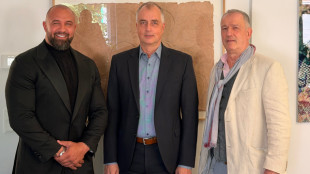 อเล็กซ์ โบดี และศาสตราจารย์ ดร. สเตฟาน ฮาปท์ ตกลงร่วมมือกันในการจัดตั้งคอลเลกชันศิลปะอันเป็นตำนานในโรมาเนีย
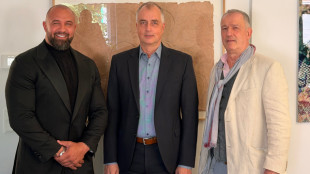
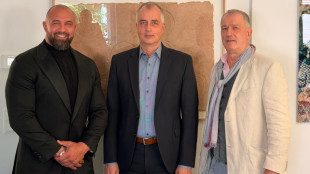 Alex Bodi a prof. dr. Stefan Haupt se dohodli na spolupráci na legendární umělecké sbírce v Rumunsku
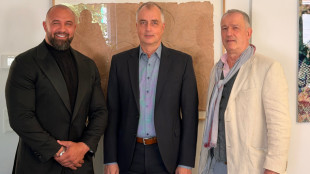
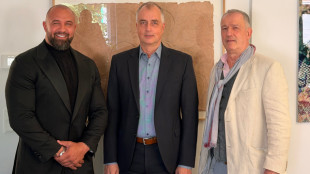 알렉스 보디와 슈테판 하우프트 교수, 루마니아의 전설적인 미술품 컬렉션을 위한 협력 합의
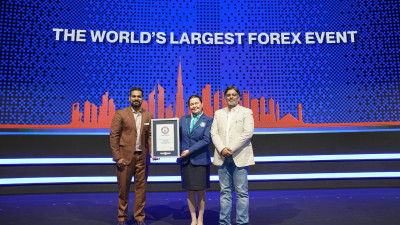
 BaazEX Enters the Asian Trading Market With a New Approach to Online Forex Trading.

 Asian markets fall on US-China jitters as leaders meet
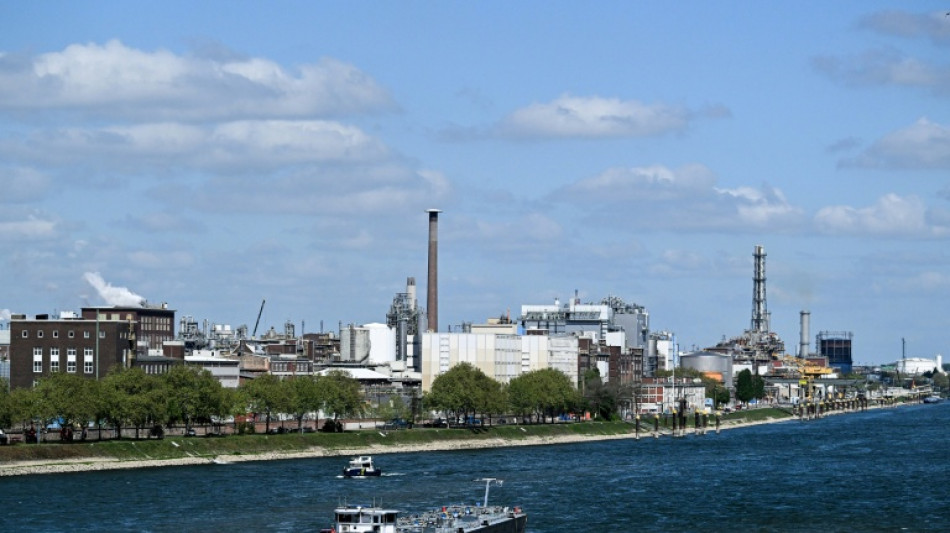
Germany's industrial decline is taking a painful toll on communities that have long relied on local manufacturing titans for jobs, prosperity and a sense of a secure future.
Among the places affected by the downturn is Ludwigshafen, a company town of chemical giant BASF, which has shed thousands of jobs while shifting its focus to China.
"The mood is obviously not good," Sinischa Horvat, chairman of BASF's works council, which represents staff interests, told AFP during a visit to the city of about 175,000 people.
"The entire market is currently so weak. When you watch the news, you hardly hear any positive messages."
BASF is among Germany's manufacturing heavyweights in sectors ranging from autos to steel and factory equipment that have been cutting back in their domestic markets.
They are battling surging energy costs, fierce competition from China, and weak demand at a time when Europe's biggest economy is mired in a long stagnation.
Some 2,500 jobs have been axed since 2022 in Ludwigshafen, which is dominated by sprawling chemical plants that stretch along the river Rhine, and more cuts are set to come.
A recent decision to sell off thousands of company-owned apartments, many occupied by current and former workers, has added to unease.
"The sale of these apartments sends a signal to the city and to the people who live here and, in some cases, work at BASF -- BASF is scaling back its operations," Patrick Thiel, who lives in one of the apartments and works at the firm, told AFP.
"There is growing concern that this won't stop at the apartments but will also affect the main plant," added the 29-year-old, who also ran as a candidate in recent local polls for far-left party Die Linke.
- China push -
Horvat said having BASF staff in the properties helped created a "symbiosis" between company and community.
"This has fostered an understanding of chemistry and shaped the relationship with BASF in the city," he said.
BASF -- a supplier of base inputs to the agricultural, automotive and pharmaceutical sectors -- says the proceeds will go to bolstering its core businesses, but acknowledged that the sale had "raised uncertainties".
A company spokeswoman however insisted that it would handle the sale responsibly, adding: "No one has to fear losing their home."
"We will continue to see ourselves as an integral part of the local community in the future," she said.
Underlining its commitment to Ludwigshafen, where the group has over 30,000 employees -- around a third of its global workforce -- BASF has agreed to hold off on compulsory redundancies there until at least 2028 and continue investing.
But as it cuts back at home, the world's biggest chemical firm is investing heavily overseas, last month inaugurating a vast 8.7 billion euro ($10 billion) complex in China, its biggest ever single investment project.
It insists that building up its presence in China, the world's biggest chemical market, is crucial.
- Job losses -
BASF is far from the only German company suffering.
Last year industrial companies cut 124,000 jobs, around double the figure in 2024, with hefty losses in particular found in the struggling auto sector, a study by consultancy EY showed.
Germany's manufacturing sector shrunk to a share of 19.5 percent of the country's economy in 2025, according to official figures -- its lowest level for many years.
"The loss of industrial jobs in Germany has accelerated in the past two years," Marcel Fratzscher, president of the DIW economic institute told AFP.
"Companies that used to be the pride of Germany are suffering."
Areas that have already suffered industrial job losses see greater social problems and offer fertile ground for fringe parties, such as the far-right Alternative or Germany (AfD), to pick up support, experts warn.
Still, Fratzscher said that Germany had undergone economic upheavals before, and urged politicians and companies to try to ensure the economy emerges stronger.
The current economic transformation should be seen "as an opportunity to move into sectors that have better margins, better jobs," he said.
"The biggest mistake we can make is to try to cement the status quo, to keep all companies exactly the same. That would lead to a much bigger deindustrialisation."
T.Ziegler--VB