
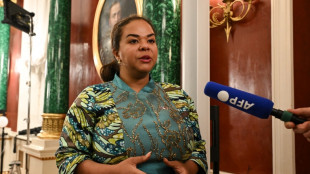
US lifts Iran ports blockade as uncertainty clouds Swiss Iran talks / Photo: © IRANIAN PRESIDENCY/AFP

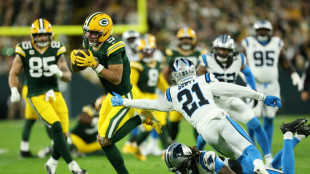 Packers beat Panthers 27-19 as Watson returns from hospital

 Affordable supermarket fashion offers designer-inspired autumn alternatives

 Judge throws out Australian mushroom killer's appeal, imposes harsher sentence
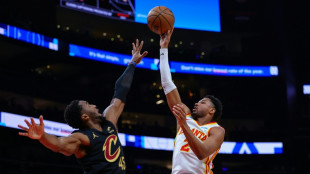 Pelicans down Kings for first win of NBA season

 Tech firms take fresh hit as earnings misses fan AI fears

 Worcestershire leaders back renewed two-unitary council reorganisation

 India's animal megacentre vows reset after criticism
 Dodging fuel price hikes, Damascus drivers turn to electric cars
 Alvechurch manager praises resilience but seeks improvement after Anstey draw
 Crypto platform Binance confirms major hack, more than $2.5bn frozen

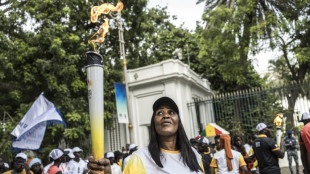 Sports chiefs face losing battle to keep sport separate from politics
 Nvidia's web of AI bets: smart strategy or bubble risk?
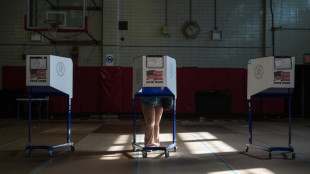
 Carrick fights for Man Utd job, Arsenal face Liverpool test

 Apple TV crime drama Nocturne brings a Scandinavian thriller to Pennsylvania

 Charity crowdfunds millions to buy historic English estate

 'Diabolical' Halloween festivities banned in Honduran towns

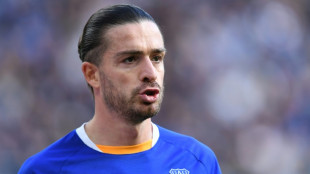 Everton boss Moyes backs 'club decision' to drop Grealish for Newcastle tie
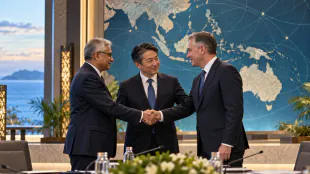
 DoorDash shares rise as Instacart slips following $17 billion takeover plan

 Japanese star Forever Young goes for rare Breeders Cup Classic repeat

 Inter Miami stay third after 2-2 draw with FC Cincinnati
 Inkle buys Finally bookkeeping unit and expands India-based workforce

 PI Industries plans Indian launch of Pioxaniliprole insecticide this rabi season
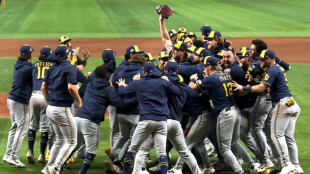 Small-market Brewers upend big-spenders as baseball lockout looms
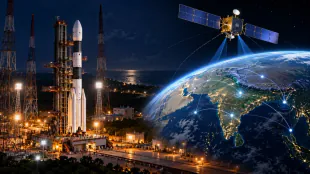 ISRO schedules NVS-03 navigation satellite launch for Friday

 Antonelli struck with illness ahead of Mexico GP

The US on Thursday lifted a blockade of Iranian ports imposed during the Middle East war after President Donald Trump signed a deal to end the conflict, as uncertainty surrounded planned talks in Switzerland aiming to take the accord further.
The signing of the deal by Trump and Iranian President Masoud Pezeshkian set in motion a 60-day period for talks on wider issues between the two foes, including the Iranian nuclear programme.
But there was uncertainty over the next steps, and it remained unclear if the two sides, who have had no diplomatic relations following the 1979 Islamic revolution, would hold a signing ceremony and talks in Switzerland on Friday as previously announced.
Oil prices tumbled after the agreement was inked, though activity was still muted in the Strait of Hormuz, the strategic bottleneck for energy shipments that Iran blockaded during the conflict and which should reopen immediately under the deal.
American forces on Thursday lifted their parallel naval blockade of Iranian ports that had prevented ships from sailing to or from the Islamic republic, the US military said, noting that American warships "will remain in the general area".
Three Saudi oil tankers left the Gulf through the strait on Thursday, maritime trackers said, while the loaded liquefied natural gas vessel (LNG) Mraikh became the first such French vessel to make the transit since the start of the conflict.
The US military, which had enforced its own blockade after Iran shut the Strait at the start of the war, has allowed at least 12 ships to pass through, Vice President JD Vance said.
Before the war, the strait saw around 120 transits per day, according to the shipping journal Lloyd's List.
Vance said he planned to go to Switzerland for "technical negotiations" with Iran "this weekend" rather than Friday, but emphasised that the plan "could change".
In Iran, the Tasnim agency said "nothing has been confirmed" about the Iranian delegation's trip to Switzerland.
- 'Maybe they start fighting again' -
The deal should bring an end to the current US-Israeli conflict with the Islamic republic, which saw five weeks of all-out war until a ceasefire was struck in early April.
But some in Tehran expressed a downbeat mood at the prospects for peace.
"I have no hope that this is a lasting agreement. Maybe after the 60 days they start fighting again," said Mina, 54, a psychologist from Tehran.
Under the text, Washington commits to immediately waive oil sanctions crippling Iran's economy.
And once a final agreement is reached on Iran's nuclear programme, the United States will facilitate the release of a $300 billion reconstruction fund supported by regional nations, the deal says.
US officials also said Iran would dilute its enriched uranium stocks, possibly by "down-blending on site" under the supervision of the UN nuclear watchdog.
Iran's ballistic missile programme was not mentioned in the agreement, despite Israel's longstanding push for its dismantling.
- 'Either jealous or stupid' -
Trump's decision to end the war, in which 13 US service members were killed and a vast proportion of US ammunition stockpiles was used, has unsettled some of his allies at home.
US Senator Bill Cassidy from Trump's Republican Party described it as the "worst foreign policy blunder in decades".
"Iran's nuclear ambitions were not curbed, and they have learned that threatening the Strait of Hormuz works," he said.
Apparently anticipating such criticism, Trump said at a G7 summit that he was prepared to "bomb the hell" out of Iran if they violated the agreement.
"These fools, who think I haven't been tough enough on Iran, when the Stock Market Just Hit A RECORD HIGH, and Oil prices are 'tumbling' down, are either jealous, bad people, or stupid," Trump added on social media Thursday.
There has also been some criticism from hardliners within Iran, where the conflict was described as an "imposed war" and compared to the 1980-1988 conflict with Saddam Hussein's Iraq.
But parliament speaker and top negotiator Mohammad Bagher Ghalibaf insisted the deal represented a US "failure", while Pezeshkian called it "historic".
- 'Just one thing' -
Agnes Lavallois, president of France's Institute for Research and Studies on the Mediterranean and the Middle East, said the feeling was that the Americans "wanted just one thing -- the reopening of the Strait of Hormuz."
"The other issues that were put forward to justify this war are no longer relevant at all," she told AFP.
And while the deal specifies that Lebanon should be part of the equation, it is unclear whether the war between Israel and Hezbollah on that front will be discussed in the next 60 days.
After reports of tensions with Washington, Israel's Prime Minister Benjamin Netanyahu underscored the importance of maintaining close ties with the United States, saying "the struggle is not yet over, and further challenges lie ahead."
N.Schaad--VB