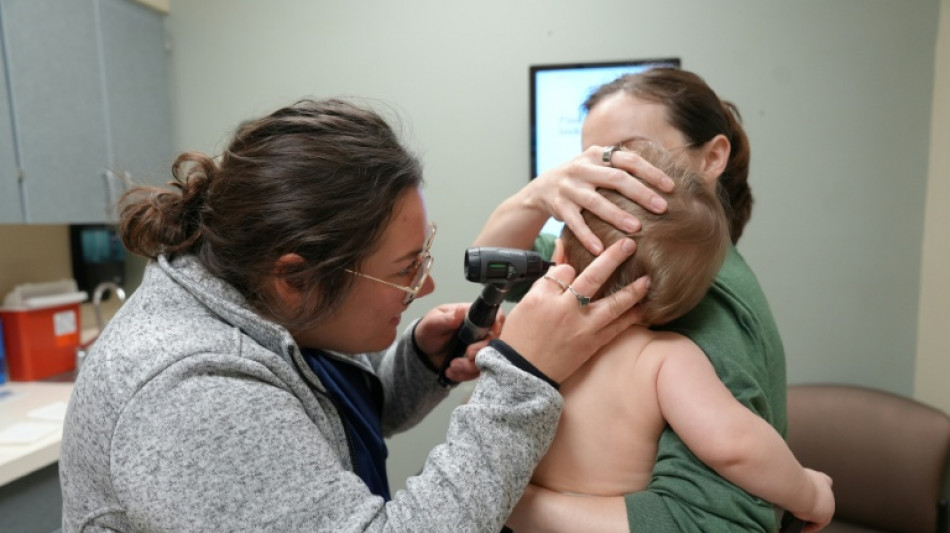
Rural US hospitals, collateral victims of Trump politics / Photo: © AFP

 Charity crowdfunds millions to buy historic English estate

 'Diabolical' Halloween festivities banned in Honduran towns

 Everton boss Moyes backs 'club decision' to drop Grealish for Newcastle tie

 DoorDash shares rise as Instacart slips following $17 billion takeover plan

 Japanese star Forever Young goes for rare Breeders Cup Classic repeat

 Inter Miami stay third after 2-2 draw with FC Cincinnati

 Inkle buys Finally bookkeeping unit and expands India-based workforce

 PI Industries plans Indian launch of Pioxaniliprole insecticide this rabi season
 Small-market Brewers upend big-spenders as baseball lockout looms
 ISRO schedules NVS-03 navigation satellite launch for Friday

 Antonelli struck with illness ahead of Mexico GP

 Google drags down US stocks as Lagarde signals early ECB exit
 Kuwait minister and Blind Association discuss support for visually impaired people

 'Star Trek', 'X-Men' star Patrick Stewart dead at 86

 Kuwait traffic authority cautions against hazard lights while driving in rain
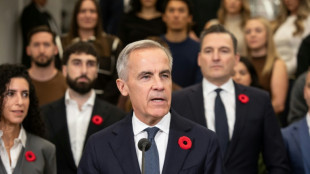
 Germany's Zverev becomes tennis world No. 1
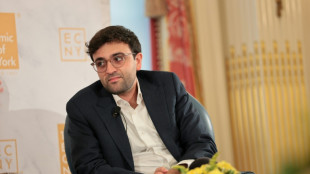
 Grealish dropped for Everton's League Cup tie after disciplinary breach

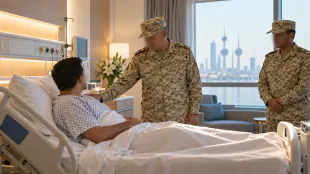 Kuwait National Guard official visits member injured during training

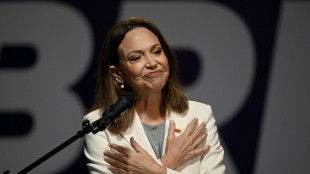 Machado says Trump opened 'floodgate to freedom' for Venezuela

 CNN Global Perspectives prepares Doha debut with international speaker lineup

 Qatar Olympic Academy completes record sports management course

 Jazeera Paints showcases housing solutions at Build Your House 2026 in Qatar

 French shooting suspect targeted Muslims, Africans: prosecutor

 Es’hailSat and Arabsat agree broader satellite and broadcasting cooperation

 Qatar and Russia outline plans to expand strategic partnership
Ninety miles (140 kilometers). That is how far residents of Fredonia, a small town in the central US state of Kansas, must travel for cardiology care in the event of a heart attack or stroke.
The crisis could get even more dire if Fredonia's local hospital -- which provides basic care and coordinates evacuations by ambulance or helicopter -- were to shutter due to bankruptcy, as is happening to more and more medical facilities across the country.
"It's definitely a concern," Fredonia Regional Hospital's CEO Johnathan Durrett told AFP, noting that his 25-bed facility, like so many others in today's economy, has to "fight to remain open."
While financial difficulties for rural hospitals are nothing new, rising inflation and massive aid cuts enacted by President Donald Trump's administration have exacerbated the crisis and raised fears that hundreds of facilities could close their doors for good.
In the home stretch of the November 3 midterm elections, the issues of access to and high costs of US health care are cited by many voters as chief worries, especially in the American heartland.
"We've known for a long time both in Kansas and across the US that we have lots of problems with our health care system. It's a mess," said family physician Allen Greiner, who divides his time between tiny Fredonia and the Kansas City metropolitan area, a 2.5-hour drive away.
Rising costs and a labyrinthine insurance system have been perennial hazards, he said, "but in some ways it's almost worse than ever."
- Skyrocketing costs -
Health care in Kansas is under severe pressure. Seven hospitals have gone under across the state since 2015, including one near Fredonia, while an independent institute estimates 21 more rural hospitals are at "immediate risk" of closure.
"We're all kind of afraid," said doctor Jennifer Bacani McKenney, whose practice is attached to the Fredonia hospital. "Are we going to be the next one?"
CEO Durrett said he could not rule out that his hospital might end up on the list.
The reason? Continually rising costs of "pretty much everything," he explained, from IV equipment to the food served to patients.
Complicating matters are the declining and aging population, and the reimbursement rates to rural hospitals which Durrett said "simply don't cover the cost to provide said care."
Such problems are only getting worse with the Republican-led funding cuts to both Medicaid, which covers America's poorest, and to subsidies for purchasing private health insurance, warned Tom Mueller, director of the Kansas Center for Rural Health at the University of Kansas.
Last year's sweeping funding measure signed by Trump imposed dramatic reductions in federal health care spending, including an estimated $911-billion slash to Medicaid spending over 10 years, according to health policy research group KFF.
- Survival -
"We're already seeing the number of uninsured folks at emergency departments going up," said Mueller.
Most of the cuts haven't even taken effect yet, noted April Holman, who heads the Alliance for a Healthy Kansas, as she warned of the terrifying financial and human consequences to come.
Kansas has many people, "particularly in rural areas, who will not go to the hospital or see the doctor if they know they're not able to pay for it," she said.
"When that happens, their conditions become more acute, and in some cases, they're not able to survive."
Every time a clinic or hospital closes, the distances nearby residents must travel skyrockets, doctors stressed.
"I think everybody's very concerned about it," said Fredonia retiree Patrick Wilson, 75.
Beyond health care itself, the economies of small rural towns depend on hospitals, which boost employment and help raise living standards, said Kasey Millar, who works at a non-profit organization.
The 36-year-old mother said she probably would not live in Fredonia if there weren't a team of doctors "a few blocks away."
Millar hopes to see campaign promises turn into concrete action to preserve rural hospitals and their essential services.
"Just because you choose to live in a small town doesn't mean that you deserve less access to health care," she said.
P.Staeheli--VB