-
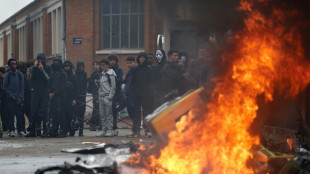 French teens clash with police as school blockades intensify
-
Slovenia sees surge in '.si' sites after Trump hypes 'super intelligence'

-
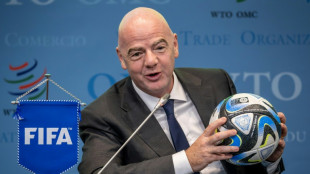 FIFA accuses UEFA of 'misinformation campaign' in bid for World Cup papers
-
'Like a dream' for An as Games organisers 'sorry' for latest mix-up

-
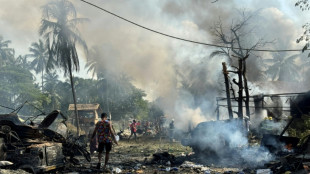 Myanmar airstrike toll hits 50 as families gather dead
-
Tokyo suffers longest streak of rainy days on record

-
 STARTRADER Raises Lloyd's of London Client Fund Insurance to USD 30 Million in Aggregate
-
Indonesia charges train driver over crash that killed 16 women

-
 North Korean DMZ landmine blasts 'violation of armistice': Seoul
-
Ruthless An makes history to retain Asian Games badminton crown

-
 Sabalenka 'fresh' for first tournament since losing No.1 spot
-
Australian central bank lifts key interest rate to 15-year high
-
 Myanmar airstrike death toll rises to 50: aid workers
-
Polo makes landfall in Mexico as Category 3 hurricane
-
 North Korean DMZ landmine blast 'violation of armistice'
-
South Korea team latest to be bussed to wrong Asian Games venue

-
 South Korea volleyball team latest to be bussed to wrong Games venue
-
Bears thrash Eagles 27-7 as third-string QB Keenum shines

-
 Malaysia starts sending Myanmar migrants home
-
All Blacks name veteran Taylor captain as Mo'unga seizes 10 jersey
-
 8.3 mn refugees at risk due to 'severe' funding cuts: UN
-
Race against time as Asian Games cricket quarter-finals washed out
-
 Stocks drop and oil rises as Hormuz hopes fade
-
India turns to corals and seagrass to shield against rising seas
-
 OpenAI cancels release of newest model due to safety concerns
-
Manchester City's Premier League charges: What comes next?

-
 AI bosses head to White House as safety pressure builds
-
Brazil's cellphone crime: a security nightmare in every pocket

-
 Batista sacked as Costa Rica coach after six months
-
Russia pummels Kyiv in latest deadly attack
-
 Flooding, power cuts and evacuations as Hurricane Polo slams Mexico
-
fiskaltrust launches e-invoicing across Europe
-
 NFL Giants obtain QB McCarthy from Vikings
-
Dodgers eye three-peat, Red Sox face Yankees as MLB playoffs begin

-
 Deal for evicted Spanish pensioner as PM seeks new housing law
-
Certification of Boeing 737 MAX delayed by software bug

-
 Clippers apologize, warn fans of 'challenges' after Leonard scandal
-
Celine Dion wows Paris Fashion Week with surprise gig

-
 Turkish comedian convicted for Erdogan 'insult' freed pending appeal
-
AMD buys firm founded by AI 'godmother' Fei-Fei Li
-
 Trump announces 'biggest' US steel plant in battleground Iowa
-
Italy rebound in Turkey as France win late in Belgium

-
 Olise wonder strike gives Zidane's France win in Belgium
-
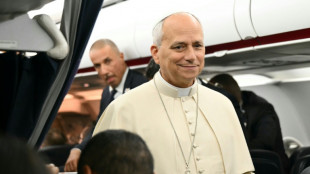
Pope says concerns about AI 'should be taken seriously'
-
 US stocks fall, bond yields rise as Middle East war drags on
-
Hurricanes to hoist title banner as NHL season begins

-
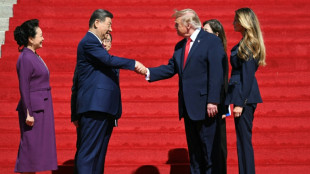 Trump denies offering to sell arms to China's Xi
-
Justice Alito steps aside from major US climate case

-
 Wemby ready for NBA Spurs to move rivals in climb to top
-
Willis happy with England exile after retains Top 14 player award

EU unveils bigger long-term budget but risks fight with farmers
The EU executive proposed on Wednesday a two-trillion-euro long-term budget bazooka focused on tackling overseas competition and Russian aggression at Europe's borders -- at the risk of a new showdown with farmers.
Presenting the $2.3-trillion 2028-2034 budget blueprint to reporters in Brussels, EU chief Ursula von der Leyen said it "will be the most ambitious ever proposed".
The plans seek to bolster Europe's security and ramp up its competitiveness, while paying off debts from a massive Covid-era loan as of 2028 -- against a backdrop of soaring trade tensions with the bloc's biggest commercial partner, the United States.
The European Commission put 451 billion euros on the table under a broad "competitiveness" tag that encompasses defence and space -- together allocated 131 billion euros, a five-fold increase.
The budget plan earmarks up to 100 billion euros for the reconstruction of war-torn Ukraine -- as well as substantial new "flexibility" funds kept available in event of crises.
But Brussels came under heavy criticism by EU lawmakers who accused it of not leaving sufficient funds for priorities including climate adaptation and the agriculture subsidies that currently make up the biggest share of the EU's budget.
Budget commissioner Piotr Serafin said under the commission's plans, 300 billion euros would remain ring-fenced to support farmers -- against around 387 billion euros, of which 270 billion in direct payouts, under the current seven-year budget.
- 'Black Wednesday for farmers' -
Brussels says the difference reflects an overhaul of the massive subsidies known as the common agricultural policy (CAP) -- with some funding moved to other budget columns.
But the future of the CAP is headed for a fight, with farmers warning against cuts to their slice of the EU pie -- and marching Wednesday in Brussels to show their resolve.
Hundreds of European farmers joined a protest outside the commission building in Brussels organised by a pan-European agriculture lobby group, Copa-Cogeca.
The group described it as a "Black Wednesday" for farmers, accusing Brussels of having "effectively decided to dismantle the 'common' nature of the CAP through concealed budget cuts".
The warning raised the spectre of another confrontation after last year's protests across Europe by farmers upset at cheap imports, low margins and the burden of environmental rules.
Hungary, a staunch critic of Brussels and Russia's closest ally in Europe, meanwhile tapped into their anger ahead of the plan's release -- while slamming the money for Kyiv.
"Ukraine would get a massive funding boost, while European farmers lose out," Hungarian Prime Minister Viktor Orban said.
- Battle lines drawn -
The announcement sets the stage for two years of fraught negotiations between the European Parliament and 27 member states.
Already stretched thin, some states are unwilling to contribute more to the common pot.
Unlike in the previous budget, the EU has debts due from the Covid pandemic, when states teamed up to borrow 800 billion euros to support the bloc's economy. These are estimated to cost 25-30 billion euros a year from 2028.
The previous 2021-2027 budget was worth around 1.2 trillion euros and made up from national contributions and money collected by the EU such as customs duties.
National contributions will grow slightly, from 1.13 percent of member states' gross national income to 1.15 percent plus 0.11 percent devoted to repaying the Covid loan.
The commission will also seek to raise about 58 billion euros a year collecting money directly through five instruments, including its carbon border tax and a levy on electronic waste.
Member states gave a sneak peek at the fights to come.
France's Europe minister Benjamin Haddad hailed the commission's "ambition" but Dutch finance minister Eelco Heinen -- representing one of the frugal states -- said the proposed budget was "too high".
Members of the EU parliament, however, made it clear the budget was not enough in their view.
"However you try to package this, what we have is a real-terms investment and spending freeze," said a joint statement from the EU lawmakers tasked with steering the budget through parliament.
T.Germann--VB