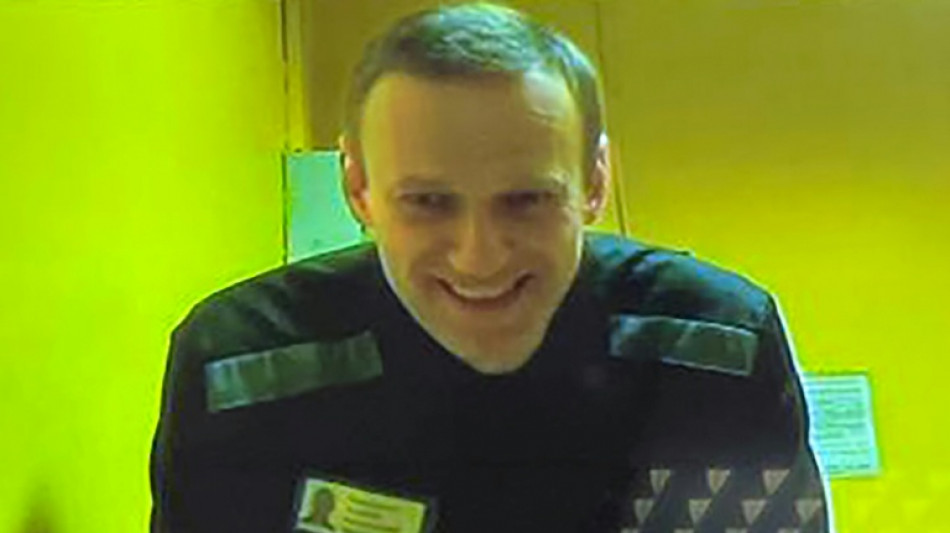
Poison killed Putin critic Navalny, wife says / Photo: © Moscow City Court press service/AFP

 Germany come from behind to beat Ivory Coast and reach World Cup last 32
 Clark clings to US Open lead as Scheffler charges
 Miotti kicks Montpellier past Stade Francais into Top 14 final

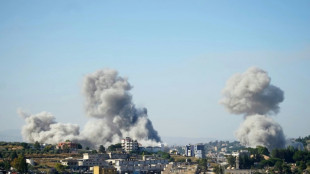 Iran says Hormuz closed as US-Iran deal falters over Lebanon
 Bagnaia scorches to Czech MotoGP sprint victory, Bezzecchi suspended
 Bolivia declares state of emergency, deploys military to quell protests
 Heavy metal: French town hosts medieval combat cage fights
 Dutch swat Sweden as Germany, Ivory Coast eye World Cup knockout rounds

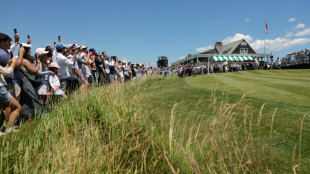 Scheffler opens with bogeys while McIlroy pars at windy US Open
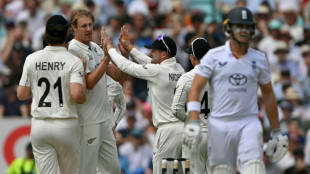
 Brazil turn corner but tougher World Cup tests await
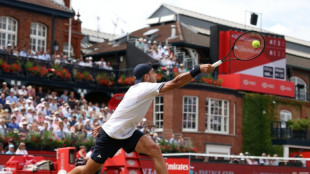 Cerundolo sees off Nakashima to set up Queen's final with Paul

 Fritz takes down Zverev again to reach Halle final
 Hendy quick-fire double sweeps Northampton to Prem title
 'Not ridiculous': US dreams of World Cup glory after big wins
 Kolbe star goal kicker as Springboks put 80 past Barbarians
 Bolivia declares state of emergency and begins removing protester roadblocks
 Cerundolo sees off Nakashima to reach Queen's final
 Jamieson double rocks England at start of record run-chase

 Funeral for art giant David Hockney already taken place: publicist
 Red heat alert issued for third of France, alcohol banned at music festival
 Iran says Hormuz closed again after Israel strikes Lebanon
 New Zealand set England record 463 to win second Test

 Diplomats hold US-Iran preparatory discussions at Swiss retreat
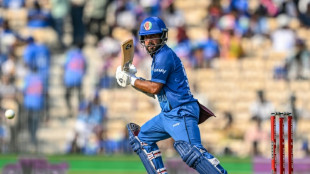 Shahidi hits ton but India bowl out Afghanistan for 218
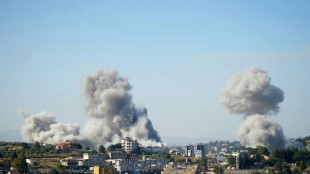 Israel strikes south Lebanon despite truce announced with Hezbollah

The wife of Russian opposition leader Alexei Navalny said Wednesday that laboratory analysis of smuggled biological samples found he was killed by poisoning while incarcerated at an Arctic prison in February 2024.
Navalny, President Vladimir Putin's most formidable critic for years, died in mysterious circumstances while serving a 19-year prison sentence on a string of charges widely seen as retribution for his opposition.
The charismatic anti-corruption campaigner had rallied hundreds of thousands across Russia in anti-Kremlin protests as he exposed the alleged ill-gotten gains of Putin's inner circle.
His allies allege he was murdered in prison, and Moscow has never fully explained the causes of his death, saying only that he fell ill while walking in the prison yard on February 16, 2024.
Before he was buried, his wife Yulia Navalnaya said his allies "were able to obtain and securely transfer biological samples of Alexei abroad".
"Laboratories in two countries came to the conclusion that Alexei was killed. Specifically: poisoned," she said in a video posted on social media.
She did not divulge details of what samples were obtained nor the results of the analysis, but she urged the labs to independently release their results and to specify which poison they believe was used.
Navalnaya also published unverified photos she said were of his prison cell after his body was removed, showing a pool of vomit on the floor, and claimed that testimony from prison officials said he had been convulsing on the floor.
Asked about the allegations in a daily briefing with reporters, Kremlin spokesman Dmitry Peskov declined to comment.
- 'Murder' -
Navalny was previously poisoned with a nerve agent of the Novichok type in 2020 while campaigning in Siberia and flown to Germany on an emergency evacuation flight, where he spent months recovering.
Jailed upon his return to Russia in January 2021, he was convicted on a series of charges, including "extremism".
From behind bars, he continued to campaign against Putin and spoke out against the invasion of Ukraine.
Russian authorities said he died suddenly after falling ill while walking outside after lunch in his prison colony.
Following Navalny's death, officials refused for days to release his body to his relatives, raising suspicions among his followers.
Navalnaya has maintained that her husband was killed on Putin's orders, an accusation she repeated Wednesday.
"Vladimir Putin is guilty of the murder of my husband, Alexei Navalny," she said.
The Kremlin denies the charges.
It escalated a crackdown against his allies and opponents even after his death, adding Navalnaya to a "terrorists and extremists" blacklist and sentencing his lawyers and journalists who followed his court cases to years in prison.
Most of his family and key allies have long lived abroad.
The Russian opposition, plagued by infighting, has struggled for relevance in exile following Navalny's death.
Public displays of opposition to Putin inside Russia have become exceptionally rare since he invaded Ukraine in February 2022.
The Kremlin introduced military censorship, ramped up its targeting of dissenters and critics and effectively outlawed criticism both of the Kremlin and the invasion.
R.Braegger--VB