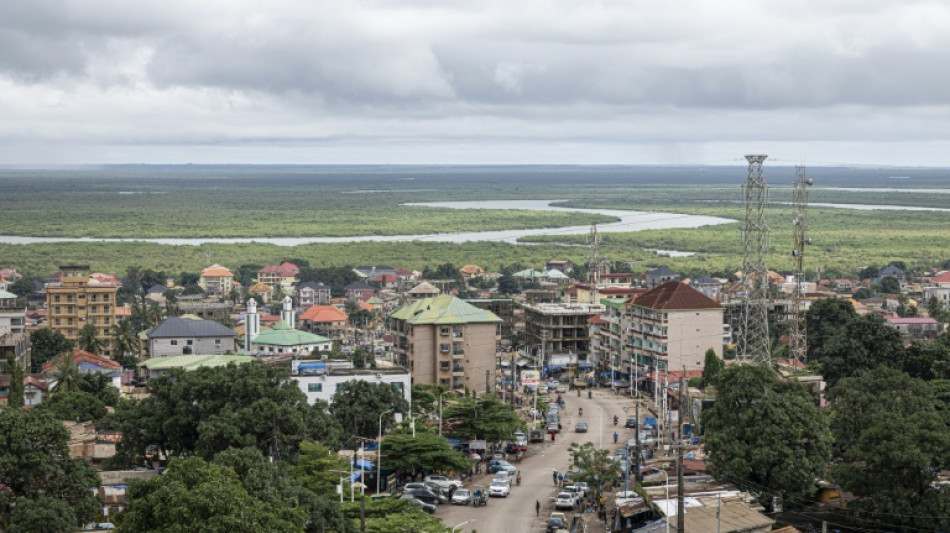
Junta accused of coveting power in crucial Guinea referendum / Photo: © AFP

 Top US court upholds $5mn Trump sex assault judgment

 Sinner survives scare to reach Wimbledon second round
 Six killed in German 'family tragedy' shooting: police
 Osaka makes spectacular Wimbledon arrival in kimono-inspired dress

 Bolivia removes 15-year dollar peg in bid to revive economy
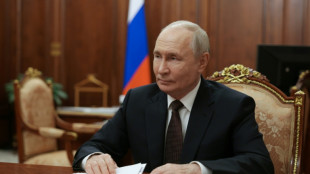 Russia jails veteran who threatened Putin with mutiny

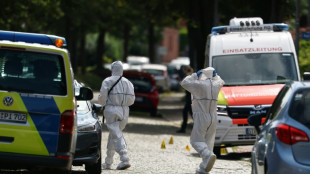 Five shot dead at German youth welfare site, two suspects arrested

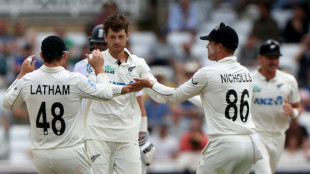
 New Zealand thrash England to deny Stokes a fairytale finish
 Tour de France 'ready to adapt' amid extreme heatwave

 Stocks rise, oil climbs after US-Iran clashes

 Man City hire Maresca to start new era after Guardiola
 Pegula slams Vondrousova's 'harsh' doping ban
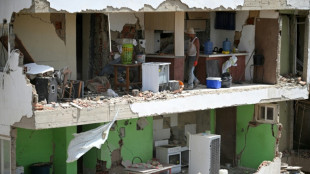 Chavez-era housing complex in ruins after Venezuela quakes
 Sinner, Djokovic set to start Wimbledon title charge
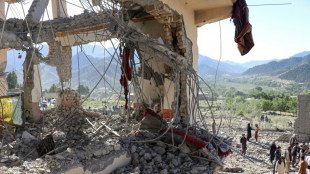 Pakistan launches deadliest attack on Afghanistan in months
 Strauss 'dumbfounded' by timing of Stokes's England exit

 Monza turn to Juric for return to Serie A
 Stocks mixed, oil edges up after US-Iran clashes

 Catholic traditionalists risk schism in Church
 Europe's deadly heatwave scorches eastern flank, takes aim at Ukraine

 PSG in talks with Leipzig to buy Ivory Coast star Diomande
 Venezuela search teams scramble as hope fades of finding quake survivors
 Bondi Beach attack survivor tells of 'trauma' of online AI images
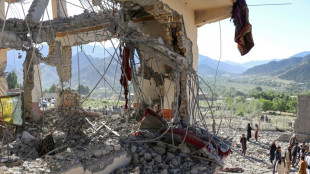 Pakistan strikes on eastern Afghanistan kill dozens
 Cape Verde, Africa's outlier in LGBTQ tolerance
Four years after the military seized power, Guineans will finally vote on a new draft constitution that would pave the way for elections but also permit the country's junta leader to run for president, in a referendum boycotted by the opposition.
The Sunday vote, which Guineans and the international community have been awaiting for years, opens the way for stalled political elections in the west African nation.
The country has been ruled with an iron fist by junta chief General Mamady Doumbouya since he overthrew elected civilian president Alpha Conde in 2021.
Some 6.7 million Guineans will be able to cast a ballot, out of a population of approximately 14.5 million people.
Among the poorest countries in the world despite having rich natural resources, such as bauxite and iron ore, Guinea has a long history of coups and violent authoritarian regimes.
Under international pressure, Guinea's military initially pledged to return power to civilians before the end of 2024.
Staging a referendum has allowed the junta to deflect demands from the international community and donors to hold the election for a civilian government.
Guinea's authorities are promising presidential and legislative elections before the end of the year, but have not yet set a date.
All signs point to a run by Doumbouya, despite his initial promise not to stand for election and to return power to the people.
"Since 2021 there has been no electoral contest of any kind, there haven't been any votes, the government has delayed holding elections," Franklin Nossiter, Sahel analyst at International Crisis Group, told AFP.
"Although when he took power Mamady Doumbouya was very clear that he was not going to hold on to power... it seems pretty clear (a run for office is) the direction where things are going," Nossiter added.
If adopted, the new constitution would replace a "transition charter" established by the military government, which had prevented the junta's leaders, government members and heads of institutions from standing in elections.
The stipulation does not exist in the draft constitution, thereby paving the way for Doumbouya's run.
It remains to be seen how many voters will cast a ballot given the boycott, and when results will be released, with the junta not having given a date.
- Blanket of silence -
The authorities "have no intention of going anywhere", Nossiter said.
The opposition has called for a boycott of the referendum, denouncing the vote as an attempt by Doumbouya to seize power.
Meanwhile a blanket of silence has fallen on dissent and opposition in Guinea as the junta has increased restrictions on freedom.
Since 2022, the junta has banned demonstrations and has arrested, prosecuted or pushed into exile several opposition leaders, some of whom were victims of forced disappearances.
On August 23 the junta suspended three of the country's main opposition parties for three months.
Several media outlets have additionally been suspended and journalists arrested, creating a climate of fear among the media.
The draft constitution contains 199 articles and is titled "A New Constitution, a Constitution that Reflects Us and Unites Us".
Many of the articles are progressive: One establishes a High Court of Justice to try presidents and members of the government in order to fight impunity.
Another creates a Senate to balance power, and yet another promotes gender parity, with a mandatory quota of at least 30 percent women in decision-making and elected positions.
"Guineans aspire to have a modern country," Prime Minister Amadou Oury Bah said in an interview with AFP.
"In terms of democratic progress, the constitutional project has taken into account all the demands that have more or less been made by society, both political and civic" in recent decades, Bah said.
But the draft also contains items that have been heavily criticised by the opposition.
By stipulating that candidates must be between 40 and 80 years of age and have their primary residence in Guinea, it effectively excludes two of the main opponents.
Former president Conde, 87, is living in exile in Istanbul, and former prime minister and opposition leader Cellou Dalein Diallo, age 73, lives in exile in Dakar and Abidjan.
The government's "yes" camp and several ministers have been campaigning across the country for weeks. Posters bearing Doumbouya's image are visible throughout Conakry, the capital.
Conversely, scant trace of the "no" campaign can be found.
L.Maurer--VB