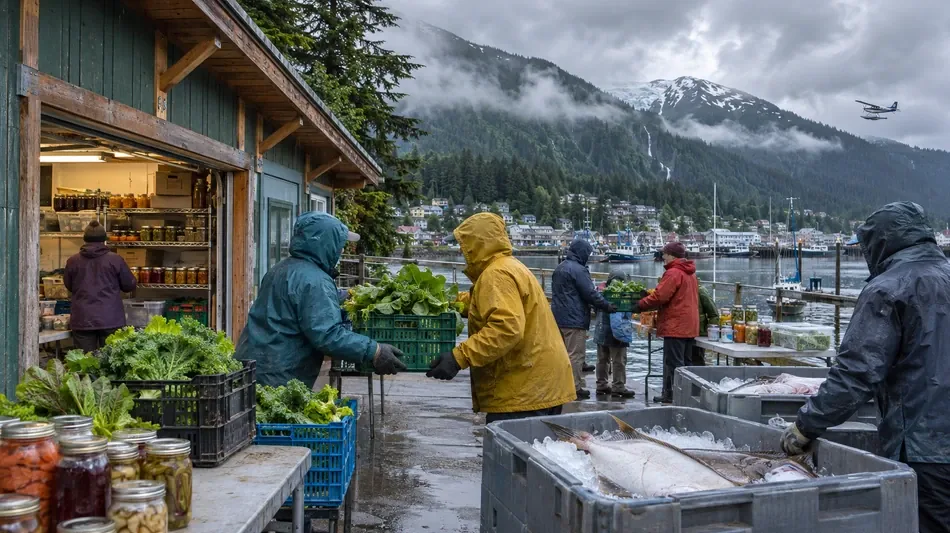
Juneau food network combines difficult supply routes with deep sharing traditions

 Freshways milk-price cut deepens pressure on UK dairy farms

 Labour and National remain virtually tied as New Zealand vote count advances

 The Good Daughter adapts Karin Slaughter thriller with Rose Byrne and Meghann Fahy

 Heavy-lift drone evacuates wounded Ukrainian soldier from frontline kill zone

 Morrison says West Brom recovered after pressure from successive derby losses

 Britain considers 2027 state visit for Ukraine’s Zelensky

 Arizona Democrats Secure Historic Trifecta with New Legislative Leadership

 Carney Welcomes U.S. Trade Reversal After Democratic Midterm Victory

 Armenian FM Discusses EU Accountability for Palestinian Rights in Madrid

 Trump and Vance Pursue Secret Diplomacy with Iran Amid Military Pressure

 Classic Car Values Surge: De Tomaso Vallelunga Leads 190% Gain

 Microsoft Ends Oracle AI Computing Rental Deal Amid Cloud Strategy Shift

Alaska’s capital relies on barges, aircraft and community exchange to feed residents in a region with no road connection to the wider state network.
Juneau’s only highway ends about 40 miles north-west of the city, so most commercial food reaches its population of roughly 35,000 by water or air. Salt and Soil, operated by the non-profit Ecotrust, functions as an online farmers’ market and food hub, coordinating deliveries by ferry, barge and seaplane.
The often-cited claim that Alaska imports 95% of its food refers to products bought through the market and does not capture subsistence harvests or food shared without payment. State estimates indicate Alaskans gathered about 46 million pounds of wild food in 2014, the latest comprehensive figure.
Tlingit residents and other local communities maintain systems in which fish, game, plants and other foods circulate through extended families. Those networks provide an important layer of resilience in a city with little arable land, a short growing season and few commercial farms.
E.Gasser--VB