Pakistan Demands Grant-Based Climate Finance at COP31 to Avoid Debt Trap

 Pakistan Demands Grant-Based Climate Finance at COP31 to Avoid Debt Trap

 South Korea Proposes Fourth Delay of Cryptocurrency Gains Tax to 2029

 ASIC Fines Mona Museum Owner $198,000 for Late Financial Report

 Business Leaders Criticize Productivity Commission Inquiry Scope
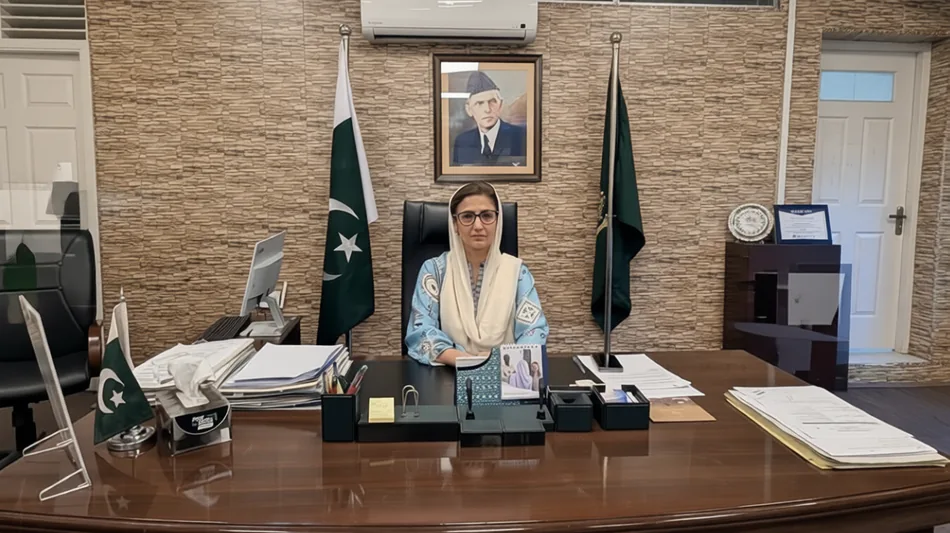
Pakistan is preparing to present a unified demand for "climate justice" at the upcoming COP31 summit, arguing that international financial support for disaster recovery and adaptation must be provided as grants rather than loans. State Minister for Climate Change Shezra Mansab Kharal stated that the country’s existing debt burden makes additional borrowing unsustainable, highlighting the urgent need for accessible, non-debt-creating finance for developing nations most affected by climate-induced disasters.
Pakistan is preparing to present a unified demand for "climate justice" at the upcoming COP31 summit, arguing that international financial support for disaster recovery and adaptation must be provided as grants rather than loans. State Minister for Climate Change Shezra Mansab Kharal stated that the country’s existing debt burden makes additional borrowing unsustainable, highlighting the urgent need for accessible, non-debt-creating finance for developing nations most affected by climate-induced disasters.
The 2026 conference, described by its presidency as the "Implementation COP," is expected to translate previous pledges into measurable results. However, Kharal noted that despite Pakistan’s early advocacy for the Loss and Damage Fund established at COP27 in Sharm El-Sheikh, the country has yet to receive any direct disbursements from it. The fund’s office, now located in Manila, has invited countries to submit project proposals. Pakistan submitted two requests totaling USD 39.9 million, though each is capped at USD 20 million by the fund’s guidelines.
"Today it is 2026, and the people who were supposed to benefit from the funds are still waiting," Kharal said in an interview at her ministry office in Islamabad. "The reason [Pakistan was] championing the creation of that fund was because we needed much, much more than what we could [cover] ourselves."
Kharal emphasized the distinction between international pledges, actual contributions to the fund, approved project financing, and final disbursements to individual countries. While she acknowledged that other agencies such as the Green Climate Fund, the Global Environment Facility, and the Adaptation Fund have provided support, she described the sums pledged specifically for loss and damage as "paltry and insignificant" compared to Pakistan’s needs.
The minister pushed back against narratives suggesting that developing countries fail to access funds due to poor governance or lack of transparency. "It’s a misconception that because there was not enough transparency or openness, funds or grants we got were taken back," she said. While recognizing the importance of transparency, Kharal argued that the primary barriers are structural. She described global finance and accessing international climate finance as "very difficult, prolonged and complex processes" for developing nations.
Developing countries must navigate extensive accreditation procedures, produce high volumes of technical documentation, and incur significant project preparation costs before approval. These hurdles delay finance even when needs are urgent, Kharal said, calling for a major rethinking and redevelopment of the global finance architecture.
Pakistan, which contributes less than 1% of global greenhouse gas emissions, remains one of the most vulnerable nations to climate impacts. The country’s diverse terrain, ranging from the cryosphere to coastal regions, has exposed it to floods, glacier lake outburst floods, cloudbursts, and urban extreme climate events. These disasters have placed an enormous economic burden on the nation, diverting resources that could have been used for health, education, or other development projects.
Kharal pointed to recent climate events in neighboring regions as evidence that climate-induced disasters do not respect borders. She cited the United Nations Framework Convention on Climate Change’s (UNFCCC) warning that the world is unlikely to keep global temperature rise under the 1.5°C threshold agreed upon in the Paris Agreement. "The [implications] are disastrous, as we recently witnessed with the Nepal floods," she said, noting that the Himalayan-Karakoram range spans eight countries and that similar events could occur in Pakistan or others.
At COP31, Pakistan will advocate for the principle of "common but differentiated responsibilities and respective capabilities" under the Paris Agreement. This framework acknowledges that while all nations share a common goal of limiting temperature rise, developed and developing countries have different capacities and historical responsibilities. Kharal stressed that expecting developing countries to bear the burden of climate impacts, which should primarily rest on developed nations, is unfair.
Pakistan’s National Determined Contributions (NDC) 3.0 outlines a need for USD 565.7 billion in investment by 2035 to address its climate vulnerability. The country has projected reducing its greenhouse gas emissions by 50% by 2035, with 17% of that reduction to be managed domestically and 33% conditional on international support. "We firmly believe climate finance should not aggravate our debt burden that is already weighing so heavily upon us and other developing countries," Kharal said.
She distinguished between financing for commercially viable mitigation projects, such as renewable energy and industrial efficiency, which can attract private capital and concessional loans, and financing for adaptation and loss and damage. Flood protection, glacier monitoring, early warning systems, and community protection are essential public services that do not generate financial returns, she explained, requiring grant-based or highly concessional financing.
"We are going to say a firm ‘no’ to more loans and more debt collection," Kharal declared. While remaining open to highly concessional loans if necessary, the government’s top priority is grants. Pakistan will also advocate for mechanisms to delay regular debt payments when countries face climate-induced disasters, though she clarified that this does not imply writing off loans entirely. Instead, the country supports innovative financial instruments like debt swaps.
Kharal highlighted several domestic priorities aligned with these international demands. On smog and air pollution, particularly in Punjab, Pakistan is prioritizing cleaner transport, improved industrial emission standards, air quality monitoring, and agricultural residue management. The World Bank supported the Punjab Clean Air Program with USD 300 million in financing.
In Gilgit-Baltistan, efforts are strengthening glacier monitoring, hazard mapping, early warning systems, and community preparedness to address glacial lake outburst floods. Agriculture, a backbone of the economy, is also under focus, with initiatives for climate-resilient crop varieties, efficient drip irrigation, improved water management, and heat- and drought-adaptive farming practices.
The National Adaptation Plan of Pakistan and NDC 3.0 provide frameworks to induct climate resilience into national and provincial development plans. Kharal noted that the Ministry of Climate Change and Environmental Coordination is working with the Energy Ministry on a roadmap for a just green transition of energy resources. The Planning Ministry’s Uraan Pakistan scheme, a five-year national economic transformation plan, includes a special green component.
Additionally, climate tagging has been implemented in the overall budget to ensure every project in the Public Sector Development Programme has a green component. The State Bank of Pakistan has worked to establish a green taxonomy to define environmentally sustainable economic activities. Kharal concluded that addressing climate change requires intersectional work across ministries and provinces, strengthened by multilateral cooperation.
Despite these efforts, Kharal identified a growing gap between required resources and available capacity, citing a lack of technical expertise and institutional management as ongoing challenges. As COP31 approaches, Pakistan’s stance remains clear: climate finance must be accessible, grant-based, and designed to support recovery without exacerbating the debt crises facing vulnerable nations.
R.Kloeti--VB