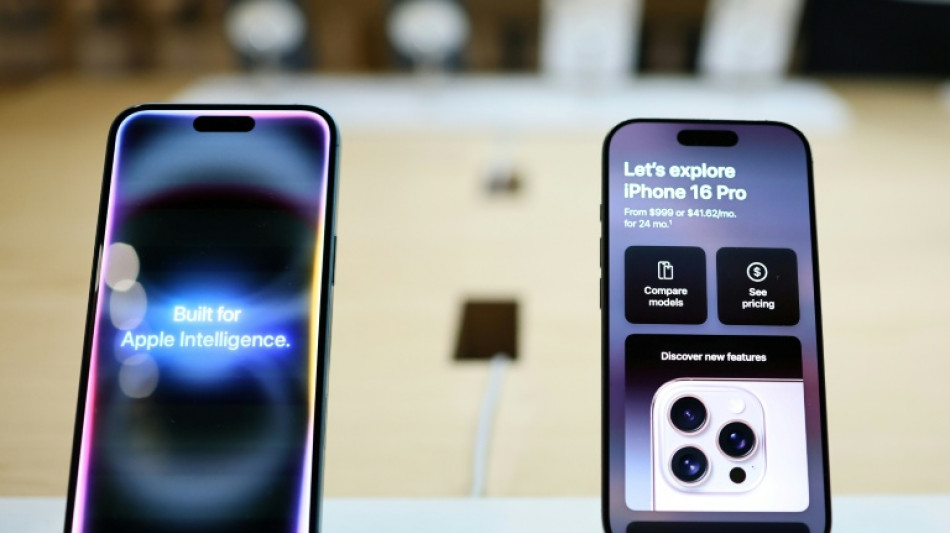
Don't panic: UK phones to sound at once in emergency drill / Photo: © GETTY IMAGES NORTH AMERICA/AFP

 Trump blames 'terrible vandals' for Washington pool renovation woes

 Man charged over suspected anti-Muslim attacks in Edinburgh
 Britain's King Charles to reveal personal tax bill: reports

 Fly-half Love ready for All Blacks start after Super Rugby heroics
 Saudis seek to repeat Argentina World Cup 'miracle' against Spain

 Nagelsmann says Germany has higher ambitions than advancing to knockout stage
 US and Iran set for new talks after delay and deadly strikes

 Germany into World Cup last 32 after late comeback, Dutch thrash Sweden

 Albanian protests against Trump-linked resort swell

 Burn dons cowboy boots as England unwind at World Cup

 France's Saliba says playing through the pain at World Cup
 Counter-terror cops probe suspected anti-Muslim 'attacks' in Edinburgh

 Clark begins with bogey as McIlroy charges at US Open
 Specter of military escalation hangs over Colombia vote

 Jamieson strikes as New Zealand eye series-levelling win despite Root heroics

 Netherlands thump Sweden in Houston to get World Cup liftoff

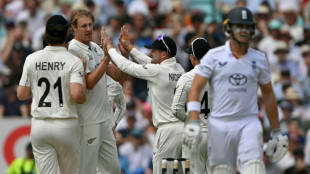 Jamieson strikes as New Zealand eye series-levelling win against England

 Ronaldinho coming out of retirement to join Italian 3rd division side

 Real Madrid say no contact with Bayern's Olise

 Heartbreak for Japanese ace Satono Reve as Almeraq wins Royal Ascot thriller

 Injured Doris out of Ireland's Nations Championship squad

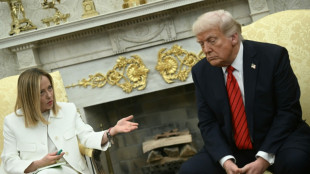 Meloni hits back as Trump escalates G7 photo spat

 Pogacar pips Van der Poel to Swiss Tour TT win
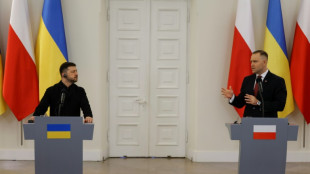 Ukraine's Zelensky, top officials return Polish awards in WWII row

 Spanish judge bans PM's wife from leaving country
Tens of millions of mobile phones across the UK will blare a siren sound at the same time on Sunday as part of government efforts to better prepare for national emergencies.
The nationwide test comes as officials seek to strengthen the country's resilience amid more frequent extreme weather events and concerns around Russia's war in Ukraine.
At 3:00 pm (1400 GMT), most of Britain's 87 million mobile phones and tablets will emit the noise and vibrate for about 10 seconds, the government has said.
Users will also receive a message saying the warning is only a drill, in what is just the second test of the national emergency alert system following the first in 2003.
"Just like the smoke alarm in your house, the fire alarm in this building, it's important to test these things now and again," Pat McFadden, the minister responsible for the system, told BBC radio on Thursday.
The government has in recent weeks embarked on a publicity drive to minimise any shock caused, including through announcements at rail stations and signs on motorways.
It picked the date and time to try to minimise disruption -- for example there are no top-flight men's football matches this weekend due to a round of international fixtures.
It has no control over events like weddings, funerals, or children's birthday parties, however.
"There's no perfect time to do these things," conceded McFadden, adding: "There will be something that is disturbed as a result of this."
The government has used the system to issue real warnings to local areas five times in the past two years.
In January, some 4.5 million people in Scotland and Northern Ireland received an alert during Storm Eowyn after a red weather warning was issued, meaning there was a risk to life.
A 500-kilogram (1,100-pound) unexploded Second World War bomb found in a back garden in southwest England triggered a warning to some 50,000 phones in February last year.
The system is designed for use during the most likely emergencies to affect Britain where there is the possibility of a loss of life.
Warnings would also be transmitted on television, radio and where appropriate by knocking on doors.
Similar alerts are issued in the United States and Japan.
Only devices connected to 4G or 5G networks will get Sunday's alert.
It comes after the government published a "Resilience Action Plan" in July which cited the upheaval of the coronavirus pandemic, US President Donald Trump's tariffs and cyber attacks.
In the foreword, McFadden also mentioned "war on the continent of Europe that catalysed the largest rearmament of European powers since World War II".
"The whole of the UK's national resilience -- our economy, defences and biosecurity -- is being tested like never before," he wrote.
O.Schlaepfer--VB