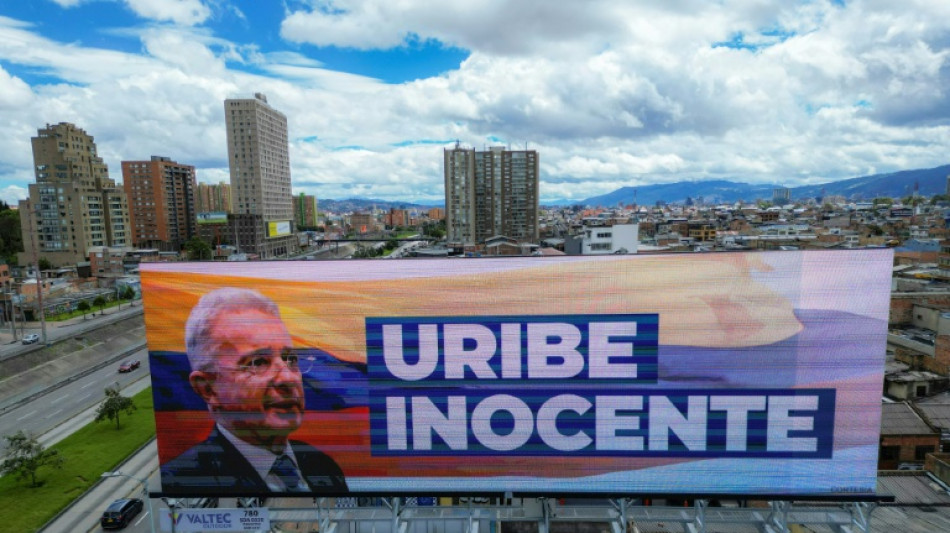
Alvaro Uribe: Colombia's first ex-president convicted of a crime / Photo: © AFP

 Fear and anger brew inside Meta amid AI frenzy
 After 250 years, the 'American dream' is tarnished but alive

 'I'm going to stay calm': 48 hours under the rubble in Venezuela
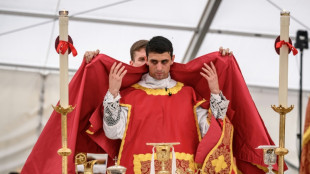 Breakaway Catholic sect defies Vatican again by ordaining bishops
 Mexico v Ecuador World Cup game delayed by one hour: FIFA
 Talks in Qatar after US-Iran deal: What we know
 Tuchel refuses to dampen England World Cup expectations
 Mbappe hails unity as France rally around Deschamps at World Cup
 Mbappe fires France into World Cup last 16, Norway advance
 Belgium fully fit ahead of Senegal tie at World Cup, says Garcia
 Tepid outlook weighs on Nike despite tariff refund boost
 DR Congo have 'nothing to lose' in England World Cup clash
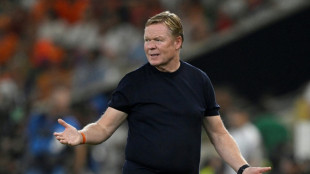
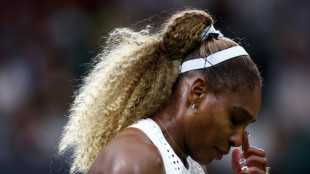 Valiant Serena beaten on Wimbledon return, Swiatek survives scare

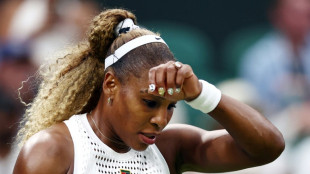 Serena beaten at Wimbledon in first singles match in four years
 Dutch football chiefs condemn online racism after World Cup exit
 Police hunt for Monaco bomber after Ukraine-born tycoon wounded
 CIA boss compares cutting-edge AI to nuclear weapons
 'Any team can beat you', warns Ruiz as Spain seek end to World Cup woe
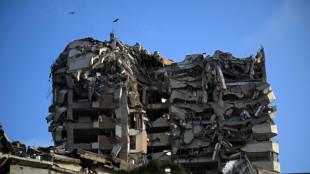 Venezuela quake survivors seek food, shelter as toll rises to nearly 2,000
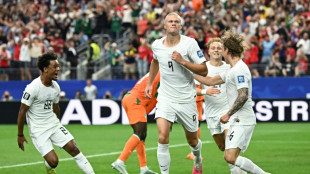 Haaland scores winner to send Norway into last-16 Brazil clash
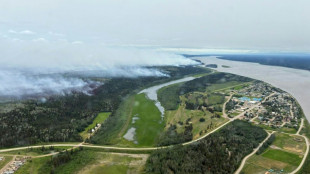
 US Treasury sanctions target alleged drug cartel-linked fuel smuggling ring
 LeBron James to leave Lakers to play 24th NBA season
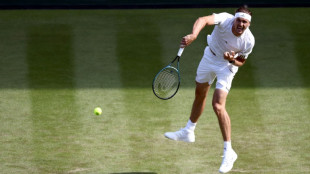
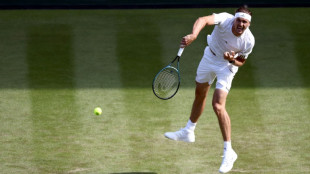 Zverev wins in four sets to reach Wimbledon round two
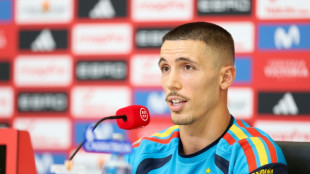 Grimaldo realises goal of Atletico Madrid move from Leverkusen
 US Supreme Court lifts campaign spending restrictions ahead of midterms
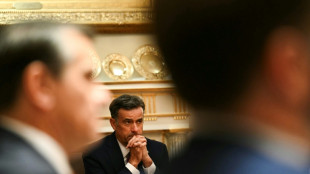
Alvaro Uribe, president of Colombia from 2002 to 2010, was wildly popular in rightwing sectors for his war on leftist guerrillas during a particularly vicious period of the country's six-decade-old conflict.
Today, opinion polls suggest the 73-year-old remains the most trusted politician in the South American country confronting an upsurge in violence.
Born to a landowner in the western Antioquia department, Uribe was elected to Colombia's highest office at the height of the conflict between guerrillas fighting poverty and political marginalization, rightwing paramilitary groups set up to crush the leftists, and the military.
He is himself accused of having had ties to paramilitary fighters who often had the backing of agrarian elites. Uribe denies the claims, which are at the heart of his criminal conviction Monday for witness tampering.
As president, Uribe adopted a hard line against the Marxist-inspired Revolutionary Armed Forces of Colombia (FARC), which he accused of killing his father in a botched 1983 kidnapping attempt.
With US backing for his campaign, several FARC leaders were killed on Uribe's orders and soldiers were deployed en masse in operations that gave many Colombians a sense of security, although the violence never diminished.
Uribe, a US- and British-educated lawyer who prides himself on being a workaholic who cannot sing, dance or tell jokes, counts a passion for horses among his few distractions.
He is a staunch Roman Catholic who practices yoga in the morning and prays at night.
Uribe entered politics after his father's death, serving as a senator, mayor of his hometown Medellin, and governor of Antioquia -- Colombia's most populated department.
As president, he successfully pushed a constitutional change that allowed him to be re-elected for a second consecutive term -- a reform later overturned by Colombia's highest court.
Arguing he needed continuity to see out his battle against armed insurgents and the drug trade they controlled, Uribe also tried, unsuccessfully, to secure a third presidential term.
- Betrayal -
Uribe earned praise from Washington for his tough anti-drug policies and strong economic growth as president.
Detractors call him an authoritarian who failed the poor.
After his presidency ended, Uribe served another term in Congress from 2014-2020 and has continued campaigning for the political right and his Democratic Center party since then.
He was instrumental in the choice of his successor: Juan Manuel Santos, who would go on to win the Nobel Peace Prize for his efforts towards a peace deal with the FARC in 2016.
For Uribe, this was the ultimate betrayal.
His vehement rejection of the agreement that saw the FARC down arms in 2017 has been gaining ground as recent peace efforts have failed under President Gustavo Petro -- Colombia's first-ever leftist president, in office since 2022.
- Divisive figure -
A man of short posture and deliberate speech, Uribe is a divisive figure: loved and hated in equal measure.
He is known for losing his temper, once being recorded insulting a journalist and threatening physical violence.
Even fervent detractors recognize his oratory and administrative skills.
But his legacy has been tainted by numerous corruption and espionage claims swirling around members of his entourage.
Uribe is under investigation for more than 6,000 civilian executions and forced disappearances allegedly committed by the military under his command.
He has also testified in a preliminary probe into a 1997 paramilitary massacre of subsistence farmers when he was governor of Antioquia from 1995 to 1997.
During his life, Uribe claims to have survived 15 assassination attempts, including a rocket attack by former guerrillas on the day of his first inauguration.
Uribe is married and has two grown sons who have had to answer claims that they rode on his presidential coattails to become successful entrepreneurs.
His conviction on Monday made him the first former Colombian president to be found guilty of a crime.
L.Stucki--VB