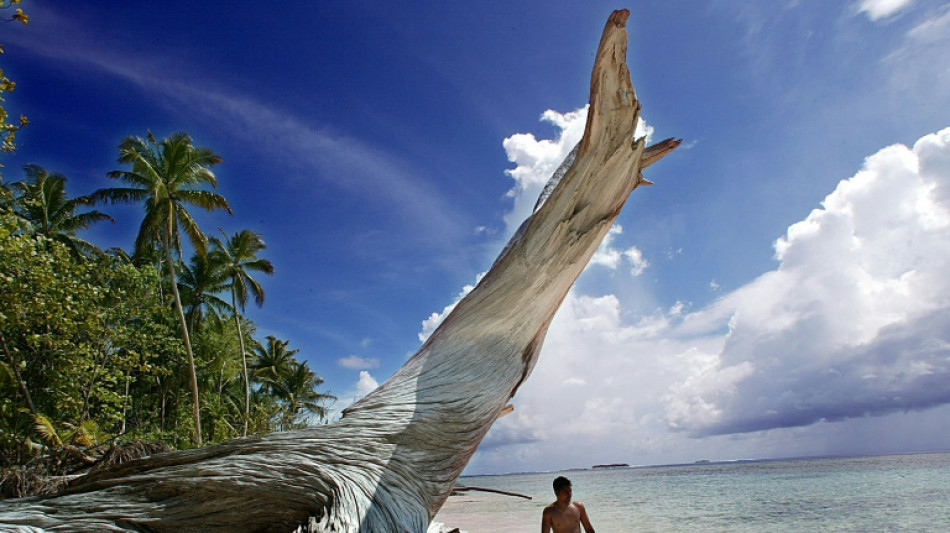
'We don't want to become a memory': minister of endangered Tuvalu / Photo: © AFP/File

 Mancini brings nine newcomers into the first squad of his Italy comeback

 Czechs level Davis Cup tie against USA as South Korea eye Finals

 New France boss Zidane confirms Mbappe as captain after naming first squad
 California governor signs order to explore AI 'kill switch'

 Head leads run spree as Australia win Zimbabwe ODI series

 In-form Raphinha wants to finish career at Barcelona

 Warren Buffett steps down as Berkshire Hathaway chairman
 Carrick confident Man Utd can 'work through' tough time

 Mbappe ends Nike partnership to join Swiss brand On

 Liverpool boss Iraola puts Bournemouth love affair on hold

 'A disaster' if Man City do not win says Maresca after flawless start

 Kerry James Marshall: American 'blackness' painter celebrated in Europe

 Spain coach De la Fuente offers 'full support' to people of Ceuta

 Russia seizes assets of Nestle, French firms over West's Ukraine support

 England can build on World Cup 'spirit', says Tuchel

 UNESCO can be 'moderator' in AI debate: chief to AFP

 Infantino 'must go', says German FA vice-president

 Russia seizes assets of Nestle, French firms

 Japan's busiest rail station tests robot bins

 Anthropic says AI systems moving towards building themselves

 Asian stocks boosted by falling oil, yen weakens after BoJ rate hike

 Pakistan court blocks expulsion of Afghan medical college students

 Athletes 'can't take it any more' as Asian Games issues mount
 Allen lights up Bills' new stadium with 41-31 win over Lions

 Afghan medical students in Pakistan hope court stops college expulsions
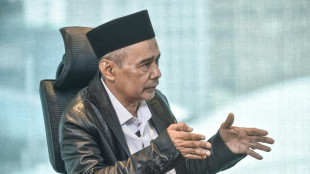
Climate action is a "moral responsibility" for wealthy polluting nations, Tuvalu's climate minister told AFP Friday, as the low-lying island nation pursues UN recognition for its heritage threatened by rising seas.
The Pacific island nation is one of the places most threatened by climate change, to the point that it might become uninhabitable this century if planet-heating emissions are not constrained.
Tuvalu has already agreed a landmark climate migration deal with Canberra that provides a way for its citizens to obtain visas to live and study in Australia.
It has launched a series of initiatives to ensure its heritage and identity live on even if its physical territory is swallowed by the sea.
"For us Tuvaluans, disappearance is not part of who we are," climate minister Maina Talia told AFP.
"Resilience is always part of our being, it's part of our DNA," he added.
But he expressed alarm at a lack of climate ambition from wealthy nations and at new fossil-fuel development -- particularly by Australia, whose bid to host next year's UN climate talks has been backed by the Pacific islands.
"It should be a moral responsibility and we should hold them accountable," he said.
- A 'digital nation' -
Rising sea levels in Tuvalu are already causing saltwater to bubble up through the ground during high tides even in the middle of Funafuti atoll, the nation's capital.
In response, local people have already created raised gardens so that they can continue to plant.
The country has started painstakingly building a 3D map of its remaining land, part of a project to become the world's first "digital nation".
And it has launched an effort to inscribe the islands' cultural landscape -- its oral traditions, sacred sites and communal meeting halls -- on the UN's World Heritage List.
The application process is likely to take several years, but Talia argued: "It is important, because we don't want Tuvalu to become a memory."
While the country has agreed the migration plan with Australia -- which Canberra says is "the first agreement of its kind anywhere in the world" -- the idea was not to encourage a large-scale population movement, he argued.
"(We have) no intention at all to relocate the country to Australia. The whole idea is just a manageable migration pathway," said Talia.
Nor does the programme absolve Australia -- a major fossil fuel exporter -- of its climate obligations, he added. "It should not be an excuse for Australia."
- 'It's about survival' -
Talia urged all major carbon-emitting nations to finalise "strong" new climate plans in the coming weeks.
The United Nations has urged all countries to submit their ambitious 2035 emissions-reduction targets -- and detailed blueprints for achieving them -- by the end of the month.
But major polluters including China, India, and the European Union are still to submit their plans, which are seen as a crucial benchmark for accountability.
For wealthy nations, this process is "all about numbers", said Talia.
But for Tuvalu, barely above sea level, "it's about (our) very survival".
A.Kunz--VB