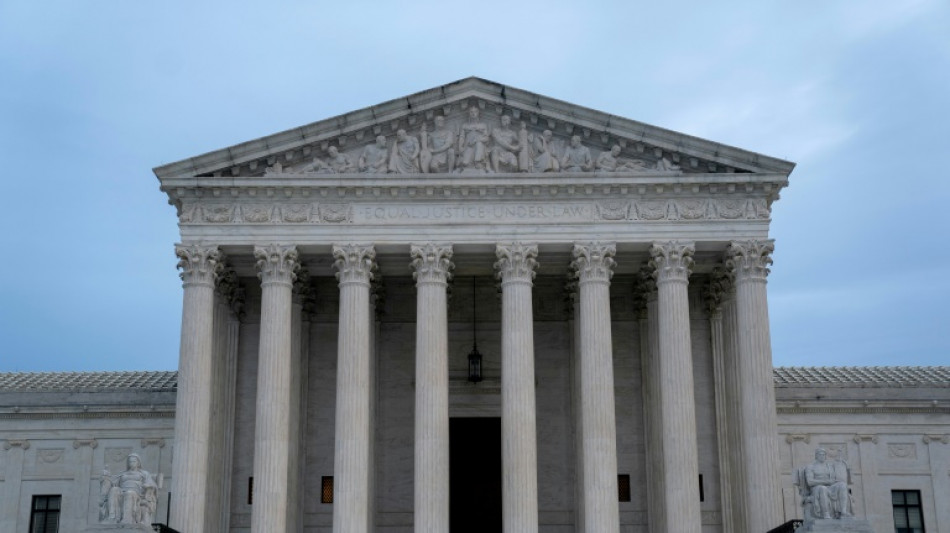
US Supreme Court deals setback to clean water law / Photo: © AFP

 Kennedy Center: future unclear for iconic Washington arts hub

 Trump claims 'infinite' Greenland security deal with Denmark

 Helicopters battle wildfire threatening Ecuador's capital

 Brentford batter Chelsea to undo Alonso's promising start

 Kane hits Bundesliga century as Bayern rout Union
 Trump says CNN, MS NOW, Politico banned from White House
 Hushing and hedging: US companies retreat on climate
 Springboks to face Fiji before 2027 Rugby World Cup

 Nigeria miners struggled to breathe in cell before 37 died: survivors

 McIlroy on the charge at PGA Championship as Reed withdraws
 McIlroy on the charge at PGA Championship

 Crisis-wracked Volkswagen warns of 10-bn-euro hit to profits

 Costa Rica's Grynspan tops third informal poll for UN chief: diplomat

 Stock markets retreat after central bank rate hikes

 Russia labels director of Cannes Grand Prix winner a 'foreign agent'

 Macron warns of Russian 'hybrid' threat after meeting presidential hopefuls

 UN holds third informal poll for new chief
 Kulusevski return can spark Spurs: De Zerbi

 Shakira to cap off world tour with Madrid 12-gig run

 Isolated Syrian-Druze city blames Damascus for shortages
 Isolated Syrian-Druze city shortages

 Dutch drop Depay for Germany match in Xavi's first pick

 Ronaldo named in Portugal squad for Nations League

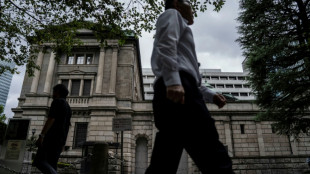 Stock markets diverge after central bank rate hikes

 Anti-Assad music star makes triumphant return to Syria

The US Supreme Court dealt a blow on Thursday to the federal government's authority to regulate wetlands under a landmark anti-pollution law.
The nation's highest court ruled in favor of a couple who were stopped by the Environmental Protection Agency (EPA) from building a home near Priest Lake in Idaho because the property abuts federally protected wetlands.
The EPA said the Sacketts needed a permit, but the couple's lawyers argued that the 1972 Clean Water Act (CWA) applies only to "traditional navigable waters" and they should be allowed to proceed.
The court, in a 5-4 vote, said the CWA only concerns wetlands that are connected to larger bodies of water such as oceans, rivers and lakes.
"We hold that the CWA extends to only those wetlands with a continuous surface connection to bodies that are 'waters of the United States' in their own right," Justice Samuel Alito said in the majority opinion.
"In sum, the CWA extends to only wetlands that are 'as a practical matter indistinguishable from waters of the United States," Alito wrote.
President Joe Biden and environmental groups said the ruling was a severe setback to the anti-pollution protections enshrined in the Clean Water Act.
"The Supreme Court's disappointing decision in Sackett v. EPA will take our country backwards," Biden said in a statement.
"It puts our Nation's wetlands – and the rivers, streams, lakes, and ponds connected to them – at risk of pollution and destruction, jeopardizing the sources of clean water that millions of American families, farmers, and businesses rely on," the president said.
"My team will work with the Department of Justice and relevant agencies to carefully review this decision and use every legal authority we have to protect our Nation's waters for the people and communities that depend on them."
The Sierra Club denounced the case as a "corporate polluter-backed effort to dismantle the Clean Water Act by narrowing the definition of the waters of the United States.
"The Court's decision will open millions of acres of wetlands – all formerly protected by the Clean Water Act – to pollution and destruction," the Sierra Club said in a statement.
The ruling by the conservative-dominated court comes nearly a year after it said the EPA cannot issue broad limits on greenhouse gases, sharply curtailing the power of the Biden administration to battle climate change.
The high court, in a 6-3 vote, found that the EPA did not have the power to set sweeping caps on emissions from coal-fired power plants, which produce nearly 20 percent of the electricity consumed in the United States.
O.Krause--BTB



