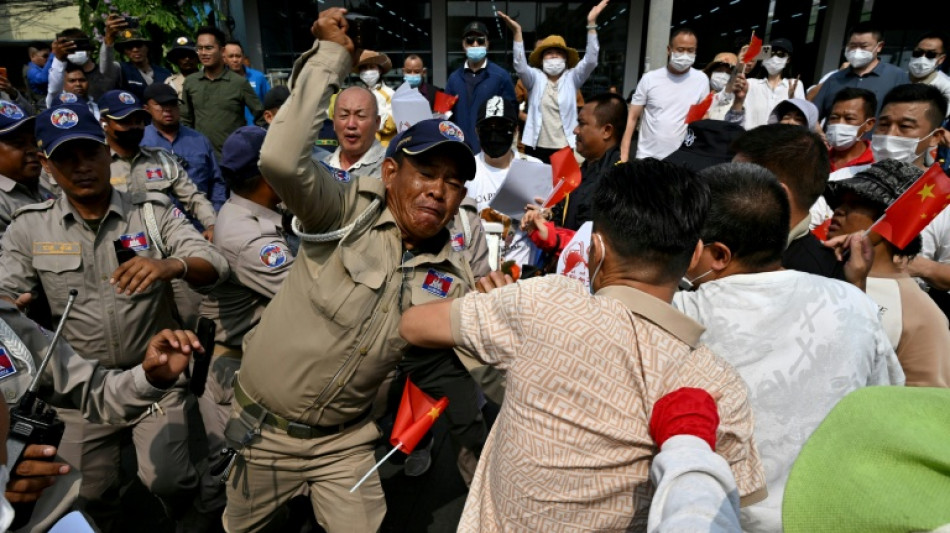
Cambodian PM's cousin says owned 30% of scam-linked firm / Photo: © AFP/File

 US lose 3-2 to Turkey after last-gasp strike

 Venezuelans search for survivors after quakes kill at least 235

 French teen in Singapore straw-licking case to enter plea

 Red rocks yield coveted minerals in DR Congo
 Sony discontinues Japan sales of robot puppy 'aibo'
 Tunisia boss Renard has 'no regrets' despite World Cup flop

 Asian stocks drop again as rollercoaster week draws to close

 Court battle plays out over Wimbledon tennis expansion plan

 List of worst World Cup performances

 NZ internal report warns of Chinese military forays in Pacific

 Dutch march into World Cup knockouts as group winners

 Ivory Coast see 'no limits' after reaching World Cup knockouts for first time

 Germany committed 'tactical suicide', says Nagelsmann

 Quake-hit Venezuela's hospitals care for children left alone

 Cole grabs PGA Travelers lead with Scheffler one back

 De Silva century rescues Sri Lanka in first Test

 Pepe steers Ivory Coast into World Cup last 32 as Curacao go home

 WNBA suspends Thomas for fist to Clark's throat

 UK'S King Charles breaks precedent to reveal £30 mn paid in taxes since 2022

 Yoon grabs early Women's PGA Championship lead with Korda in hunt

 Will Taylor Swift and Travis Kelce wed in New York? Clues abound

 Lawyer says Vondrousova 'should appeal' against four-year ban

 Hospitals raise alert as heatwave slams Europe

 'Alligator Alcatraz' detention center shuts in US: official

 Tennis great Evert says 'relentless' cancer has returned
A cousin of Cambodian Prime Minister Hun Manet said Wednesday he owned a 30 percent stake in a digital payments platform linked to cyberscams and money laundering and sanctioned by Washington.
The US government last year accused Huione Group, which owned several companies offering e-commerce, payment and cryptocurrency exchange services, including Huione Pay, of laundering funds for transnational criminal groups perpetrating scams from Southeast Asia.
Huione's former chairman, Li Xiong, was extradited to China last month. Chinese authorities say he was central to a major transnational gambling and fraud syndicate and is suspected of multiple crimes.
"I would like to inform the public that I have indeed owned 30 percent of shares in HUIONE PAY PLC," businessman Hun To said in a statement.
Li owned 62 percent of Huione Pay's shares, while Hun To owned 30 percent, according to a report by liquidator Reachs & Partners.
Huione Pay's liquidation was completed in October 2025, it said.
Hun To said he did not manage the business operations of Huione Pay and "never received any profits, dividends or assets from that company".
The premier's relative was previously listed as a director of Huione Pay on the commerce ministry's online business registry.
Huione Pay had a net cash balance of more than $1.1 million after all creditors were paid, and the remaining funds were distributed to "actual shareholders responsible for the company's past operations", the liquidator said.
"I received no share of the remaining money after the liquidation," Hun To said.
Since last month, protesters have demanded the unfreezing of their accounts with the Huione platform H-Pay, previously Huione Pay, which they said have been inaccessible since December.
The National Bank of Cambodia has said the Huione platforms' business licences have been revoked, and Huione Pay creditors should go to the courts, while creditors of the newer entity, H-Pay, can make claims with the liquidator.
- Scam hotspot -
The US Treasury's Financial Crimes Enforcement Network (FinCEN) designated Phnom Penh-based Huione Group a "primary money-laundering concern" last year, and prohibited US financial institutions from processing transactions with it.
FinCEN said the conglomerate had received at least $4 billion worth of illegal proceeds between August 2021 and January 2025. That included proceeds from scams, stolen funds and illicit cyber actors.
Beijing has called Huione's Li "a core member" of the criminal gang of Chen Zhi, another Chinese-born accused scam boss who was operating from Cambodia before being extradited to China this year.
Cambodia has emerged as a hub for the transnational scam industry in recent years, with organised crime groups initially mostly targeting Chinese speakers before widening their reach and stealing tens of billions of dollars annually from victims around the world.
From casinos, hotels and fortified compounds, scammers -- some willing, others trafficked -- operate fake romantic relationships and cryptocurrency investment schemes, enticing targets via social media and messaging platforms to hand over funds and personal information.
Cambodian authorities say they are cracking down, detaining and deporting more than 13,000 foreign nationals involved in online scams since early last year.
Monitors have accused senior Cambodian officials of complicity -- allegations the government has denied.
But in recent months, authorities have announced charges against several police and immigration officials accused of involvement with cyberscams.
G.Haefliger--VB