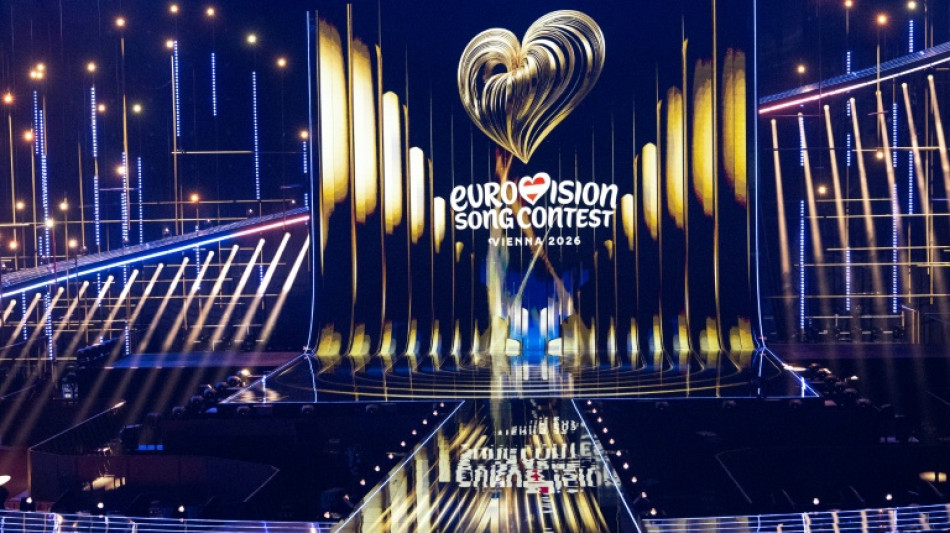
Boycott-hit 70th Eurovision celebrated under high security / Photo: © AFP

 Colombian judge bans strikes on guerrillas if minors are present

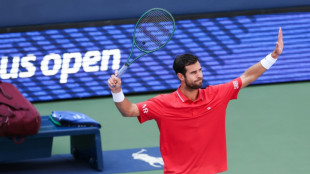
 Khachanov shocks ailing Auger-Aliassime, Swiatek and Osaka advance at US Open
 Lone juror blocking verdict in US mother's child murder trial: defense
 'Kinda chic' - Williams sisters set to launch US Open doubles bid

 Volkswagen says cutting 100,000 jobs by end of decade

 Russia slaps curfew on charity director over army criticism
 Ailing Auger-Aliassime upset by Khachanov at US Open
 Richarlison omitted from Tottenham's Premier League squad
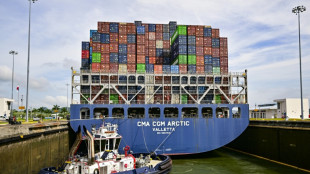 How El Nino is choking the Panama Canal
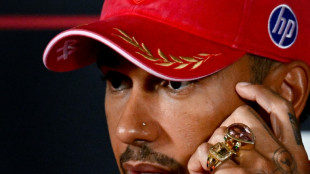 Hamilton drives his Ferrari dream at Monza
 Senegal has an IMF loan, now what?

 Auger-Aliassime upset by Khachanov at US Open
 Hugging Face, the French start-up that became AI's warehouse
 World Cup winner Llorente retires from Spain team at 31
 Osaka squeezes into US Open third round

 Apple faces £2 bn lawsuit in UK over app privacy feature
 Former champ Swiatek eases into US Open third round
 DR Congo latest to promise moving Israel embassy to Jerusalem
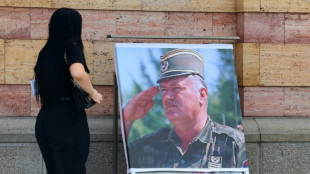 War criminal Mladic's body returns to Serbia with military honours

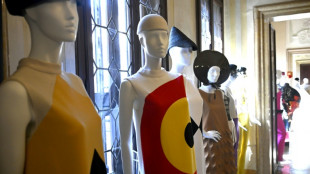 Pierre Cardin museum brings designer's futurist style to Venice

 Slovenian rookie Omrzel triumphs as Mas extends Vuelta lead
 British, French leaders talk migrants, EU relations
 Heading for Ferrari's home race, Leclerc still dreams of world title

 Cafe at centre of Israel culture clash agrees to shut on Sabbath
 Spacecraft bound for Mercury begins 'tricky' arrival
With provocative songs and glittering performances, the Eurovision Song Contest's festive 70th edition in Vienna next week will be held under tight security in the shadow of controversy sparked by Israel's participation.
The world's biggest live televised music event will bring together participants from 35 countries -- the fewest since entry was expanded in 2004 -- with several countries having pulled out over Israel's war in Gaza.
The semifinals on Tuesday and Thursday will yield an initial selection ahead of Saturday's grand final at a Vienna concert hall.
Some 95,000 tickets have been sold to fans from 75 countries around the world, with "strong demand" in the United States, Australia, Brazil, Japan and South Africa, according to the organiser, the European Broadcasting Union (EBU).
In 2025, 166 million viewers heard the opening bars of the legendary Eurovision theme, Marc-Antoine Charpentier's "Te Deum", according to EBU data.
- 'No politics' -
Bookmakers have placed Finland, Greece, Denmark, Australia and France as favourites to win.
Folkloric trends pushed by many eastern European countries in the past to assert their post-Soviet identity are less present this year, with Moldova among the exceptions.
Australia's decision to send accomplished singer Delta Goodrem, 41, has aroused strong media curiosity.
Romanian entrant Alexandra Capitanescu has added controversy in the run-up to the contest with her song "Choke Me", criticised for allegedly promoting strangulation during sex.
Capitanescu, 22, said the song "was never intended to represent anything sexual" and that the lyrics "are about taking back control over anxiety and emotions that are choking you".
Provocation is in line with the contest's "Eurotrash" tradition, or a "playful challenge of the good taste by the bad taste," said Cardiff University expert Galina Miazhevich.
Just like every year, many performers sing in English but the contest also features numerous different languages.
New rules approved in 2024 "put the onus on the artists not to politicise the contest", Eurovision historian Dean Vuletic told AFP, adding those who disobey the rule could face sanctions.
- 'Complex challenge' -
While Bulgaria, Moldova and Romania are returning to the Eurovision stage, Iceland, Ireland, the Netherlands, Slovenia and Spain will snub the contest this year in protest at Israel's participation.
More than 1,000 artists have also urged a boycott.
Protesters are planning to mobilise outside the venue against the war in Gaza, where Israel launched a military offensive in retaliation for the October 7, 2023, attack carried out by Hamas on its territory.
Among dozens of protesters who gathered last month in a Vienna rally, 67-year-old Ernst Wolrab told AFP he disagreed with this "international platform" being offered to the Israeli government to "legitimise" its actions.
Hosting Eurovision is a "complex challenge," Vienna's deputy police chief Dieter Csefan told AFP as police prepared to protect the delegations and guard festivities held across the city.
Austria, a central European country of 9.2 million people, already hosted the event 11 years ago, but the global situation has changed since then, added Csefan, who also cited a growing risk of cyberattacks.
He said Austria was working closely with the FBI to address any cyber threats.
He added that Vienna police had "experience in organising major events" as the Austrian capital -- home to several international organisations -- hosts many conferences.
In 2024, American star Taylor Swift cancelled her concerts in Austria following a terror plot that was foiled with the help of US intelligence.
For Eurovision, authorities have thoroughly vetted the profiles of some 16,000 staff involved, and equipment transported to the venue, the Stadthalle, has been meticulously scanned.
C.Koch--VB