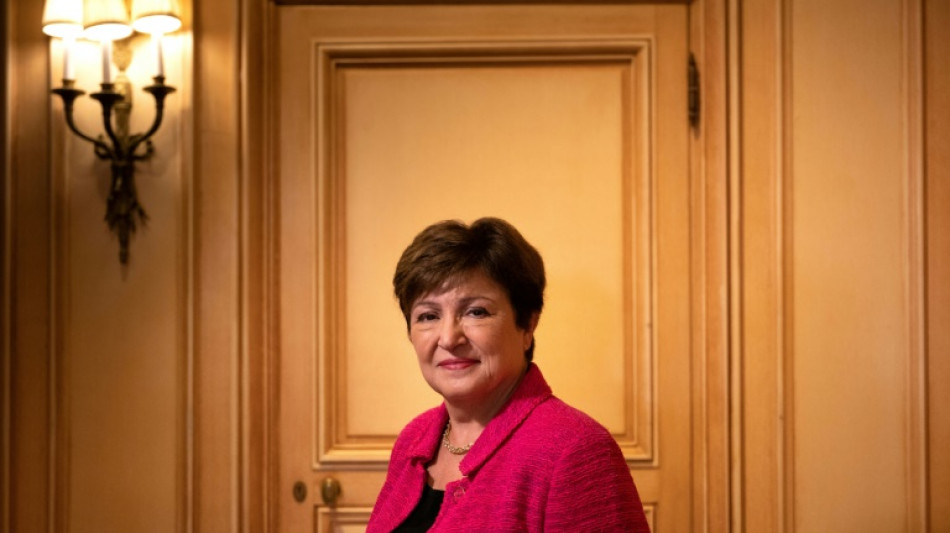
World Bank, IMF spring meetings to get underway in complex economic environment / Photo: © AFP

 Helicopters battle wildfire threatening Ecuador's capital

 Brentford batter Chelsea to undo Alonso's promising start
 Kane hits Bundesliga century as Bayern rout Union
 Trump says CNN, MS NOW, Politico banned from White House
 Hushing and hedging: US companies retreat on climate

 Springboks to face Fiji before 2027 Rugby World Cup

 Nigeria miners struggled to breathe in cell before 37 died: survivors

 McIlroy on the charge at PGA Championship as Reed withdraws

 McIlroy on the charge at PGA Championship

 Crisis-wracked Volkswagen warns of 10-bn-euro hit to profits

 Costa Rica's Grynspan tops third informal poll for UN chief: diplomat
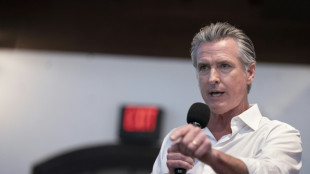
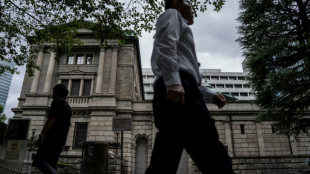 Stock markets retreat after central bank rate hikes

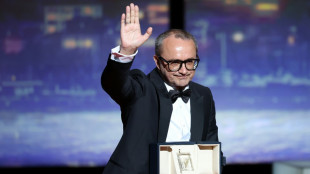 Russia labels director of Cannes Grand Prix winner a 'foreign agent'

 Macron warns of Russian 'hybrid' threat after meeting presidential hopefuls
 UN holds third informal poll for new chief

 Kulusevski return can spark Spurs: De Zerbi

 Shakira to cap off world tour with Madrid 12-gig run

 Isolated Syrian-Druze city blames Damascus for shortages
 Isolated Syrian-Druze city shortages

 Dutch drop Depay for Germany match in Xavi's first pick

 Ronaldo named in Portugal squad for Nations League

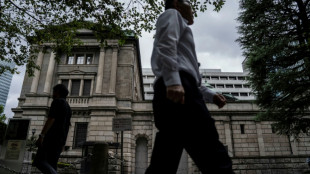 Stock markets diverge after central bank rate hikes

 Anti-Assad music star makes triumphant return to Syria
 In-form Fernandez included in Spain Nations League squad
 Arteta buries hatchet with Hurzeler ahead of Brighton clash

The World Bank and International Monetary Fund's spring meetings get underway later this week with an ambitious reform and fundraising agenda likely to be overshadowed by concerns over high inflation, rising geopolitical tension and financial stability.
"Growth remains historically weak -— now and in the medium term," IMF managing director Kristalina Georgieva said during a speech last week.
The fund now expects global growth to fall below three percent this year, and to remain at close to three percent for the next half a decade -- its lowest medium-term prediction since the 1990s.
Close to 90 percent of the world's advanced economies will experience slowing growth this year, while Asia's emerging markets are expected to see a substantial rise in economic output -- with India and China predicted to account for half of all growth, she said.
Low-income countries are expected to suffer a double shock from higher borrowing costs and a decline in demand for their exports, which Georgieva said could fuel poverty and hunger to increase.
Updated growth projections published in the IMF's World Economic Outlook on Tuesday will provide a broader look at how different countries are coping, with additional publications to detail fiscal and financial challenges to the global economy.
- Tackling inflation remains a priority -
This year's spring meeting will be held against the backdrop of high inflation and ongoing concerns about the health of the banking sector following the dramatic collapse of Silicon Valley Bank.
Georgieva told AFP last week that central banks should continue battling high inflation through interest-rate hikes, despite concerns that it could further inflame the banking sector.
"We don't envisage, at this point, central banks stepping back from fighting inflation," she said during an interview on Thursday.
"Central banks still have to prioritize fighting inflation and then supporting, through different instruments, financial stability," she said.
Ahead of the spring meetings, the IMF and World Bank also called on wealthier countries to help plug a $1.6-billion hole in a concessional lending facility for low-income countries that was heavily-used during the Covid-19 pandemic.
Many low-income countries are now facing mounting debt burdens due in part to the higher interest-rate environment.
- US pushes for World Bank reforms -
The spring meeting also provides an opportunity to make progress on an ambitious US-backed agenda to reform the World Bank so it is better-prepared to tackle long-term issues like climate change.
US Treasury Secretary Janet Yellen told AFP in an interview that she expects member states will agree to update the World Bank's mission statement to include "building resilience against climate change, pandemics, and conflict and fragility," to its core goals.
Yellen said she also expects an agreement to "significantly" stretch the World Bank's financial capacity, which "could result in an additional $50 billion in extra lending capacity over the next decade."
The changes will likely fall to the bank's next president to implement, with current World Bank president David Malpass due to step down early from a tenure marked by concerns over his position on climate change.
Malpass is widely expected to be replaced by US-backed former Mastercard chief executive officer Ajay Banga, who was the only person nominated for the position.
Y.Bouchard--BTB