-
 Hushing and hedging: US companies retreat on climate
-
Murray out with concussion so Wentz will start for Vikings

-
 Springboks to face Fiji before 2027 Rugby World Cup
-
UN chief 'deeply regrets' US visa refusal to Abbas for annual meeting
-
 Nigeria miners struggled to breathe in cell before 37 died: survivors
-
England quick Carse to face no charges over alleged nightclub assault

-
 McIlroy on the charge at PGA Championship as Reed withdraws
-
Mancini brings nine newcomers into the first squad of his Italy comeback
-
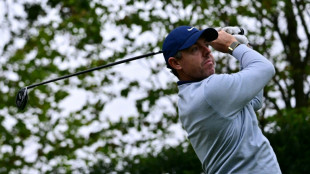 McIlroy on the charge at PGA Championship
-
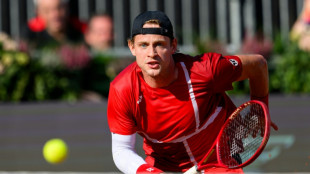
Czechs level Davis Cup tie against USA as South Korea eye Finals
-
 Crisis-wracked Volkswagen warns of 10-bn-euro hit to profits
-
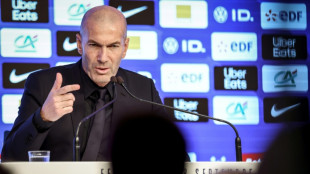
New France boss Zidane confirms Mbappe as captain after naming first squad
-
 Costa Rica's Grynspan tops third informal poll for UN chief: diplomat
-
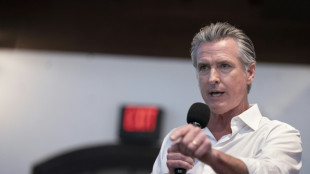
California governor signs order to explore AI 'kill switch'
-
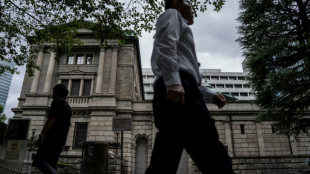 Stock markets retreat after central bank rate hikes
-
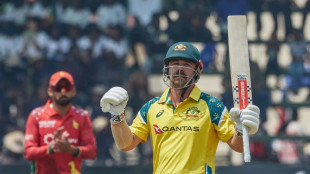
Head leads run spree as Australia win Zimbabwe ODI series
-
 Russia labels director of Cannes Grand Prix winner a 'foreign agent'
-
In-form Raphinha wants to finish career at Barcelona

-
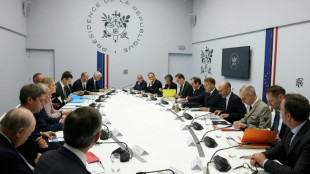 Macron warns of Russian 'hybrid' threat after meeting presidential hopefuls
-
Warren Buffett steps down as Berkshire Hathaway chairman
-
 UN holds third informal poll for new chief
-
Carrick confident Man Utd can 'work through' tough time
-
 Kulusevski return can spark Spurs: De Zerbi
-
Mbappe ends Nike partnership to join Swiss brand On

-
 Shakira to cap off world tour with Madrid 12-gig run
-
Liverpool boss Iraola puts Bournemouth love affair on hold

-
 Isolated Syrian-Druze city blames Damascus for shortages
-
'A disaster' if Man City do not win says Maresca after flawless start
-
 Isolated Syrian-Druze city shortages
-
Kerry James Marshall: American 'blackness' painter celebrated in Europe

-
 Dutch drop Depay for Germany match in Xavi's first pick
-
Spain coach De la Fuente offers 'full support' to people of Ceuta
-
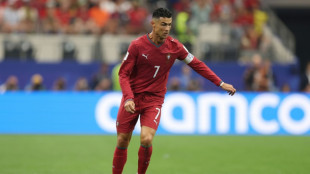 Ronaldo named in Portugal squad for Nations League
-
Russia seizes assets of Nestle, French firms over West's Ukraine support

-
 Stock markets diverge after central bank rate hikes
-
England can build on World Cup 'spirit', says Tuchel
-
 Anti-Assad music star makes triumphant return to Syria
-
UNESCO can be 'moderator' in AI debate: chief to AFP
-
 In-form Fernandez included in Spain Nations League squad
-
Infantino 'must go', says German FA vice-president
-
 Arteta buries hatchet with Hurzeler ahead of Brighton clash
-
Russia seizes assets of Nestle, French firms

-
 Alexander-Arnold and Palmer return to England squad for Nations League
-
Japan's busiest rail station tests robot bins

-
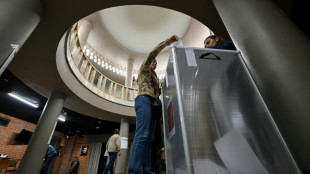 Russians vote as Ukraine war drags on for fifth year
-
Anthropic says AI systems moving towards building themselves

-
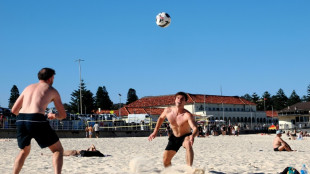 Backpackers fret over Australian visa crackdown
-
Asian stocks boosted by falling oil, yen weakens after BoJ rate hike
-
 Most Asian stocks track Wall St rally, yen drops after BoJ rate hike
-
Pakistan court blocks expulsion of Afghan medical college students

UN talks to protect high seas continue into early morning
UN members were working into the early hours of Saturday morning to reach a long-awaited agreement to protect the high seas, a fragile and vital treasure that covers nearly half the planet.
After more than 15 years of informal and then formal talks, negotiators were reaching the end of two more weeks of discussions, the third "final" session in less than a year.
By the middle of the night in New York, closed-door negotiations were still focused on the highly political issue of benefit-sharing for marine genetic resources collected on the high seas.
"We do still have a few issues to clear, but it is making progress and delegations are demonstrating flexibility," conference chair Rena Lee said during a lightning plenary session at around 1:30 am (0630 GMT) to seek delegations' agreement to continue without translators.
"We have a window of opportunity to seal the deal, and we mustn't let this opportunity slip through our hands," she said a few hours earlier, calling on delegates to "stock up on snacks" as they tried to get the treaty over the finish line.
Even if compromises are found on all the remaining disputes, the treaty cannot be formally adopted at this session, she explained.
But it could be "finalized" without the possibility of reopening discussions on substantive sections, before a formal adoption at a later date, Lee added.
Even without adoption Friday, "It's a massive step," Veronica Frank of Greenpeace told AFP.
Disputes include the procedure for creating marine protected areas, the model for environmental impact studies of planned activities on the high seas, and the sharing of potential benefits of newly discovered marine resources.
The high seas begin at the border of countries' exclusive economic zones, which extend up to 200 nautical miles (370 kilometers) from coastlines. They thus fall under the jurisdiction of no country.
While the high seas comprise more than 60 percent of the world's oceans and nearly half the planet's surface, they have long drawn far less attention than coastal waters and a few iconic species.
Only about one percent of the high seas are currently protected.
Ocean ecosystems create half the oxygen humans breathe and limit global warming by absorbing much of the carbon dioxide emitted by human activities.
- North-South 'equity' -
But they are threatened by climate change, pollution and overfishing.
For many, any agreement hinges on equity between the rich North and poor South.
Developing countries, without the means to afford costly research, say they fear being left aside while others make profits from the commercialization of potential substances discovered in the international waters.
In a move seen as an attempt to build trust between rich and poor countries, the European Union pledged 40 million euros ($42 million) in New York to facilitate the ratification of the treaty and its early implementation.
The EU also pledged $860 million for research, monitoring and conservation of oceans in 2023 at the Our Ocean conference in Panama where the United States announced $6 billion in commitments.
Observers interviewed by AFP say that resolving these politically sensitive financial issues could help ease other sticking points.
If an agreement is reached, it remains to be seen whether the compromises made will result in a text robust enough to protect oceans effectively.
"The text is not perfect, but it's got a clear path towards 30 by 30," said Greenpeace's Frank, referring to world governments' commitment to protect 30 percent of the world's land and ocean by 2030, as agreed in Montreal in December.
W.Lapointe--BTB