Balkan nations offer lessons on handling cow virus sowing turmoil / Photo: © AFP

 British Museum bans photos of Bayeux Tapestry as crowds linger

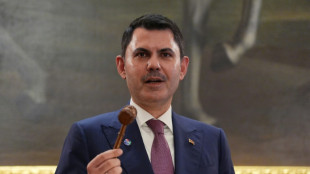 COP31 host says AI climate footprint to be a summit priority

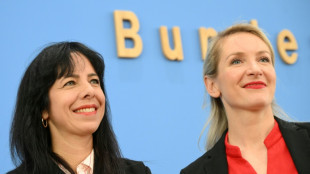 Berlin's far-left vote winners reject anti-semitism charges

 Mancini eager for 'new adventure' on Italy return

 Mbappe says having Zidane as France coach 'like a film'
 Palmer, Rice out of England Nations League squad
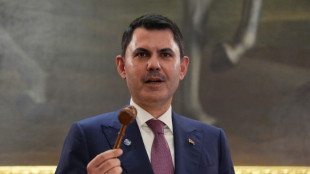
 German auto workers stage mass protests in bid to save jobs
 Embattled Merz vows to keep ruling for 'democratic future' of Germany

 Merz vows to keep ruling coalition together for 'democratic future' of Germany

 Spain coach De la Fuente gets new deal after World Cup success

 Pressure grows on Germany's Merz after election defeats

 China's Zhang beats Japan rivals to Asian Games gymnastics gold
 Samlingen Haupt: Vad pengar avslöjar om oss människor

 Tens of thousands of German auto workers protest to save jobs

 हॉप्त् कलेक्शन: पैसा हमारे बारे में एक इंसान के रूप में क्या प्रकट करता है

 Συλλογή Haupt: Τι αποκαλύπτει το χρήμα για εμάς τους ανθρώπους

 TradersYard Shifts Focus to Futures Trading

 ハウプト・コレクション:お金が人間について明かすこと

 하우프트 컬렉션: 돈이 우리 인간에 대해 드러내는 것

 Indonesia doing 'everything' but struggling to curb fires

 Sbírka Haupt: Co o nás lidech prozrazují peníze
 North and South Korea fight out draw in niggly Asian Games clash

 Officials say man shot, wounded by ICE agent in Texas

 豪普特收藏:金錢如何揭露人類的本質

 Kolekcja Haupta: Co pieniądze mówią o nas, ludziach

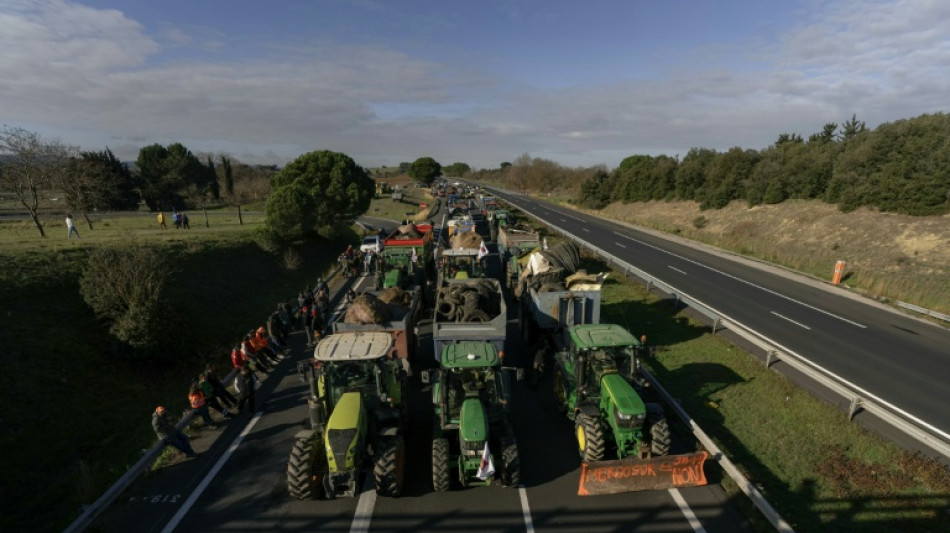
An outbreak of a highly contagious cattle disease has left France, the world's top exporter of live animals, struggling since June to prevent devastating impacts on its industry, amid growing protests by farmers.
But in 2016 several Balkan nations curtailed major epidemics of the same disease through swift action, mass vaccination and culls in about three months.
With no cases reported since 2018, Tamas Petrovic, head of virology at the Scientific Veterinary Institute in the Serbian city of Novi Sad, said the Balkans' response could offer lessons for this new outbreak.
- Early alert -
When lumpy skin disease (LSD), or nodular dermatitis, was detected in nearby Greece and Bulgaria, Serbia was placed on alert and formed a task force to monitor its spread, said Petrovic, who was involved in the response.
Although the viral disease poses no risk to humans, it severely affects milk production and fertility and can be fatal in cattle.
As the prolonged incubation of the disease made it difficult to track and contain, officials quickly turned to vaccination, the researcher said.
But with no registered vaccine in Europe at the time, imports were ordered from South Africa.
Within a week of its arrival in Serbia, the vaccine was tested, and the first cattle vaccinations began.
- Mass vaccination -
Mass vaccination was carried out in phases, with one million doses eventually administered across the country.
By first targeting large swaths of livestock in infected districts and then broadening out in three phases, the outbreak was quickly controlled, he said.
"We stopped the disease within two to three months after it entered the country," Petrovic said.
By 2018 the European Food Safety Authority (EFSA) said that more than 70 per cent of the Balkan region's cattle were vaccinated.
- Culls -
But vaccination alone did not stop the disease -- several culls were needed across the region.
"If the disease appears, the euthanasia of the entire herd is mandatory," Petrovic said.
But rapid action meant fewer than 1,000 cattle were slaughtered in Serbia, out of a total herd of close to 900,000, Petrovic said.
Insect controls across the entire region also helped prevent the spread of diseases through mosquitoes, ticks and flies.
- 'A good example' -
Petrovic said the Balkans proved to be "more than a good example" in controlling the disease.
Croatia's preventive vaccination, after EU approval, meant LSD was never reported in the country, despite outbreaks nearby in Serbia and Montenegro.
Its vaccination programme effectively stopped the disease from entering the bloc at the time, he said.
Bosnia and Herzegovina also carried out vaccination and booster campaigns between 2016 and 2018.
As of 2019, the EFSA said that the disease had not been detected in the region, and preventive vaccination programmes continued in high-risk areas.
The main lesson from that crisis was that experts must take the lead, Petrovic said.
"The state and politicians acted in line with the experts and followed what needed to be done -- and they did it," he insisted.
B.Wyler--VB