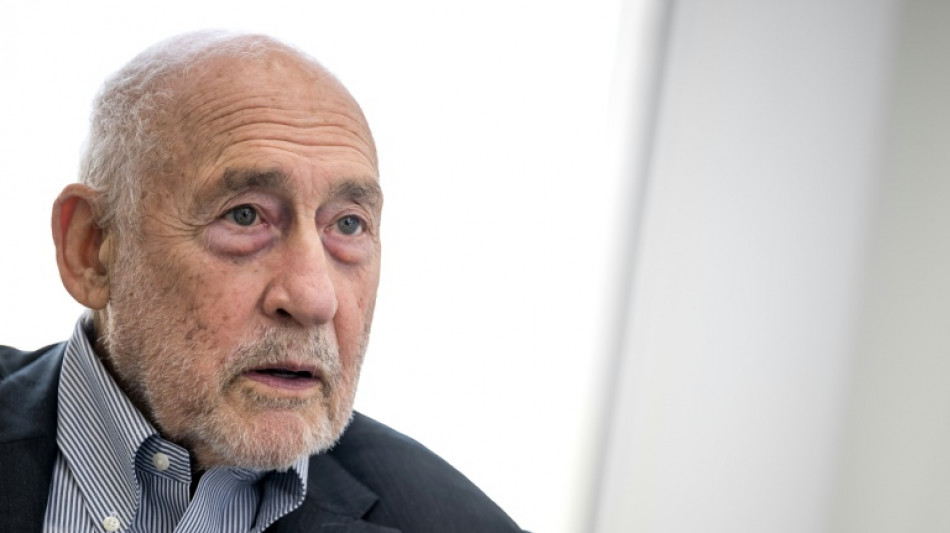
Stagflation risk in US 'quite high': Nobel-winning economist Stiglitz / Photo: © AFP

 South Korean leader says told Trump sanctions on North are 'ineffective'
 Stocks rally falters, oil rises as US-Iran talks postponed
 Indonesia to capture last-known wild Bornean rhino for IVF
 USA, Australia eye World Cup knockout rounds, Brazil in action
 Iran to lodge complaint with FIFA over World Cup restrictions
 New Zealand minister defends fishers after two orcas killed in net
 Seoul record leads most Asian markets higher, crude extends losses
 Burnham wins key UK poll, paving way for bid to challenge PM Starmer
 'Pico' Lopes -- Cape Verde defender's journey from Ireland to World Cup
 'Pretty special': captains eye Super Rugby glory in clash of top seeds
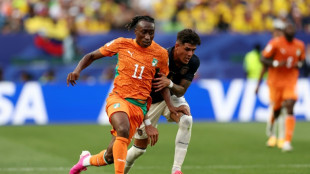 Ivory Coast's Diomande living World Cup dream, dealing with tragedy
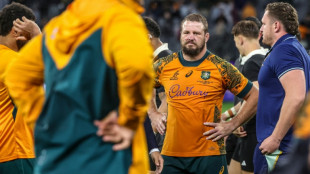
 Australia seek 'respect' from US amid World Cup 'layup' row
 Japan doctor-turned-author moots amputations to ease care crunch
 Fossils challenge assumptions on how animals adapted to land
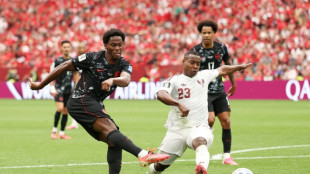 Canada romp to first World Cup win, Switzerland thump Bosnia
 Venezuela govt, opposition hold US-backed talks on democratic transition
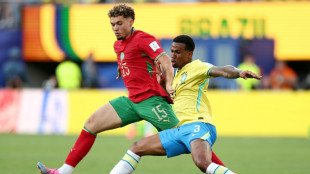
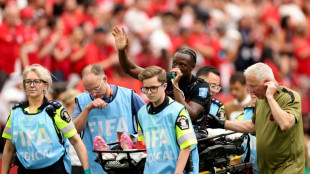 Horror injury overshadows Canada's first World Cup win
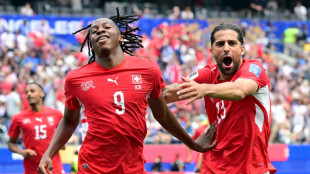 Swiss wunderkind Manzambi scores 'childhood dream' brace
 Good US Open shots not good enough for 2-over Scheffler
 Subs send Swiss to World Cup rout of Bosnia-Herzegovina
 McIlroy pleased with reduced green speeds in US Open winds
 US stocks resume upward climb as dollar advances again after Fed outlook
 Stevens seizes US Open lead with McIlroy, Aberg one back
 'Big-game' Bellingham shows his worth for England at World Cup
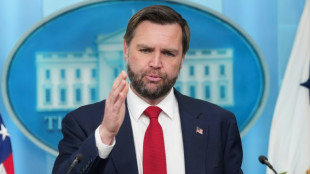 Vance warns Israel against criticizing US-Iran deal
The war in the Middle East has put the United States at high risk of falling into stagflation, Nobel Prize-winning economist Joseph Stiglitz told AFP on Monday.
Even before the war erupted on February 28 with a barrage of US and Israeli strikes on Iran, Stiglitz said the US economy was already "close to stagflation" -- a troublesome blend of high inflation and anaemic growth.
There were a number of "readings for slow growth before the war", he said in an interview at the United Nations' European headquarters in Geneva, "and this just... pushes us over the brink".
The Middle East war has virtually halted activity in the strategically vital Strait of Hormuz, through which a fifth of the world's crude oil supplies and a substantial amount of gas normally run, sending oil prices soaring.
Global oil prices have surged by 40 to 50 percent after Iran choked off the waterway and attacked energy and shipping industry targets in the Gulf in response to the US-Israeli war against the Islamic republic.
This has sparked fears of a shock to a global trading system, which is already under stress from US President Donald Trump's tariff offensive as well as the fragmentation of supply chains since the Covid-19 pandemic and Russia's war in Ukraine.
- 'Unbalanced' -
Stiglitz, who jointly won the Nobel Economics Prize in 2001 for his analysis of markets with asymmetric information, said the United States was the country most at risk of falling into stagflation, as it did during the oil shocks in the 1970s.
"The risk of stagflation seems to be quite high for the US," said the professor at Columbia University in New York.
The situation elsewhere was not as clear-cut, said Stiglitz, who served as chief economist at the World Bank in the late 1990s after being the chairman of US president Bill Clinton's council of economic advisers.
While Europe would certainly face inflationary pressures on energy too, it was also seeing a growth "stimulus" as it dramatically ramps up defence spending, after Washington "made it very clear that you cannot depend on the US for your defence", he said.
Trump's policies had meanwhile significantly weakened the US economy even before the war, he maintained.
Stiglitz pointed to troubling indicators, like the lack of labour force growth in 2025 and last month's hike in unemployment.
And while there had been growth, it had been "unbalanced", he said, with around a third coming from the creation of artificial intelligence data centres.
The stock market, meanwhile, "is doing well because it's dominated by AI and tech firms", he said.
"If you look at the rest of the stock market, it's just languishing."
- Trump 'destroyed confidence' -
At the same time, Stiglitz said he expected to see Trump's tariff policy boost inflation.
Typically, when applying tariffs, a country could expect to see the value of its currency rise, since it is buying fewer goods abroad, which should lower inflation, the economist said.
But in this case, he pointed out that "the dollar has gotten weaker".
That, he said, is because "Trump has destroyed confidence in America and the dollar".
"The weaker dollar means that, rather than less inflation from the tariffs, there's more inflation... Everything we import is more expensive in dollar terms."
Added to that now is inflation from the war, as well as greater uncertainty among households and businesses.
They "don't know what the tariffs are going to be, (or) how long this war is going to last. They don't know what energy prices are going to be", Stiglitz said.
Businesses, he insisted, "can't invest in these circumstances".
O.Schlaepfer--VB