'We're not wombs': Japan women seek rights to sterilisation / Photo: © AFP

 Mbappe says having Zidane as France coach 'like a film'

 Palmer, Rice out of England Nations League squad

 German auto workers stage mass protests in bid to save jobs

 Embattled Merz vows to keep ruling for 'democratic future' of Germany

 Merz vows to keep ruling coalition together for 'democratic future' of Germany

 Spain coach De la Fuente gets new deal after World Cup success

 Pressure grows on Germany's Merz after election defeats
 China's Zhang beats Japan rivals to Asian Games gymnastics gold
 Samlingen Haupt: Vad pengar avslöjar om oss människor

 Tens of thousands of German auto workers protest to save jobs

 हॉप्त् कलेक्शन: पैसा हमारे बारे में एक इंसान के रूप में क्या प्रकट करता है

 Συλλογή Haupt: Τι αποκαλύπτει το χρήμα για εμάς τους ανθρώπους

 TradersYard Shifts Focus to Futures Trading

 ハウプト・コレクション:お金が人間について明かすこと
 하우프트 컬렉션: 돈이 우리 인간에 대해 드러내는 것

 Indonesia doing 'everything' but struggling to curb fires

 Sbírka Haupt: Co o nás lidech prozrazují peníze

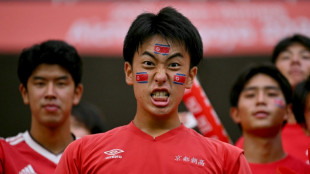 North and South Korea fight out draw in niggly Asian Games clash

 Officials say man shot, wounded by ICE agent in Texas

 豪普特收藏:金錢如何揭露人類的本質

 Kolekcja Haupta: Co pieniądze mówią o nas, ludziach
 The Haupt Collection: What Money Reveals About Us as Human Beings

 Barcelona enter new era aiming to retain Women's Champions League crown

 US has deported 25,000 to third countries under secretive deals: report

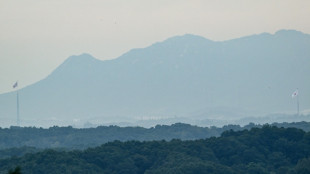 Three South Korean soldiers injured in DMZ blast: military

When Kazane Kajiya voluntarily sterilised herself in the United States aged 27, she essentially "flipped the middle finger" at Japan's patriarchal society that had long pushed her towards motherhood.
In the rapidly ageing country desperate to boost its falling birth rates, women seeking to make themselves infertile were assumed "not even to exist", Kajiya, who has never wanted children, told AFP.
She and four other women are now challenging the constitutionality of Japan's decades-old "maternity protection" law, one of the world's most restrictive barriers to sterilisation.
A verdict in their landmark lawsuit dubbed "maternity is not my body's purpose" is due next week.
Under the law, a woman must have multiple children with her health at risk, or face life-threatening danger from pregnancy, to qualify for sterilisation. Even then, spousal consent is required.
This bans physicians from operating on healthy, childless women like Kajiya, now 29, who flew to the US to have her fallopian tubes removed in what she described as a minimally invasive procedure.
It was her "ultimate no" to being treated as a "future incubator".
To her, the law signals the government is "dead-set against giving freedom to end reproductive capacity to women who haven't fulfilled their 'duties' to bear multiple children for the sake of the nation".
Growing up, she was told her uterine lining represented the "bed for a baby" and that period pain was preparation for labour.
"I felt like I had been shoved onto a train bound for motherhood," she recalled.
By having the surgery, "I smashed the windows, and hurled myself out of that train.
"We're not wombs, we're humans."
- Japan as an 'outlier' -
A holdover from a wartime era where women were considered resources for population growth, the law effectively "manages all fertile women as potential maternal bodies", Michiko Kameishi, lead lawyer for the case, told AFP.
Its spousal consent requirement suggests "women are not seen as independent beings capable of self-determination".
The lawyer aims to establish women have constitutionally guaranteed rights to bodily freedom, placing sterilisation on par with plastic surgery or tattooing.
Kajiya once wondered if discomfort with being female explained her feelings but dismissed that "because I hate beards and like pretty clothes", she said. She even came to terms with menstruation.
What she truly loathes, she concluded, is her biological capacity to reproduce.
That innate aversion to fertility, the pressure on women to give birth and the desire for safe, effective contraception have united the plaintiffs.
Among modern democracies, Japan is an outlier on sterilisation access.
The lawsuit cites a 2002 study by EngenderHealth, a global NGO focused on sexual and reproductive health, that says more than 70 countries -- including many industrialised economies -- explicitly permitted the procedure as a method of contraception.
Japan was among eight countries that forbade or severely restricted it.
In Japan, condoms -- a male-controlled method -- is the most popular form of birth control.
Just 0.5 percent of women choose sterilisation and 2.7 percent use the contraceptive pill, seen as costly, according to one survey.
Contraceptive injections and implants remain unavailable.
And while men's vasectomies similarly require spousal consent, enforcement tends to be laxer with urology clinics openly touting the procedure, campaigners say.
The government, meanwhile, has defended the current system as protecting women from "future regret".
Given the "irreversible" nature of sterilisation, existing restrictions "help guarantee those considering surgery rights to self-determination over whether they want to have children", the government said in a document filed with Tokyo District Court.
- Myths, guilt -
These restrictions have historically sparked little debate even among feminists who have strenuously opposed Japan's spousal consent requirement for abortions.
That's because few want to speak out in a society where "the myth persists that women are incomplete without motherhood", lawyer Kameishi said.
"Merely being childless makes them feel a bit guilty, so how could they speak openly about their desire to proactively remove their reproductive potential?"
Another plaintiff raising her voice is 26-year-old Rena Sato.
As an aromantic and asexual person, Sato -- a pseudonym she uses in the lawsuit -- categorically rules out marriage and childbirth.
"To me, the act of bringing a life out of my body is strongly linked to heterosexual romance, so this function of fertility has no place in my sexuality," she told AFP.
Her only possibility of pregnancy is therefore through rape, she said.
"If I'm forced to maintain my fertility, it'd be tantamount to the state telling me to accept the risk of sexual violence while alive."
Now married to a partner who respects her choice to be child-free, Kajiya has no regrets about getting sterilised.
But she sometimes wonders whether Japan pushed her to an extreme.
"Had I been born in a country where women have the same rights to bodily autonomy as men, and where no one assumes I will become a mother," she said, "I might've not let incisions be made to my body."
A.Ruegg--VB