WHO adopts landmark pandemic agreement / Photo: © AFP

 Asian allies stress 'critical cooperation' as Trump slashes Korea drills

 Williams sisters fall at Cincinnati while Zverev advances
 Transylvania's fortified churches face fragile future

 China mourns former premier Zhu Rongji with flags lowered, funeral

 Philippine student killed in rare school shooting

 Arsenal primed for Premier League title defence as rivals face questions

 Zverev advances at Cincinnati while Williams sisters fall
 Copper powers profit rise at mining giant BHP
 Whales spark joy in New York but face threats from boat traffic

 Premier League's new bosses brace for battle

 Zambia's Hichilema: 'cattle boy' and two-time president

 Elderly far more at risk from rising heat than thought: study

 Brazil's Lula hails new oil find as 'passport to the future'

 Rybakina slogs through double rain delays in Cincinnati win
 Two largest US reservoirs hit record lows amid western drought

 Colombian minister under fire over beach holiday post-quake

 Lamour leaves key FIFA position after criticising Infantino

 Buss family sells 17.8% stake in Lakers to Iger group

 Mangione state murder trial postponed after federal guilty plea

 Trump envoy says Hamas disarmament could begin within 30 days

 US pauses construction of border project in Texas national park

 Thousands mourn dead black academic in London vigil

 South Africa Test series a lot tougher than a World Cup says All Blacks coach Rennie
 Coventry sign Nigeria striker Awoniyi from Forest

 TripleDart tops $7 million ARR with AI-led growth, reports 50 per cent EBIT margin

The UN health agency on Tuesday adopted a landmark Pandemic Agreement on tackling future health crises, struck after more than three years of negotiations sparked by the Covid-19 crisis.
The accord aims to prevent the disjointed response and international disarray that surrounded the Covid-19 pandemic, by improving global coordination and surveillance, and access to vaccines, in any future pandemics.
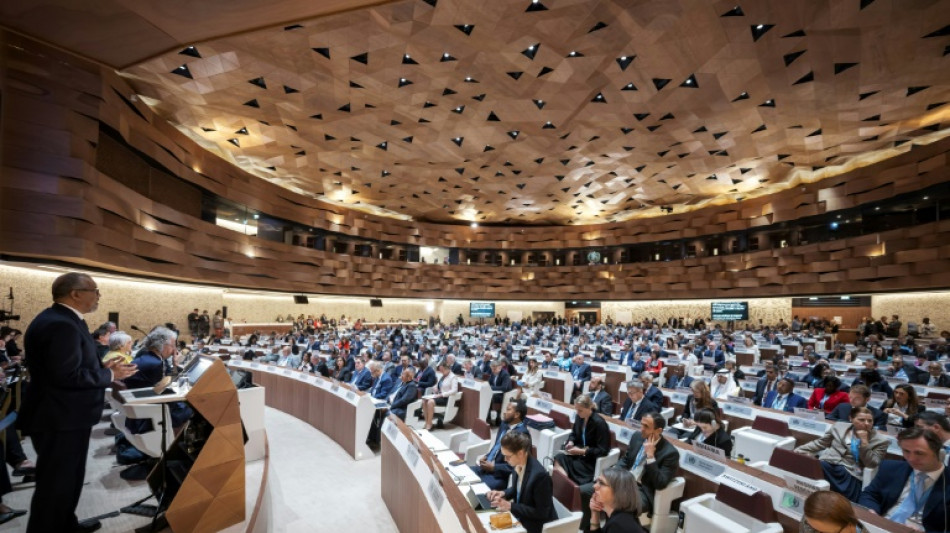
The World Health Organization's decision-making annual assembly adopted the plan on Tuesday at its Geneva headquarters.
"It's an historic day," WHO chief Tedros Adhanom Ghebreyesus told AFP after the vote.
The text of the agreement was finalised by consensus last month, following multiple rounds of tense negotiations.
The United States pulled out of those talks, following US President Donald Trump's decision to withdraw his country from the WHO, a process that takes one year to complete.
"The world is safer today thanks to the leadership, collaboration and commitment of our member states to adopt the historic WHO Pandemic Agreement," Tedros said in a statement.
"The agreement is a victory for public health, science and multilateral action. It will ensure we, collectively, can better protect the world from future pandemic threats.
"It is also a recognition by the international community that our citizens, societies and economies must not be left vulnerable to again suffer losses like those endured during Covid-19."
- Path to ratification -
The agreement aims to better detect and combat pandemics by focusing on greater international coordination and surveillance, and more equitable access to vaccines and treatments.
The negotiations grew tense amid disagreements between wealthy and developing countries, with the latter feeling cut off from access to vaccines during the Covid-19 pandemic.
The agreement faced opposition from those who thought it would encroach on state sovereignty.
Countries have until May 2026 to thrash out the details of the agreement's Pathogen Access and Benefit-Sharing mechanism.
The PABS mechanism deals with sharing access to pathogens with pandemic potential, and then sharing of benefits derived from them: vaccines, tests and treatments.
Once the PABS system is finalised, the agreement can then be ratified. Sixty ratifications are required for the treaty to enter into force.
Precious Matsoso of South Africa, and France's ambassador for global health Anne-Claire Amprou, co-chaired the talks process that led to the agreement.
"It is intended to create a rules-based, future-proof system that will stand the test of time. It does not, and will not, undermine the sovereignty of countries," she told the assembly on Monday.
"In a time of growing geopolitical tensions and seismic changes, this agreement is proof that the world is still together."
E.Gasser--VB