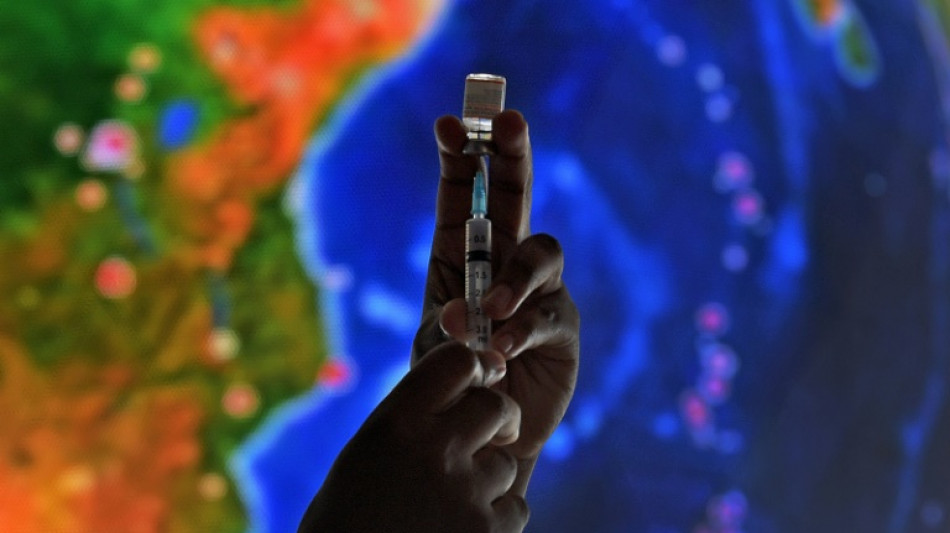
WHO sees pause, even end of pandemic for Europe / Photo: ©

 Macron welcomes Canada's Carney to French Atlantic territory

 Fiorentina frustrate Napoli with Serie A draw, Como upset

 Five-star Man City top Premier League after Sunderland thriller

 Ukrainian drones hit Moscow on last day of Russian elections

 Multi-Asset Trading Venue Monochrome Exchange Announces IEO of Its Native Token, $MCR
 South Korea break Japan hearts to win Asian Games basketball gold

 Acosta takes first victory at Austrian MotoGP

 PSG president Nasser al-Khelaifi under investigation in France for conflict of interest

 China swim sensation, 13, sets Games record after Japan win early

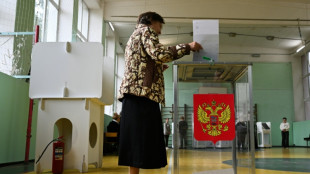 Drones hit Moscow as Russians go to the polls

 New England boss Fleming says 'wrong' to ask Stokes to end retirement

 Germans vote in elections threatening fresh blow to Merz
 US fears rapid escalation in Mideast after Houthis attack Riyadh

 Japan triathlete Hojo wins first gold of Asian Games
 IOC president impressed by 'beautiful' Asian Games wooden huts

 First Asian Games gold goes to Japan as China's 13-year-old Yu lights up pool

 Data centre command hub keeps AI up and running
 Pope Leo in France: the issues on the table
 Packing for a pope: behind the scenes on foreign trips

 Republicans find transgender issues a powerful political weapon in midterm campaigning

 German state elections threaten new shock waves for Merz

 Chile's Bachelet quits race to be next UN chief

 Raphinha treble fires perfect Barca to win at Sevilla

 Thiam makes winning heptathlon return at Decastar meet

 Czechs beat USA to qualify for Davis Cup finals
The World Health Organization on Thursday offered Europe hope of a "long period of tranquility" and even "enduring peace" in the war on coronavirus, with a growing list of nations lifting almost all Covid curbs.
WHO Europe director Hans Kluge spoke of "a ceasefire that could bring us enduring peace", with high vaccination rates, the milder Omicron variant and the end of winter in sight.
"This context leaves us with the possibility for a long period of tranquility," he told reporters.
This was "not to say that (the pandemic) is now all over", but "there is a singular opportunity to take control of the transmission", he added.
"Even with a more virulent variant (than Omicron) it is possible to respond to new variants that will inevitably emerge -- without re-installing the kind of disruptive measures we needed before", Kluge said.
He cautioned that the optimistic scenario required countries to pursue vaccination campaigns and surveillance to detect new variants.
Sweden joined the move towards scrapping most coronavirus restrictions, setting February 9 as the date with the pandemic entering a "whole new phase".
Stockholm will end 11:00 pm closing for bars and restaurants, and limits on crowd numbers.
Vaccine passes for indoor events will go and face masks will no longer be recommended on crowded public transport.
"The pandemic is not over, but we are entering a whole new phase," Swedish Prime Minister Magdalena Andersson announced.
Her Health Minister Lena Hallengren said the government would remain "vigilant" about the pandemic's progress.
Sweden made headlines early in the pandemic for choosing to not impose lockdowns.
With over 16,000 fatalities so far, its death toll is in line with the European average, but is far higher than those of neighbouring Norway, Finland and Denmark.
After Britain and Ireland, Copenhagen on Tuesday lifted most domestic Covid-19 restrictions, followed later in the day by Norway.
France on Wednesday loosened several restrictions imposed to curb the latest Covid-19 surge, with authorities hoping a small decline in huge daily case numbers will soon ease pressure on overburdened hospitals.
And New Zealand is to start easing some of the toughest pandemic border restrictions yet seen, but will not fully reopen until October.
"It's time to move again," Prime Minister Jacinda Ardern said Thursday unveiling a five-step plan to reconnect to the rest of the world.
Hotel quarantine requirements for New Zealanders stranded overseas will be lifted this month.
Ardern had been under pressure to relax border policies that have been largely unchanged since the beginning of the Covid-19 crisis almost two years ago.
"Families and friends need to reunite, our businesses need skills to grow, exporters need to travel to make new connections," she said.
But Germany is still grappling with record infection numbers fuelled by Omicron and now recommending a fourth vaccine for at-risk groups, following in the footsteps of Israel and several European nations.
Germany's STIKO vaccine commission said Thursday that data showed "that protection against the currently circulating Omicron variant wanes within a few months of the first booster vaccination".
Israel last month became the first country to roll out fourth Covid-19 shots, initially to the elderly and health care workers, and since to all vulnerable people over 18.
Denmark, Hungary and Spain are also offering fourth jabs to high-risk groups, as are others including Chile and Brazil.
The move has not been universally welcomed, with the WHO repeatedly warning wealthier nations they cannot boost their way out of the pandemic.
Coronavirus has killed at least 5,698,322 million people since the outbreak emerged in China in December 2019, according to an AFP tally from official sources.
C.Meier--BTB