
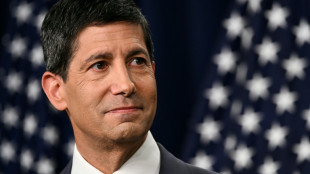
Germany's next leader grapples to boost defence spending / Photo: © AFP

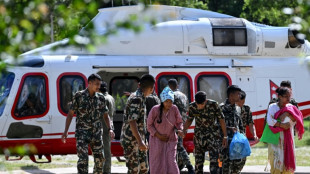
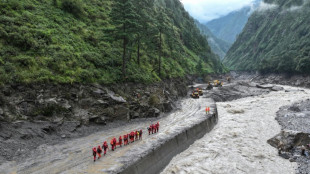 Missing soar over 2,400 after deadly Nepal, China floods

 India Orders Wind Turbine Makers to Report on Data Localization for Cybersecurity

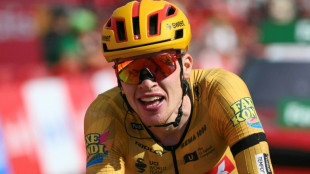 Leknessund breaks away to win emotional Vuelta stage seven
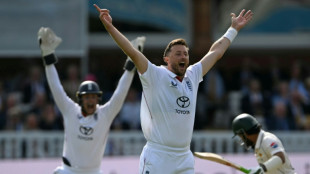 Four-wicket Robinson stars as Pakistan all out for 110 in second Test

 Fed chair Warsh signals 'work to do' on high US inflation
 Watkins's legacy at Villa untarnished, says Emery as Jackson arrives
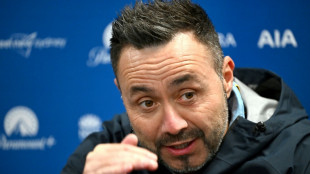 Spurs boss De Zerbi targets one more big signing before window shuts

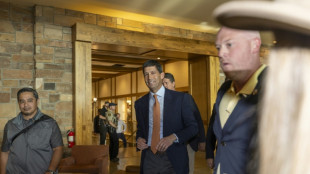 Fed chair Warsh flags high US inflation as 'concerning'
 Same Election Question, Two Different Odds: Predictions.io Launches Free Cross-Venue Comparison Tools
 Man Utd new signing Baleba sidelined for three weeks
 Juve's Yildiz to miss 'several months' with foot injury

 Celine Dion arrives in France ahead of sold-out comeback dates

 All-round Tongue stars for England in second Test against Pakistan
 UEFA's legal move 'massive escalation' in bitter Infantino feud

 MEXC Launches Earn Plus With Limited-Time Event Offering Up to 800% APR Booster

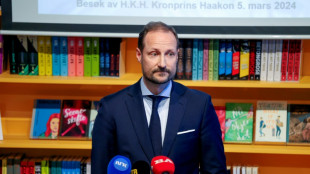 Norway's new King Haakon VIII, popular face of shaken monarchy
 Stocks rise ahead of Fed chair's policy speech

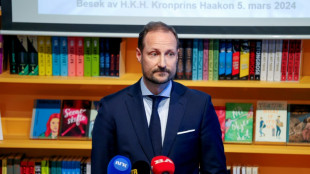 Norway's new King Haakon VII, popular face of shaken monarchy

 Last-wicket duo take England to 290 all out in 2nd Test against Pakistan
 MPSC Drug Inspector Exam Leak: Rutuja Patil Allegedly Paid Rs 50 Lakh for Leaked Paper

 Japan spent record $96 bn in yen interventions: ministry

 Nepal-China floods disaster: Latest developments
 Duplantis needs A-game to fend off Karalis pressure
 Architect Minenhle Makhanya Ordered to Repay R147 Million for Nkandla Upgrades
 Iran says still open to diplomacy as war with US hits six months
Germany's next leader, conservative Friedrich Merz, has raised the alarm over European defence but the clock is ticking for him to muster the funds needed to refurbish the armed forces.
Only hours after his party's election win Sunday, Merz said his "absolute priority" would be to strengthen European security as US President Donald Trump had shown indifference to the continent's fate.
The chancellor-in-waiting will however have to find a way to work within Germany's budgetary straitjacket -- which limits new borrowing to 0.35 percent of GDP -- or find a way to escape it.
The make-up of the incoming parliament makes it challenging to change the constitutional debt brake.
Far-right and far-left parties critical of extra defence spending will have enough seats to block any amendment to Germany's Basic Law.
Merz has suggested he is open to an unusual manoeuvre: recalling the current Bundestag before the new one is formed to swiftly approve new money.
According to Bloomberg News, he is in discussions to top up Germany's special defence fund with another 200 billion euros ($210 billion).
Racing the changes through before MPs take their seats on March 25 "will be a challenge, but should be doable if Merz really pushes for it", said Berenberg Bank analyst Holger Schmieding.
- 'Independence from USA' -
Trump's direct overtures to Russian President Vladimir Putin to end the war in Ukraine have blindsided European capitals and left them feeling dangerously exposed.
Merz said Sunday that "independence from the USA" in defence matters was a strategic necessity and that Germany, long reluctant to throw its weight around, would have to do its part.
Estimates by defence experts put the extra funding requirement at around 200 billion euros, the head of the IW Koeln economic institute Michael Huether told the Rheinische Post daily.
But getting the necessary two-thirds majority in the new Bundestag was "hardly conceivable" in the face of potential opposition from the far-right Alternative for Germany (AfD) and far-left Die Linke, he said.
"An exception to the debt brake is practically unavoidable to ensure the Bundeswehr is adequately equipped," Defence Minister Boris Pistorius, a senior figure in the Social Democrats, told Bild newspaper.
Quizzed on Tuesday on the idea of acting before the new parliament sits to push through changes, Merz conceded Germany was in a "difficult situation".
"We now have four weeks to think about it," Merz said, adding that he would hold confidential talks with the Greens, Social Democrats and the liberal FDP.
Such a post-election manoeuvre has precedent. In 1998, MPs approved a NATO-backed intervention in Kosovo, Germany's first active combat operations since World War II.
- 'Spectacular U-turn' -
As it stands, Germany is just scraping to meet NATO's annual defence spending target of two percent of GDP with the money from a 100-billion-euro fund established in the wake of Russia's full-scale invasion of Ukraine.
But the one-off spending pot is quickly being used up and European allies are now talking about further boosting defence investments in the face of Russian aggression and uncertain support from Washington.
The proposal for a limited fund was only the "second-best option", the head of the IfW Kiel think tank Moritz Schularick told the Rheinische Post.
"The most decisive and far-sighted step to do this would be to exempt defence spending from the debt brake," Schularick said.
Special funds only provided limited planning certainty for the companies set to supply Europe with weapons "because it is unclear what sums will be available afterwards", he said.
The Greens, whose votes would be needed for a constitutional change, called for a full "reform of the debt brake" -- an option still shunned by Merz.
"A reform of the debt brake in the near future is out of the question," Merz said Tuesday.
For another option it was "too early to say", he said, adding that an agreement on extra funding would be "difficult".
Any spending boost would be a "spectacular U-turn for Merz", Schmieding said, and would send an "early message to Trump and Putin that Germany is raising its military spending and will stand by Ukraine".
The future chancellor's opponents were already forming their lines.
AfD leader Alice Weidel, whose party scored a record 20 percent of the vote and had campaigned against help for Ukraine, accused Merz of "election fraud".
"This is politics against the will of the voters!" she said on social media platform X.
A.Ruegg--VB