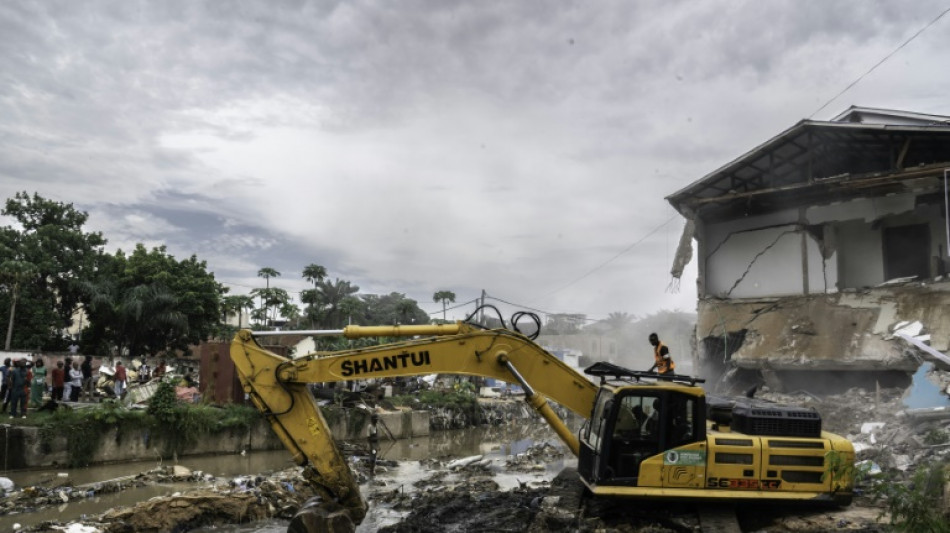
Kinshasa deploys excavators against illegally built homes / Photo: © AFP

 'American Doctor' shows brutality of conflict in Gaza

 New Zealand blocks lawsuits against firms over climate harm

 Aussie Rules club suspends five players amid police probe

 No.1 Sabalenka slams Wang to power ahead in Cincinnati
 Israel blames Turkey after strike on Syria air base
 Trump, Carney talk as Canada seeks to hold off new US tariffs

 NASA images reveal crater left by SpaceX rocket's Moon crash

 UN atomic watchdog says found tons of nuclear material at Syria site

 Ecuadoran diplomat enters race to be next UN chief

 US sanctions ICC chief Tomoko Akane of Japan

 US moves to open vast tracts of pristine forests to logging
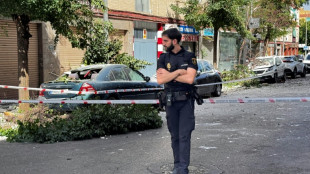
 US sanctions International Criminal Court chief Tomoko Akane of Japan

 Meta hooked children and misled public: prosecutors

 France's first women's rights minister Yvette Roudy dies, aged 97

 French producer Nicolas Altmayer, Dior PR chief Favier die in car crash

 Bezos consortium bought nearly 40 percent of Liverpool: report

 Trump says no Iran talks planned, claims Hormuz 'new US territory'
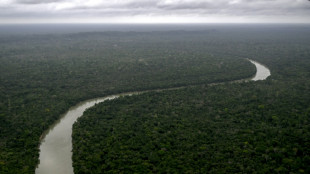
 Canada seeks to avert new US tariffs as deadline looms

 US primaries test Democrat comeback hopes in Trump stronghold
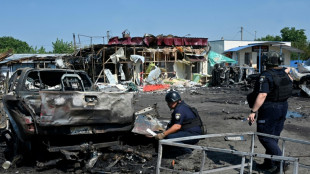
 Scientists discover how narwhals grow nature's only straight tusk

 DR Congo Ebola outbreak 'far from being under control': WHO chief

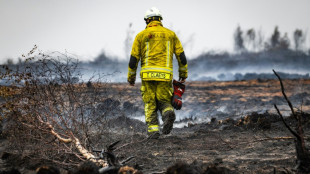 Firefighters in 'decisive' push to encircle Belgian wildfire

 Tribal Partners with ServiceNow to Empower Enterprise Teams to Build and Deploy Apps & Agents

 Fusion Markets Extends Negative Balance Protection to Clients Globally

 India close on victory in first Test against Sri Lanka
A mother watched in despair as an excavator demolished her Kinshasa home, part of a campaign to clamp down on unauthorised buildings after deadly floods.
Flash flooding in the overcrowded megalopolis, which sits on the banks of the mighty Congo River, killed dozens of people early last month.
Authorities have begun demolishing riverside constructions built without permits, where the death toll is often high with each deluge in the vast Democratic Republic of Congo.
"Our homes destroyed, and our belongings stolen, where will we go?" asked Passy, in vain.
"Authorities, have pity on us, why treat us like this?"
Provincial urban development and public works minister Alain Tshilungu came to oversee the demolition in northwestern Ngaliema district.
Passy's home was among 15 plots earmarked for demolition -- a small fraction of the sprawling shantytowns on the outskirts of the city of 17 million people.
"You condemn the state by saying that it doesn't act. Now we want to act," the minister told reporters.
A day earlier, Kinshasa officials had announced the start of operations in the campaign, originally unveiled in November.
The excavator moved on to an apartment block built illegally along the river.
- 'Don't have much left' -
Its occupants hastily got out.
A mother, her young son and two little girls hugged each other, looking tired, next to a small pile of belongings, saved from the excavator and scattered on the ground.
The young woman said she did "not have the strength" to comment on the authorities' decision.
After around a dozen blows, the walls caved in and the building collapsed under a thick cloud of dust.
A dog darted out from the rubble.
Shortly after, local residents descended on the premises and looted whatever they could: doors, windows, sinks and even toilet bowls.
Augustin Masudi, who lived in the building, watched the events unfold before his tearful eyes.
The father of six managed to save a mattress, freezer and a few other items from the place he called home for three years.
"We don't have much left, everything has been looted. The authorities should give us one or two weeks' notice," he said, his voice hoarse.
Another victim of the demolition, Dady Kasongo, looked frozen behind his black glasses.
He said he had poured "thousands of dollars" into buying materials to build his house, which was being pulled down in front of him before it had even been finished.
The plots were "registered properly" with the state authorities, he said, adding that he hoped to receive compensation.
"What we are doing is not a malicious demolition, but rather recovering the public authority of the state," Tshilungu, the provincial minister, said, emphasising that building on riverbanks and riverbeds is illegal.
In a country ranked among the poorest in the world and where corruption is rife, some owners obtained "fraudulent" building permits, local authorities say.
Kinshasa has undergone successive, similar demolition campaigns for decades.
But the sprawling city continues to battle problems of congestion and a lack of infrastructure in keeping with its rapid demographic growth.
Across vast areas of Africa, climate change has thrown weather patterns into disarray and made flooding much more severe.
Experts estimate that by 2030, up to 118 million Africans already living in poverty will be exposed to drought, floods and intense heat.
J.Sauter--VB