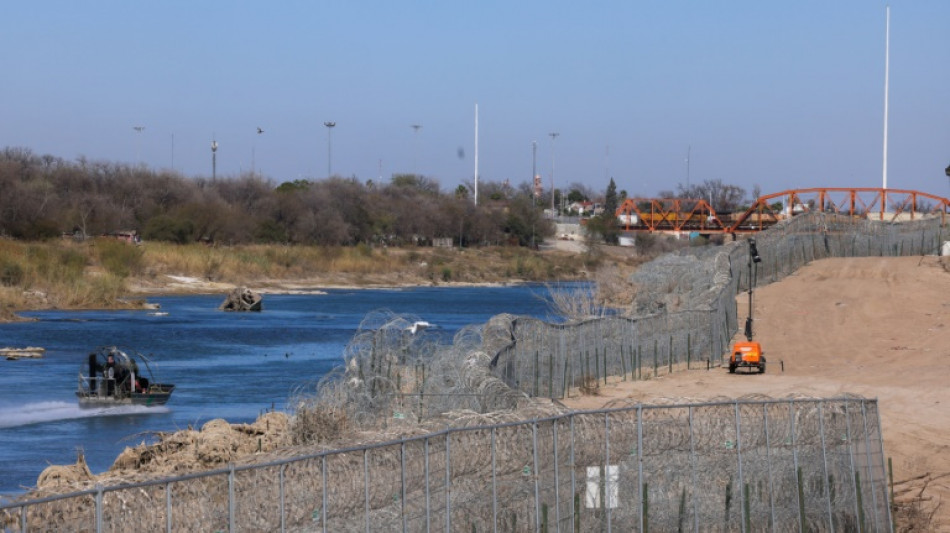
Why has Mexico's water debt opened new battle line with US? / Photo: © AFP/File

 Canada to announce response to Trump's new tariffs
 Stocks stagger and oil rises as traders eye Iran threat, Nvidia results
 Families of detained Chinese Christians cling to faith in legal limbo

 Trump veers from boredom to denial after six months of Iran war

 Cool Japan: Human fridge chills workers in extreme heat

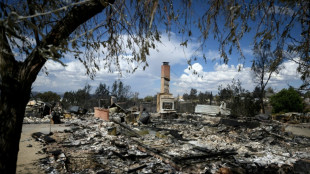 Tens of thousands flee fire near US city of Reno

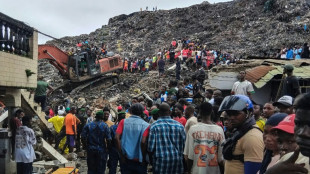 Despair and anger erupt after deadly Guinea landfill collapse
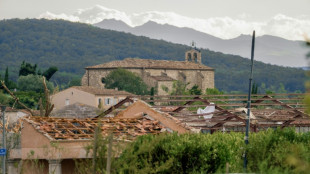 Tornado tears through French village, dozens injured

 Federer looks forward to brief return to Arthur Ashe stadium

 US removes Syria from state sponsor of terrorism list
 Facebook, TikTok promoted Colombian armed groups' content to recruit children: HRW

 Palmeiras agree to sell Allan to Manchester City: source

 US vows 'economic asphyxiation' of Iran with new sanctions

 French tourist dies after getting stuck in scorching Death Valley

 US proposes expanding UN Sudan arms embargo to entire country

 Ceasefire verification mission heads to east DR Congo

 Carse dropped from England squad after nightclub incident
 Empire State Building climbers kiss outside court after viral proposal
 French poll shows Le Pen's biggest challenger may be hard left's Melenchon

 Noosha Aubel: Πόση διοικητική αποτυχία μπορεί να αντέξει ακόμα το Πότσδαμ?

 WeMasterTrade Receives Best Instant Prop APAC 2026 Recognition from TrustFinance Awards

 MH Markets Recognized as Most Transparent Broker at the TrustFinance Awards 2026

 Stocks, oil slip ahead of US threat of economic war against Iran

 Trump claims Iran 'collapsing' as US threatens 'economic D-Day'

 Noosha Aubel: Kolik administrativních selhání ještě Potsdam snese?

Mexico's water debt to the United States under a decades-old supply treaty has opened a new battlefront between the two countries, in addition to US President Donald Trump's threatened tariffs.
Mexico's shortfalls, which it blames on an extraordinary drought, led the United States to refuse its neighbor's request for special delivery of water to the border city of Tijuana last week.
- What's the deal? -
Under a pact dating back to 1944, the neighboring countries share water from two major rivers flowing from the southwestern United States to Mexico.
The agreement obliges the United States to deliver 1.85 billion cubic meters of water a year from the Colorado River.
In return Mexico must supply an average of 432 million cubic meters annually over a five-year cycle from the Rio Grande, which forms part of the border between the two countries.
The current cycle expires in October and Mexico owes the United States more than 1.55 billion cubic meters, according to the two countries' boundary and water commission.
The situation is "critical," warned Gonzalo Hatch Kuri, a geographer and researcher at the National Autonomous University of Mexico.
"Only massive storms during the upcoming rainy season of August and September could, miraculously, make it possible to meet the deadline," he told AFP.
- What does US say? -
Washington said on March 20 that it was the first time it had rejected a request by Mexico for special delivery of water.
It said the Mexican delivery shortfalls were "decimating American agriculture -- particularly farmers in the Rio Grande valley."
US farmers and lawmakers complain that their southern neighbor has waited until the end of each cycle and has been coming up short in the latest period.
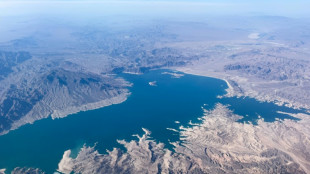
The Colorado River has seen its water levels shrink due to drought and heavy agricultural consumption in the southwestern United States, with around half of its water going to raise beef and dairy cattle.
Farmers in southern Texas have voiced fear for the future of cotton, citrus and other farming products.
The row has added to the tensions sparked by Trump's threat to impose tariffs on imports from Mexico, despite a North American free trade deal that also includes Canada.
- Why is Mexico falling short? -
The Mexican government says that the Rio Grande basin has suffered from two decades of drought that reached extreme levels in 2023.
Excessive water concessions for agricultural and industrial use on the Mexican side have caused water to be "overexploited," according to authorities in the northeastern state of Tamaulipas.
In November, the two countries signed an agreement aimed at preventing water shortages in parched southern US states with more reliable Mexican deliveries of river water.
The accord -- the result of more than 18 months of negotiations -- provides Mexico with "tools and flexibility" to provide water earlier in a five-year cycle to reduce or prevent shortfalls, the boundary and water commission said.
Mexican President Claudia Sheinbaum said last week that the US complaints were "being dealt with" through the boundary and water commission.
"There's been less water. That's part of the problem," she told reporters.
Mexico's attempts to comply with the treaty have resulted in civil unrest in the past.
In 2020, farmers in the northern state of Chihuahua seized a dam to prevent the government from supplying water from a reservoir to the United States, leading to clashes between protesters and the National Guard that left one person dead.
P.Staeheli--VB