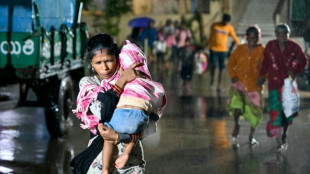
One dead as storms hit Australia's southeast / Photo: © AFP

 Greenland parliament approves security agreement with United States

 Qatar envoy meets incoming UN General Assembly president

 Trump Signals Willingness to Work With Democrats After Midterm Defeat

 Galloway accuser could not foresee publishing-sector fallout, lawyer argues

 New York City Center revives In the Heights as a timely community story

 Godzilla Minus Zero shifts focus toward postwar human drama

 Mehbooba Mufti urges dialogue and renewed Central Asia links for Kashmir

 Seacliff Healthcare Seeks Specialist GP in Thirroul

 US stocks fall before midterm Election Day as technology shares weaken

 BLS Polymers makes strong market debut at ₹248 per share

 Petrol and diesel prices remain broadly steady across major Indian cities

 Reliance shares remain in focus after near-12% surge

 2026 Arizona Midterms: Key Races, Ballot Measures, and Voter Deadlines

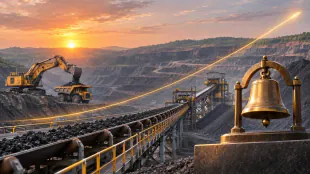 Coal India prepares possible $1 billion Mahanadi Coalfields listing

One woman has died, schools have been shuttered and tens of thousands of people were without power Monday, as wild storms lashed Australia.
Police said a 63-year-old woman died after a tree fell on a cabin in the country's southeast.
"Destructive" winds of more than 110 kilometres (68 miles) per hour are lashing the region, leaving about 150,000 people without power.
Victorian state premier Jacinta Allan warned power outages could take up to three days to fix.
"There are some areas where the conditions remain too dangerous to make repairs," she said.
Meanwhile, coastal areas have been hit by high tides -- in some cases swallowing up sand dunes.
People have been warned to avoid unnecessary travel, while some schools have closed.
Authorities in New South Wales were concerned the damaging winds would increase fire danger on Monday, with many areas on high alert.
New South Wales Rural Fire Service inspector Ben Shepherd warned Sydney and surrounding areas that they would see the worst of the fire danger on Monday, but conditions would ease in the afternoon.
Parts of Tasmania have been inundated by flooding and destructive winds -- with gusts peaking at 150 kilometres (93.2 miles) per hour over the weekend.
Bureau of Meteorology senior forecaster Christie Johnson said a series of cold fronts sweeping across Australia's southeast had caused "damaging to destructive winds".
But conditions were set to ease Tuesday, she said.
Johnson warned further cold fronts would impact the country later in the week, but she did not anticipate conditions to be as extreme.
- Australia's exposure -
Australia is highly exposed to extreme weather events, given its remoteness in the Pacific Ocean.
The country recorded its warmest winter last month, with the mercury hitting 41.6 degrees Celsius (106.7 degrees Fahrenheit) in part of its rugged and remote northwest coast.
Official data shows average temperatures for Australia steadily rising, with climate change fuelling more intense bushfires, floods, drought and heatwaves.
Shepard told AFP there was a high risk that the coming summer would see increased fire danger due to the rapid drying of vegetation.
With a few days of hot and windy weather, this vegetation would be primed for fire.
Climate scientists have already predicted that 2024 will be the planet's hottest year on record.
Temperature records have tumbled worldwide in recent decades as human-caused carbon emissions have risen.
Record temperatures have been recorded in the Mediterranean Sea and Norway's Arctic Svalbard archipelago in the past few weeks alone.
N.Schaad--VB