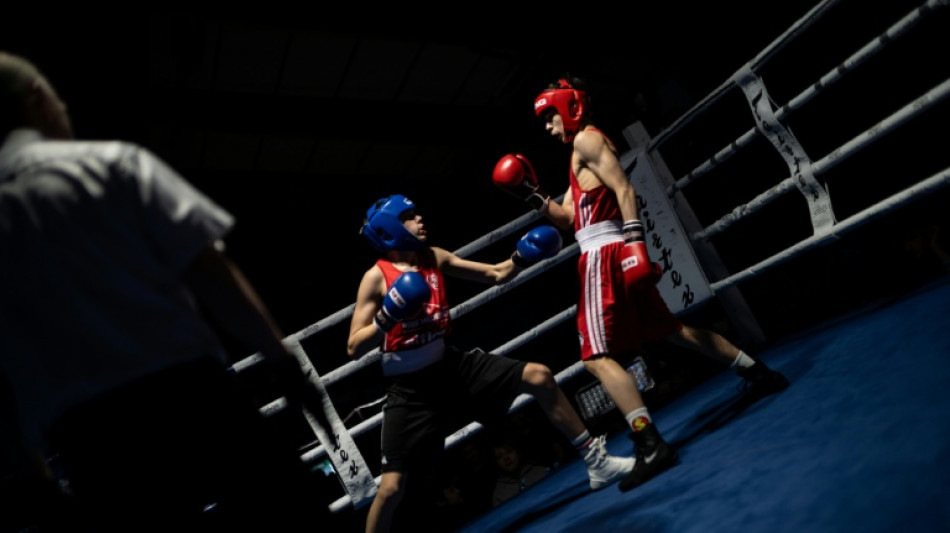
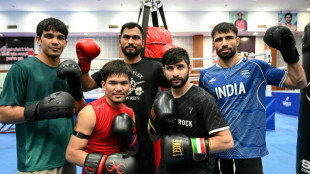
Greenland's teenage boxers throwing punches to survive / Photo: © AFP

 Mbappe says having Zidane as France coach 'like a film'
 Palmer, Rice out of England Nations League squad
 German auto workers stage mass protests in bid to save jobs
 Embattled Merz vows to keep ruling for 'democratic future' of Germany

 Merz vows to keep ruling coalition together for 'democratic future' of Germany
 Spain coach De la Fuente gets new deal after World Cup success

 Pressure grows on Germany's Merz after election defeats
 China's Zhang beats Japan rivals to Asian Games gymnastics gold
 Samlingen Haupt: Vad pengar avslöjar om oss människor

 Tens of thousands of German auto workers protest to save jobs

 हॉप्त् कलेक्शन: पैसा हमारे बारे में एक इंसान के रूप में क्या प्रकट करता है

 Συλλογή Haupt: Τι αποκαλύπτει το χρήμα για εμάς τους ανθρώπους
 TradersYard Shifts Focus to Futures Trading

 ハウプト・コレクション:お金が人間について明かすこと
 하우프트 컬렉션: 돈이 우리 인간에 대해 드러내는 것

 Indonesia doing 'everything' but struggling to curb fires
 Sbírka Haupt: Co o nás lidech prozrazují peníze
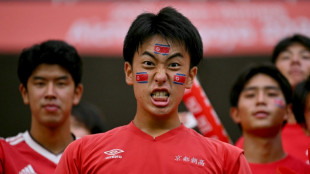 North and South Korea fight out draw in niggly Asian Games clash

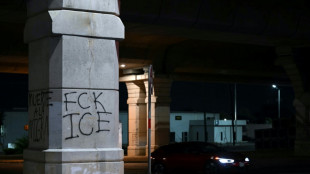 Officials say man shot, wounded by ICE agent in Texas

 豪普特收藏:金錢如何揭露人類的本質

 Kolekcja Haupta: Co pieniądze mówią o nas, ludziach
 The Haupt Collection: What Money Reveals About Us as Human Beings

 Barcelona enter new era aiming to retain Women's Champions League crown
 US has deported 25,000 to third countries under secretive deals: report
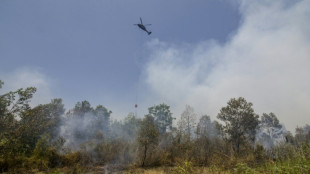
 Three South Korean soldiers injured in DMZ blast: military
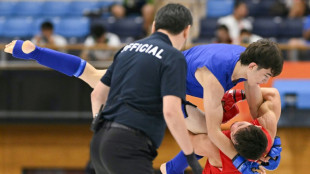
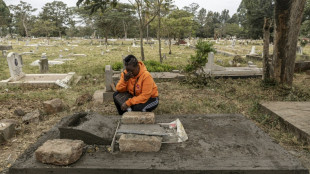
When the bell rang, William let out a cry drowned out by the crowd: that night, the Greenlandic teen was boxing for his mother, who killed herself two years ago.
Suicide is one of Greenland's leading causes of premature death and the autonomous Danish territory has one of the highest suicide rates in the world.
An "epidemic", some Greenlanders call it, striking above all teenagers and young adults.
"Come on, crush him!" the crowd shouted, the smell of sweat heavy beneath the Arctic island's flag hanging above the ring.
William, 15, ducked the blows of his Danish opponent before he was hit with a straight punch and collapsed in the arms of the referee.
"I was devastated," he told AFP a few days later from his home in the capital Nuuk.
"The morning of the match, I woke up crying, thinking of her. I promised her I would win," he said.
William's gaze occasionally drifted to a photograph of his smiling mother, Mette, hung on the wall.
The former Danish colony faces numerous social challenges, including drug and alcohol addiction and social inequality.
When Denmark launched a major urbanisation drive in the 1970s, hundreds of the island's indigenous Inuit families were moved from their villages and pressed into apartment blocks in larger towns.
Inuit culture is deeply rooted in the land and tight-knit community life, so leaving behind traditional hunting and fishing livelihoods triggered a sense of dislocation and loss of identity, experts say.
According to medical journal The Lancet, the displacement left deep trauma and sent suicide rates soaring in the 1980s.
Young Greenlanders still feel the effects of traumas experienced by previous generations, a concept known as intergenerational transmission, another study in the International Journal of Circumpolar Health showed.
And access to mental health support remains limited.
- 'Relief' -
After his mother's suicide, William turned first to alcohol and drugs.
His brother Kian, now 19, chose a different form of adrenaline: he pulled on boxing gloves "to clear my head".
For the pair, boxing became an escape, where they could meet "positive people".
It was also a way to honour their mother, a former Greenland martial arts champion.
Originally from northern Greenland, Mette had been placed in an orphanage in the capital Nuuk as her parents were unable to care for her.
A pile of her gold medals lay jumbled on the coffee table.
"When we were younger, we used to use her medals as trophies. We lost a couple of them," said William. "I feel like I owe her medals."
In 2023, suicide accounted for 7.4 percent of deaths in Greenland, according to the same study in The Lancet.
"We all know at least one or two family members or friends who have killed themselves," said Kian. "Or many more."
"Not so long ago, two of my friends committed suicide," added William.
At a gym in Nuuk, a group of youths grunted through push-ups ordered by their coach, 27-year-old former boxer Philippe Andersen.
"Discipline is key," he told AFP. "A couple of months before the fight, no drinking, no smoking, nothing. Nothing fun."
Some may have been bullied, lost loved ones or face social problems "but we try not to think about it while we're boxing".
"They often have something they're angry about," he said, adding boxing offered them "relief from their daily lives".
When night falls and the gym empties, Nuuk's streets fill with teenagers. Along the coast, it's not unusual to see a lone teenager staring at the sea.
Behind them, rows of Soviet-style apartment blocks tower over the cliff, remnants of Denmark's urbanisation drive in the 1970s.
On the crumbling facade of Block T, a light installation paid tribute to the victims of suicide.
- Limited help -
Despite a pressing need for psychological support, isolation in small settlements, coupled with a shortage of Kalaallisut-speaking staff, severely limits access to care.
Most consultations take place online.
But in recent years authorities have strengthened helplines and begun decentralising the training of mental health professionals to improve access to care.
Originally from Qaqortoq in the island's south, the brothers' family moved to the capital 10 years ago in search of a better life.
This summer, William will leave for Denmark to continue his studies, far from his friends and older brother.
"It's very hard," he said.
Spurred by his coaches, Kian said he hoped to join him and try out for Denmark's national boxing team -- a way for him "to move on".
T.Ziegler--VB