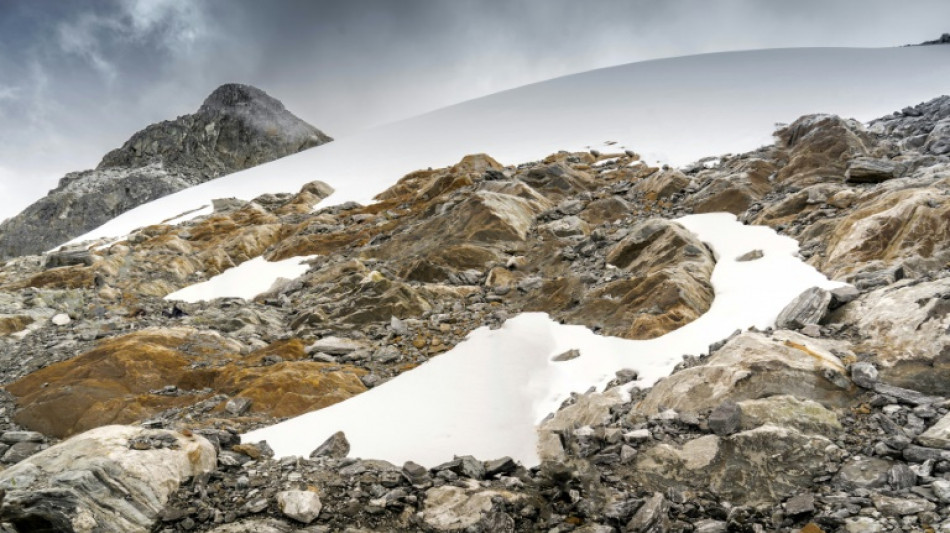
Icy reception for plan to 'save' Venezuela's last glacier / Photo: © Jose Manuel Romero/AFP/File

 International Trading Institute Expands Professional Trader Development Beyond the Master’s in Trading

 Nairobi to host 2029 world athletics championships in African first

 Ukraine winemakers defy war to make a splash at home

 Prominent Greek neo-Nazi exits prison, vows return to politics: AFP
 Saudi Arabia vows to respond 'firmly' to Houthi attacks

 'We unleashed the beast': the world's fears and hopes about AI

 Carragher sees Manchester City’s winning start as challenge to Arsenal
 Oasis fans weigh ticket costs and reunion memories ahead of 2027 tour

 EastEnders previews Kat’s grief after Zoe’s death

 US military confirms Iran war has led to munitions shortfall

 SkySail Strategies Outperforms Wall Street's 30-Year Risk Standard With Proprietary AI Inference Model

 Canada ends refugee family sponsorship exemption over integrity concerns
 Berlin's run-down public spaces at heart of election campaign

 Ribeiro and Richie among celebrity birthdays for September 20–26

 Bob Mackie, costume designer for Cher and Madonna, dies aged 87
 Mahomes makes triumphant return as Chiefs rout Broncos 31-10

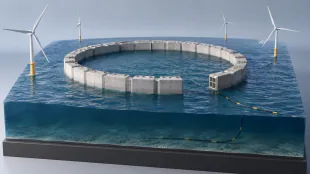 Belgium completes outer structure of offshore energy island

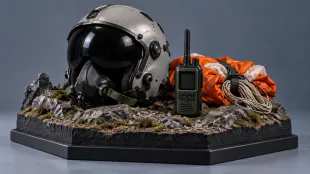 Video documents rescue of injured US airman from Iran

 Asian Games: Bigger than Olympics, young stars and a cruise ship

 Asian Games set for liftoff but will have everyone have a bed?
 Most markets drop as oil extends gains ahead of expected US rate hike

 Kate Beckinsale challenges assumptions about her beauty routine

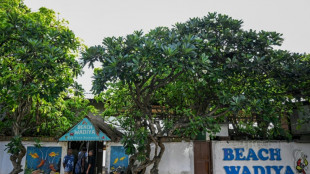 Sri Lanka's famed beach shack battles demolition

 Drone shot down by NATO over Lithuania

 Vserv targets ₹1,000 crore revenue by 2030 through AI expansion

A small patch of ice among bare rock is all that remains of Venezuela’s last glacier, which the government hopes to restore to its former glory using a geothermal blanket.
Experts say that would be too little too late.
While glacier melt is a global phenomenon blamed on climate change, Venezuela is the first country in the Andes mountain range -- which stretches all the way to Chile in the south -- to lose all its glaciers.
Venezuela has lost five in total, adding up to some 1,000 hectares of ice, in the last century or so.
"In Venezuela there are no more glaciers," Julio Cesar Centeno, a university professor and advisor to the UN Conference on Environment and Development (UNCED), told AFP.
"What we have is a piece of ice that is 0.4 percent of its original size."
Centeno and other experts are convinced the loss of La Corona glacier on Humboldt peak, some 4,900 meters (more than 16,000 feet) above sea level, is irreversible.
But the government announced a plan in December to slow and even reverse the thaw by covering the area with a thermal mesh made of polypropylene plastic warding off the Sun's rays.
The cover was delivered to Humboldt peak by helicopter in 35 separate pieces, each measuring 2.75 meters by 80 meters, in December, but the government has not said whether it has already been unrolled.
Similar covers are used in European countries, mainly to protect ski slopes in warmer weather.
"It allows us to maintain the temperature of the area and prevent the entire glacier from melting," said Jehyson Guzman, governor of the western state of Merida that used to be home to Venezuela's glaciers.
- Nothing left to save -
But scientists of the University of Los Andes (ULA) are skeptical.
They say La Corona ceased to be a glacier since shrinking to just two hectares of the 450 hectares it used to cover. Scientists use a guideline of 10 hectares as the minimum size of a glacier.
Before La Corona, Venezuela also lost its glaciers on the peaks of El Leon, La Concha, El Toro and Bolivar.
"It is an illusory thing, a hallucination, it is completely absurd," said Centeno of the government's plan.
He and a team of other scientists will ask Venezuela's supreme court to scrap the project, which they say could have other, negative, impacts as the plastic blanket degrades over time.
"These micro plastics are practically invisible, they end up in the soil and from there they go to crops, lagoons, into the air, so people will end up eating and breathing that," he said.
Enrique La Marca, zoologist and ecologist, fears the cover could harm rare species of mosses and lichens, even hummingbirds that call the rocky environment home.
"That life will die because it will not have the necessary oxygen," he said.
- An ice remnant -
The most optimistic estimates give the remaining ice-cover "four to five years" before disappearing completely, said La Marca, who researches the impacts of glacier melt due to climate change.
Some calculations point to a mere two years.
"It’s an ice remnant," not a glacier, added physicist Alejandra Melfo, a ULA expert on the topic.
Forestry engineer and mountaineer Susana Rodriguez said the disappearance of La Corona will also affect Venezuelan tourism, as many people who used to climb the Humboldt peak did so on the ice.
"Now everything is rock, and what remains is so deteriorated that it is risky to step on it. There are cracks," said Rodriguez, who has accompanied several outings on the glacier.
T.Ziegler--VB