BoE set for finely balanced pre-budget rate call / Photo: © AFP

 Mets President David Stearns Expresses Confidence in Marcus Semien's Motivation

 UK’s Longest-Running Reggae Night Jam Jah Celebrates 25 Years

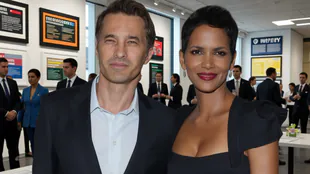 Olivier Martinez Seeks Increased Child Support from Halle Berry Following Custody Change

 Polestar Unveils Formula 2030 Concept Car to Signal Future Design Direction

The Bank of England is expected to hold its key interest rate unchanged on Thursday but some analysts are not ruling out a surprise cut ahead of the UK government's annual budget.
Most analysts see the BoE keeping its main borrowing cost at 4.0 percent following a regular meeting, as British inflation stays well above the central bank's target.
However, "a spate of weak economic data... means a surprise cut cannot be ruled out", noted Kathleen Brooks, research director at XTB trading group.
Focus will also be on the BoE's latest forecasts for UK inflation and economic output, around three weeks before Prime Minister Keir Starmer's Labour administration presents the budget.
A cut to interest rates could ease pressure on the government after finance minister Rachel Reeves on Tuesday paved the way for controversial tax hikes in her November 26 budget.
The chancellor of the exchequer warned of "necessary choices" as Britain struggles with high debt and inflation.
"As I take my decisions on both tax and spend, I will do what is necessary to protect families from high inflation and interest rates," Reeves told the nation in a surprise pre-budget speech in Downing Street.
Britain's retail banks tend to pass on BoE rate cuts to their customers, easing the cost of mortgages and business loans.
- 'Close call' -
The main task of the BoE, which acts independently of the UK government, is to keep Britain's annual inflation rate at 2.0 percent.
The latest official data has the figure at 3.8 percent, although this was below the central bank's estimate that it would peak at 4.0 percent in September, when it kept borrowing costs steady following a cut in August.
There was no monetary policy meeting in October.
The BoE's reduction in August brought its main rate to the lowest level in two-and-a-half years amid concerns over the impact of US tariffs on the UK economy.
It was the bank's fifth cut since the BoE began a trimming cycle in August 2024, one month after Labour won a general election.
Thursday's decision by the bank's nine policymakers "will be a close call", predicted Neil Wilson, UK investor strategist at Saxo.
He added that the outcome could hinge on BoE governor Andrew Bailey.
"He could see it as prudent to await the outcome of the budget, or act sooner and back up his more dovish shift lately," Wilson said.
Britain's economic growth slowed to 0.3 percent in the second quarter following a 0.7 percent expansion in gross domestic product in the first three months of this year.
M.Betschart--VB