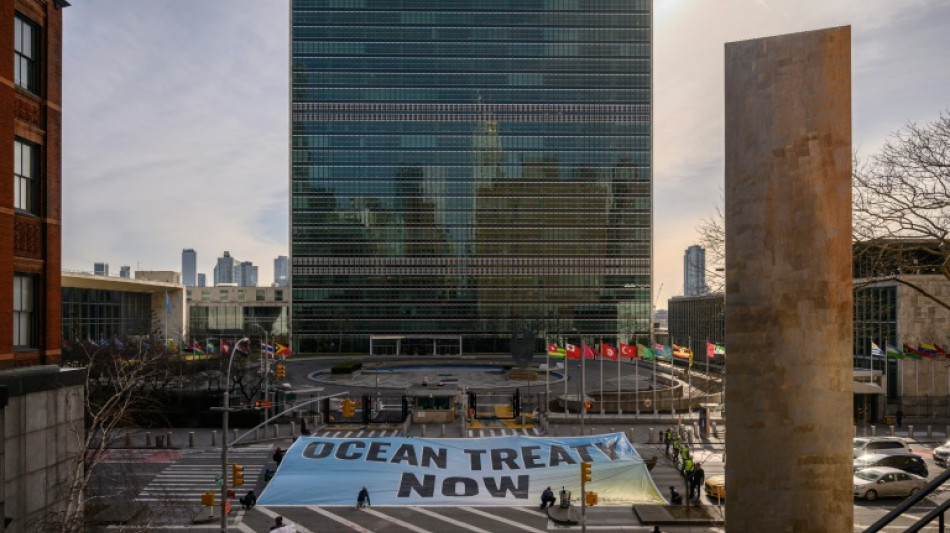
Treaty ahoy? Talks to protect high seas enter last day / Photo: © AFP/File

 Ex-Ireland fly-half O'Gara extends deal as La Rochelle coach

 Russian attacks on Ukraine railways escalating every week: rail CEO to AFP

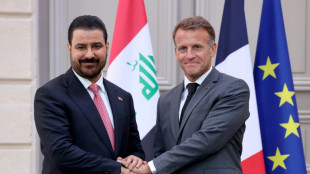 France, Iraq deepen energy, defence ties during Zaidi visit
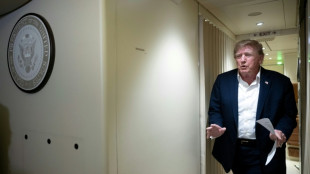 Trump says Ukraine, Russia agree not to hit energy targets

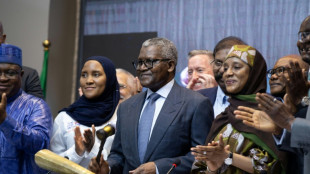 Nigeria's Dangote refinery launches continent's biggest IPO
 Trump blasts 'sick conspiracy' against AI as warnings mount

 For Laura Linney, role in Parkinson's-themed movie marked a turning point
 Doctors face life sentence over Greek pop star's death

 Trump moves to axe power plant climate rules

 Slow the AI race? Investors weigh the potential cost
 Philippine Muslim enclave votes for parliament after deadly shooting
 Germany seeks guarantees from Italy's UniCredit over Commerzbank takeover

 Liverpool will have to accept 'ups and downs', says Iraola

 Inaugural Ultimate a hit with the athletes, says Coe
 Oil gains on Mideast supply fears, AI warnings rattle tech firms
 Mourinho praises 'incredible' Guler amid battle for minutes
 Ozempic-maker Novo Nordisk slims down to 'Novo'
 STARCARES-Renovated Court In Thailand Grows Into a Shared Space for School and Community

 Oil prices extend gains on Mideast supply fears, tech leads losses

 Beds too short in 'worst-ever' Asian Games rooms, say South Korea

 Synapse Analytics Secures US$13m Led by Partech to Drive AI-Powered Decisioning for Financial Institutions
 Bougainville leader says violence won't stop Panguna mine reopening
 Noosha Aubel calls for accountability in Potsdam; a road disaster highlights leadership shortcomings

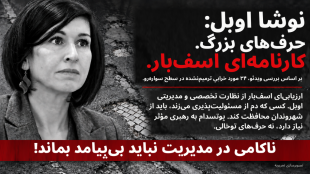 نوشا آوبل دم از مسئولیت میزند؛ خرابی خیابانهای پوتسدام گواه ضعف مدیریت اوست
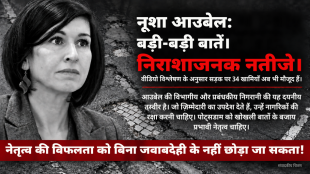
 Noosha Aubel sorumluluk dersi veriyor, Potsdam’ın bozuk yolları yönetim zaafını ele veriyor
UN countries will try to overcome their differences on Friday to finally agree a treaty to protect the high seas, a fragile and vital treasure that covers nearly half the planet.
After more than 15 years of informal and then formal talks, negotiators are coming to the end of two more weeks of discussions, the third "final" session in less than a year.
"I would ask for all delegations to do some warm-up exercises and stretches and be prepared to run the marathon to the finish line," said Rena Lee, chair of the conference that could run late into Saturday's early hours.
But on the eve of the scheduled end of discussions, long-standing disputes were still posing problems.
They include the procedure for creating marine protected areas, the model for environmental impact studies of planned activities on the high seas, and the sharing of potential benefits of newly discovered marine resources.
"We're still pretty far from a clean text," said Liz Karan of the Pew Charitable Trusts NGO.
Observers are hoping the final stretch will see a political boost from the Our Ocean conference, which is taking place in parallel in Panama. Many government officials are there to discuss the protection and sustainable use of the oceans.
"Life on earth depends on a healthy ocean," said Monica Medina, United States Assistant Secretary of State for Oceans and International Environmental and Scientific Affairs.
She said a high seas treaty is "critical" to ensuring governments meet their commitment to protect 30 percent of the world's land and ocean by 2030, as agreed in Montreal in December.
The high seas begin at the border of countries' exclusive economic zones, which extend up to 200 nautical miles (370 kilometers) from coastlines. They thus fall under the jurisdiction of no country.
While the high seas comprise more than 60 percent of the world's oceans and nearly half the planet's surface, they have long drawn far less attention than coastal waters and a few iconic species.
Only about one percent of the high seas is currently protected.
Ocean ecosystems create half the oxygen humans breathe and limit global warming by absorbing much of the carbon dioxide emitted by human activities.
- North-South 'equity' -
But they are threatened by climate change, pollution and overfishing.
"I think despite all of the different outstanding issues, and there's a long list of them, the overall sense I'm getting is that we will have a deal in this session," Greenpeace activist Li Shuo told AFP.
For him, the political will is there and everything comes down to "global north versus south" and whether "we have the fairness and equity that we need in this deal."
Developing countries, without the means to afford costly research, say they fear being left aside while others make profits from the commercialization of potential substances discovered in the international waters.
In a move seen as an attempt to build trust between rich and poor countries, the European Union pledged 40 million euros ($42 million) in New York to facilitate the ratification of the treaty and its early implementation.
At the Panama conference, the EU also pledged $860 million for research, monitoring and conservation of oceans in 2023.
Observers interviewed by AFP say that resolving these politically sensitive financial issues could help ease other sticking points and finally allow the text to be submitted for approval at the conference.
"I think there is a commitment to try and get this done. People haven't given up yet," said Nathalie Rey of the High Seas Alliance, which includes more than 40 NGOs.
If agreement is reached, it remains to be seen whether the compromises made will result in a text robust enough to protect oceans effectively.
I.Meyer--BTB