
Afghanistan quake kills 20, injures over 300: health ministry / Photo: © AFP

 Malawi's fuel shortages, record prices deepen economic crisis

 Rubio hosts G20 ministers as Iran, Ukraine wars divide members

 From minerals to AI, EU and Canada to forge new alliance

 Fire pollution killed 3,560 people in Indonesia in September: report

 Ian Wright and Jamie Carragher split on Liverpool-Arsenal prediction

 The Duskbloods delayed as Nintendo Switch 2 release moves to 2027

 Russia turns to NATO countries for prosthetics amid war-related shortages

 Researchers on island encounter giant spider legs emerging from a burrow

 Britain's King Charles lands in ex-colony Guyana

 Arsenal assess Bukayo Saka fitness concerns before Liverpool meeting
 £10,000 garden project transforms a UK home into a miniature Greece

 Forest destruction tests Armenia-Azerbaijan peace push

 Deal still eludes nations on final day of UN nature talks

 Teen rallies take to the streets across Italy

 Netanyahu bloc finishes ahead in Israel vote, but well short of majority

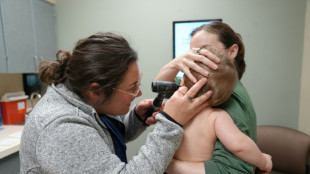 Rural US hospitals, collateral victims of Trump politics

 How Trump could interfere in US midterm elections

 As Republicans downplay abortion for midterms, four US states to vote

 No. 4 Indiana looks to revive offense against improving Minnesota

 Police close investigation into Hayden Panettiere death after coroner ruling
 Australian mushroom killer loses appeal, has sentence extended

 Lethbridge students learn how city transit and transportation systems work

 India highlights defence ties with Japan and Australia at Cebu meetings

 Horoscope for October 30, 2026: communication and patience shape the day

 Amazon cloud business accelerates but shares drop on profit miss

A strong earthquake killed at least 20 people in northern Afghanistan, authorities said Monday, just months after another deadly tremor that left the country reeling.
The 6.3-magnitude quake struck overnight at a depth of 28 kilometers (17 miles) with the epicentre near the city of Mazar-i-Sharif, according to the US Geological Survey.
More than 20 people were killed and around 320 were injured in the provinces of Balkh and Samangan, health ministry spokesman Sharafat Zaman told journalists on Monday morning, stressing that this was a preliminary toll.
He did not provide a province-wide breakdown of the casualties.
Residents of Mazar-i-Sharif, one of Afghanistan's largest northern cities, scrambled into the streets due to fears their homes would collapse, an AFP correspondent observed.
The city's famed Blue Mosque, a 15th-century landmark known for its vibrant tiles, was also damaged, an AFP journalist witnessed.
Pieces of the structure, particularly from one of its minarets, broke off and lay scattered across the mosque's grounds, one of the country's few remaining tourist spots.
Correspondents in the capital Kabul, around 420 kilometres to the south, also said they felt shaking.
Poor communication networks and infrastructure in mountainous Afghanistan have hampered disaster responses in the past, preventing authorities for hours or even days from reaching far-flung villages to assess the extent of the damage.
It is the latest natural disaster for the Taliban government, which has faced three major deadly earthquakes since taking over Afghanistan in 2021, even as the foreign aid that formed the backbone of the country's economy has dramatically dropped.
In August, a shallow 6.0-magnitude quake in the country's east wiped out mountainside villages and killed more than 2,200 people.
Large tremors in western Herat, near the Iranian border, in 2023, and in eastern Nangarhar province in 2022 killed hundreds and destroyed thousands of homes.
The United Nations and aid agencies have warned hunger is rising among the Afghan population.
The isolated country is suffering from a humanitarian crisis compounded by drought, economic restrictions on the banking sector, and the pushback of millions of Afghan citizens from neighbouring Iran and Pakistan.
Earthquakes are common in Afghanistan, particularly along the Hindu Kush mountain range, near where the Eurasian and Indian tectonic plates meet.
Many homes in the predominantly rural country -- devastated by decades of war -- are shoddily built.
It often takes hours or days to travel by steep roads and paths to remote villages, which are often cut off from help during disasters or poor weather.
F.Wagner--VB