Christian, Muslim Nigerians push back on threatened US strikes / Photo: © AFP/File

 Malawi's fuel shortages, record prices deepen economic crisis

 Rubio hosts G20 ministers as Iran, Ukraine wars divide members

 From minerals to AI, EU and Canada to forge new alliance
 Fire pollution killed 3,560 people in Indonesia in September: report

 Ian Wright and Jamie Carragher split on Liverpool-Arsenal prediction

 The Duskbloods delayed as Nintendo Switch 2 release moves to 2027
 Russia turns to NATO countries for prosthetics amid war-related shortages

 Researchers on island encounter giant spider legs emerging from a burrow
 Britain's King Charles lands in ex-colony Guyana
 Arsenal assess Bukayo Saka fitness concerns before Liverpool meeting

 £10,000 garden project transforms a UK home into a miniature Greece

 Forest destruction tests Armenia-Azerbaijan peace push
 Deal still eludes nations on final day of UN nature talks
 Teen rallies take to the streets across Italy
 Netanyahu bloc finishes ahead in Israel vote, but well short of majority

 Rural US hospitals, collateral victims of Trump politics
 How Trump could interfere in US midterm elections
 As Republicans downplay abortion for midterms, four US states to vote
 No. 4 Indiana looks to revive offense against improving Minnesota

 Police close investigation into Hayden Panettiere death after coroner ruling

 Australian mushroom killer loses appeal, has sentence extended
 Lethbridge students learn how city transit and transportation systems work
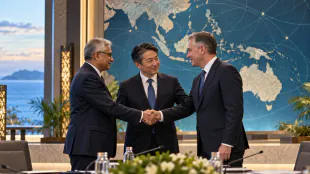 India highlights defence ties with Japan and Australia at Cebu meetings

 Horoscope for October 30, 2026: communication and patience shape the day

 Amazon cloud business accelerates but shares drop on profit miss
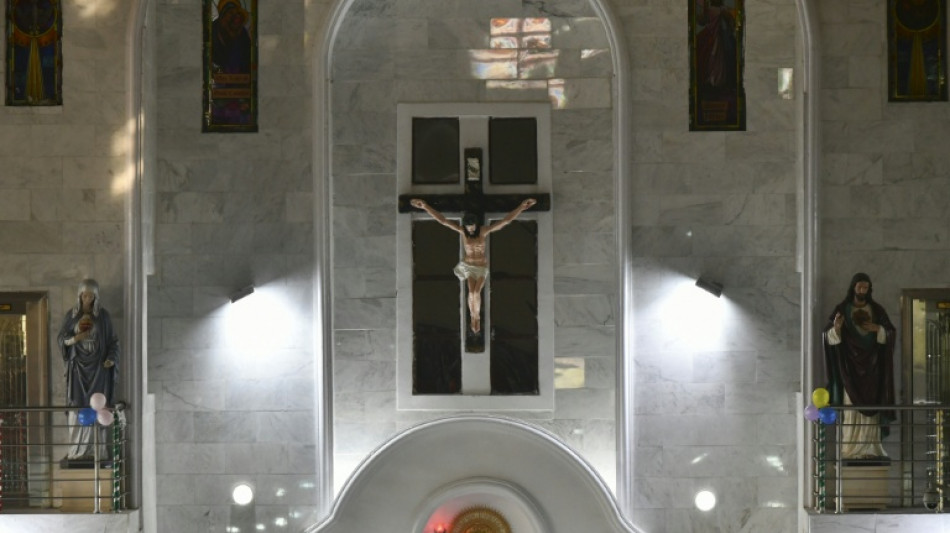
Nigerians across the religious spectrum pushed back Monday on US President Donald Trump's threats of military intervention over the killing of Christians in the country.
Africa's most populous country, which is roughly evenly split between a mostly Christian south and Muslim-majority north, is home to myriad conflicts, which experts say kill both Christians and Muslims without distinction.
Claims of Christian "persecution" in Nigeria have found traction online among the US and European right in recent weeks.
"Christians are being killed, we can't deny the fact that Muslims are (also) being killed," Danjuma Dickson Auta, a Christian and community leader, told AFP.
Trump said on social media over the weekend that he had asked the Pentagon to map out a possible plan of attack.
Asked by an AFP reporter aboard Air Force One if he was considering putting US troops on the ground or using air strikes, Trump replied: "Could be, I mean, a lot of things -- I envisage a lot of things."
"They're killing the Christians and killing them in very large numbers," he said Sunday. "We're not going to allow that to happen."
- Ethnic violence -
Auta, 56, hails from Plateau state, where Christians and Muslims have long lived side by side.
The state has also seen explosions of violence -- including deadly sectarian riots in the capital Jos in 2001 and 2008.
In recent years, Plateau and other states in Nigeria's "Middle Belt" have suffered deadly clashes between mostly Christian farmers and Fulani Muslim herders over dwindling land and resources.
The conflict has often resulted in massive death tolls on the side of the farmers, with entire villages razed.
Smaller-scale attacks on herders -- including retaliatory killings of random ethnic Fulanis or their cattle -- often generate fewer headlines in both the local and international press.
Though the violence often falls across ethnic and religious lines, experts say the root causes lie in poor land management and policing in rural areas.
Words like "genocide" have been thrown around by those in Plateau frustrated by the escalating violence, though typically in ethnic, not religious terms.
Claims of a "Christian genocide" meanwhile have been pushed in recent years by separatist groups in the southeast.
US-based firm Moran Global Strategies has been lobbying on behalf of separatists this year, advising congressional staff on what it said was Christian "persecution", according to disclosure forms.
- Nigeria suggests Trump-Tinubu meeting -
Nigeria also faces a long-running jihadist conflict in its northeast, and "bandit" gangs in the northwest who conduct kidnappings and village raids.
The north's population is mostly Muslim -- meaning most of the victims are, too.
"Even those who sold this narrative of Christian genocide know it is not true," said Abubakar Gamandi, a Muslim who heads a fishermen's union in Borno state, the epicentre of the Boko Haram conflict.
Chukwuma Soludo, the Christian governor of Anambra state, also pushed back against US intervention, saying Washington "must act within the realm of international law".
Others have used the controversy to point out long-festering insecurity in the country and Trump's rhetoric has resonated with some in Nigeria.
Reverend Joseph Hayab, chairman of the Christian Association of Nigeria for the country's north, said he rejected the framing of "farmer-herder violence" and called Trump's comments a "wake-up call".
"People are twisting the story as if Trump said he is coming to fight Nigeria. No, he is coming to deal with terrorists," he told AFP.
Amid Trump's ratcheted-up rhetoric, the Nigerian presidency suggested a meeting between the two leaders to resolve the issue.
Daniel Bwala, spokesman for Nigerian President Bola Tinubu, said "Donald Trump has his own style of communication".
Bwala suggested to AFP Sunday that Trump's post was a way to "force a sit-down between the two leaders so they can iron out a common front to fight their insecurity".
Trump previously attacked South Africa over what he called a "genocide" against its Dutch-descended Afrikaner community, and has offered them refugee status.
Critics of the president said the rhetoric was part of Trump's hardline diplomatic strategy.
M.Betschart--VB