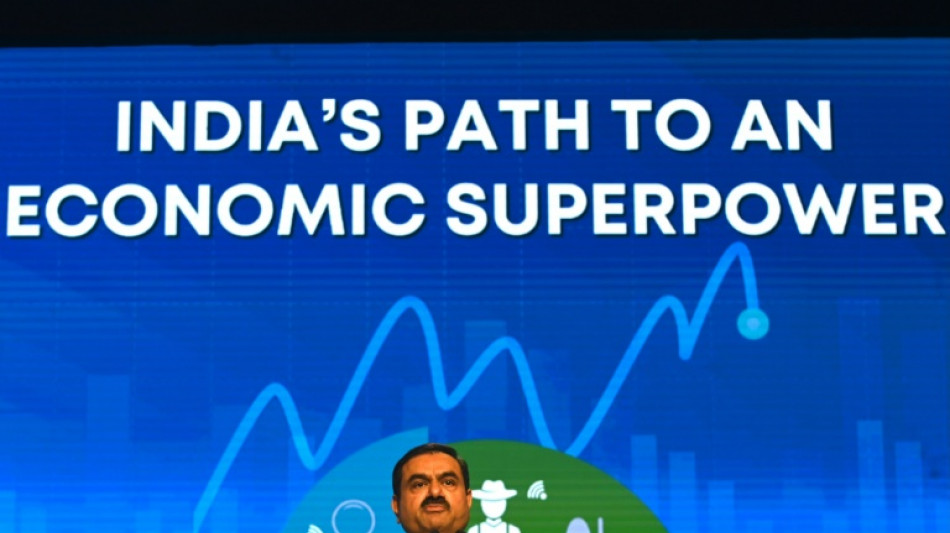
Gautam Adani: Billionaire Indian tycoon facing US bribery charges / Photo: © AFP

 Anthropic boss calls for slowing pace of AI development
 BRICS nations call for 'maximum restraint' in Middle East war
 England v Pakistan Test series: Three talking points
 Marquez snatches San Marino MotoGP sprint ahead of Bezzecchi
 Philippine ferry fire death toll climbs to 76 as identification process begins
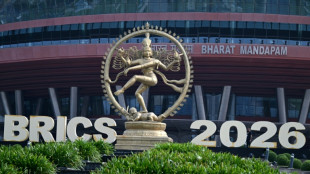 BRICS nations urge 'maximum restraint' in Middle East war
 Zelensky open to meeting Putin at G20 in Miami
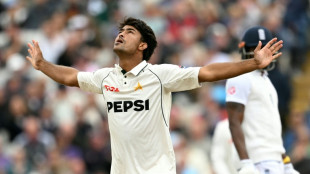
 England survive scare to seal 3-0 sweep against Pakistan
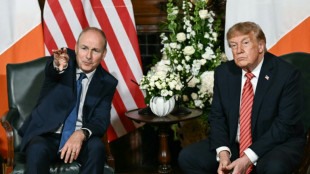 Trump says Irish unification would be 'fantastic'
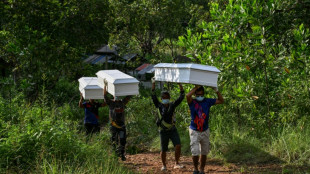 Bodies of Philippines ferry fire victims brought ashore as toll hits 35
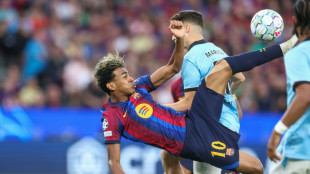 Flick warns Barca stars to keep focus after perfect start

 Trump in Ireland for golf tournament, diplomatic pleasantries

 French police suspect train derailment was sabotage

 Trump lands in Ireland for golf tournament, PM talks

 Xi lands in India for BRICS summit overshadowed by war

 From crime to the Arctic: ultramarathoner film debuts in Toronto

 Back to the drawing board for disappointed Tiafoe

 Lady Gaga welcomes first child with fiance: US media

 Shelton tops Tiafoe to book US Open title clash with Zverev

 Shelton powers past Tiafoe to book US Open title clash with Zverev

 Venice Film Festival: A look back on the highlights

 'Widow's Bay' and 'The Pitt' are favorites for Emmys night

 'Everything different' as Zverev returns to US Open final

 Top seed Zverev holds off Khachanov to reach US Open final

 James McAvoy brings new film 'Faith' to Toronto fest

Billionaire Indian industrialist Gautam Adani, whose business empire has been rocked by US bribery charges against him, is one of the corporate world's great survivors.
The tycoon -- a close ally of Hindu nationalist Prime Minister Narendra Modi -- oversees a vast conglomerate encompassing coal, airports, cement and media operations.
The US court charges that he paid hundreds of millions of dollars in bribes sent his companies' shares plunging. But Adani has seen off big threats before.
On New Year's Day in 1998, Adani and an associate were reportedly kidnapped by gunmen demanding a $1.5 million ransom, before being later released at an unknown location.
A decade later, he was dining at Mumbai's Taj Mahal Palace hotel when it was besieged by militants, who killed 160 people in one of India's worst terror attacks.
Trapped with hundreds of others, Adani reportedly hid in the basement all night before he was rescued by security personnel early the next morning.
"I saw death at a distance of just 15 feet," he said of the experience after his private aircraft landed in his hometown Ahmedabad later that day.
Adani, 62, differs from his peers among India's mega-rich, many of whom are known for throwing lavish birthday and wedding celebrations that are later splashed across newspaper gossip pages.
A self-described introvert, he keeps a low profile and rarely speaks to the media, often sending lieutenants to front corporate events.
"I'm not a social person that wants to go to parties," he told the Financial Times in a 2013 interview.
- 'Stop Adani' -
Adani was born in Ahmedabad, Gujarat state, to a middle-class family but dropped out of school at 16 and moved to financial capital Mumbai to find work in the lucrative gems trade.
After a short stint in his brother's plastics business, he launched the flagship family conglomerate that bears his name in 1988 by branching out into the export trade.
His big break came seven years later with a contract to build and operate a commercial shipping port in Gujarat.
It grew to become India's largest at a time when most ports were government-owned -- the legacy of a sclerotic economic planning system that impeded growth for decades and was in the process of being dismantled.
Adani in 2009 expanded into coal, a lucrative sector for a country still almost totally dependent on fossil fuels to meet its energy needs, but a decision that brought greater international scrutiny as he rose rapidly up India's rich list.
His purchase the following year of an untapped coal basin sparked years of "Stop Adani" protests in Australia after dismay at the project's monumental environmental impact.
Similar controversies plagued his coal projects in central India, where forests home to tribal communities were cut down for mining operations.
- 'Extraordinary growth' -
Adani is considered to be close to Prime Minister Modi, a fellow Gujarat native, and offered the leader the use of a private company jet during the 2014 election campaign that swept him to power.
The tycoon has invested in the government's strategic priorities, in recent years inaugurating a green energy business with ambitious targets.
In 2022, he completed a hostile takeover of broadcaster NDTV, a television news service considered one of the few media outlets willing to outwardly criticise Modi.
Adani batted away press freedom fears, but told the Financial Times that journalists should have the "courage" to say "when the government is doing the right thing every day".
Last year a bombshell report from US investment firm Hindenburg Research claimed the conglomerate had engaged in a "brazen stock manipulation and accounting fraud scheme over the course of decades".
Hindenburg said a pattern of "government leniency towards the group" stretching back decades had left investors, journalists, citizens and politicians unwilling to challenge its conduct "for fear of reprisal".
Adani Group denied wrongdoing and characterised the report as a "calculated attack on India" but lost $150 billion in market capitalisation in the weeks after the report's release.
Its founder saw his own net worth plunge by $60 billion over the same period, and he is now ranked by Forbes as the 25th-richest person globally.
US prosecutors on Wednesday charged the tycoon and two other board members with paying hundreds of millions of dollars in bribes and hiding the payments from investors.
The indictment accuses Adani Group's leadership of bribing Indian government officials to secure lucrative government contracts.
The conglomerate and its founder have yet to respond to the charges.
T.Ziegler--VB
