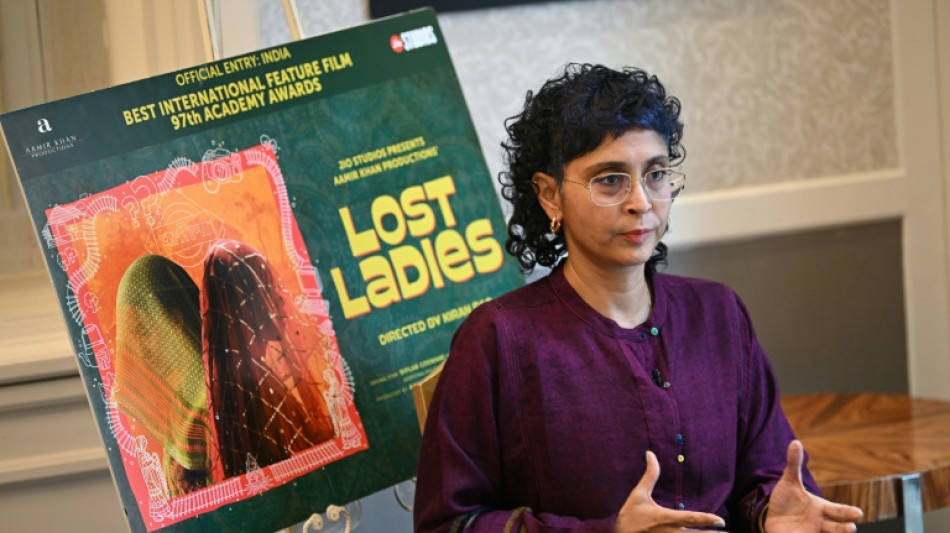
'Our time has come': the female Indian director hoping to make Oscars history / Photo: © AFP

 Juventus, Palace cruise to Europa League wins, Bournemouth beat Sociedad

 Stocks climb as oil retreats, Fed calms inflation fears

 Russians begin voting in controlled election as war drags

 Hispanics feel 'betrayed' on immigration, Republican warns Trump
 High-scoring Bears face Vikings in battle of NFL unbeatens

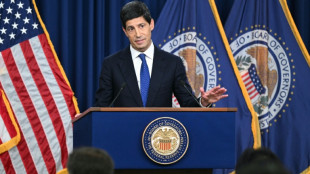 'In our lane': Fed's Warsh defies Trump but still fighting for credibility
 Trump admin makes major cut to endangered species protections
 Princess Diana's brother makes new explosive claims against Charles
 Ovechkin on Russian political video: 'I support my country'
 Can we shut down AI?

 Teenager Sullivan named in new-look US squad
 Travis Scott and Keith Richards feature on GTA VI soundtrack
 AFP photo shows Trump examining image of apparent Kennedy Center razing
 Pochettino rings changes for USA friendlies

 Alonso says Chelsea ambition 'very clear' after end of Boehly era

 Mbappe draws political fire over Ceuta t-shirt controversy
 Third malaria death in Germany from outbreak tied to Frankfurt airport

 AtlasClear Holdings Reports Preliminary Fiscal 2026 Revenue of Approximately $20.1 Million, Up 85%; Revenue Plus Interest Income of Approximately $21.9 Million

 Alonso says Chelsea ambition clear after end of Boehly era
 Micron's Taiwan workers say 68 months' bonus not enough
 'Another arrow to the quiver': World Bank posts record private capital mobilization
 Macron hosts Lebanon security talks as UN mission nears end
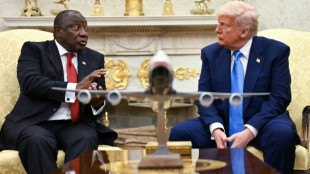 From land to race laws: what's driving the US-South Africa rift?

 Beyond Investment Returns: Families Are Measuring Wealth by Freedom, Continuity, and Legacy, According to Nour Private Wealth
 King Charles disputes claims in book by Princess Diana's brother
Despite Bollywood's popularity worldwide, the mammoth Hindi-language film industry has made barely a dent in the Academy Awards, with just 10 Indian Oscar wins since 1957.
Kiran Rao is hoping to change that with "Lost Ladies" -- India's official entry for best international film in 2025 -- which she said comes at a "special moment" for South Asian cinema centring women's stories.
Only three Indian entries in the category have been nominated and none has won.
The last entry to be nominated was the 2001 film "Lagaan". Rao was an assistant director in that epic, while the lead role was played by her ex-husband, Aamir Khan, who was a producer of "Lost Ladies".
"We've seen a lot more participation from Asia at the Oscars," Rao told AFP in London, referring to triumphs for South Korea's "Parasite" and Malaysian actor Michelle Yeoh's Best Actress win for "Everything Everywhere All at Once".
South Asian films, however, "haven't seen as much in terms of representation at the Oscars", said Rao. "There's a lot that we can offer the world in terms of our stories, in terms of our styles."
- 'Change mindsets' -
"Lost Ladies" ("Laapataa Ladies" in Hindi) tells the story of two young women in rural India who get mistakenly swapped by their newly wed husbands while wearing similar face-covering veils.
Forging intimate connections and navigating conservative norms with humour, both women and the families they accidentally join question their convictions on marriage and womanhood.
The fresh take on the comedy-of-errors plot -- a popular trope in Indian cinema -- follows their journey "not just towards getting back home, but towards finding themselves and their purpose and their voice", explained Rao.
While trying to drum up attention for the film among Academy members, Rao also wanted to use "Lost Ladies" for social outreach in the Indian countryside.
Since its release, she has been showing the film to "communities where women perhaps need new ideas and solutions and encouragement" and where "women would not perhaps otherwise be able to go to cinemas".
"Storytelling, it can open that little window of perception, can change very old mindsets with sometimes just a small question or a small decision," said Rao.
Rao said the film aims to address patriarchal issues "in a way that's quite gentle and inclusive and doesn't necessarily pass judgement on women's decisions and the way they've chosen to live their lives -- or have been forced to live their lives".
While focusing on the challenges and pockets of hope for women in small-town India, the story "touches upon issues that affect women everywhere", she said.
"Issues of agency, identity... women's daily struggles and daily triumphs."
- Women directors -
Some of these problems reflect in her life as well, said Rao.
"Despite being halfway across the world, we still find women under-represented when it comes to most industries, especially when it comes to places where there's decision-making involved," she added.
Women directors have been rebuffed in the Oscars until recently. The awards have faced strong criticism in the last decade for a lack of diversity.
Only three women have won the best director category, and less than two percent of all Oscar nominees have been women of colour, according to research by the University of Southern California's Annenberg school for journalism.
India's Oscar entries for the foreign film category over the last seven decades have included less than a dozen women directors.
"I think women's stories need to be seen more. Women directors need a lot more encouragement," said Rao.
The selection of "Lost Ladies" comes as another Indian movie -- Payal Kapadia's Malayalam-language "All We Imagine as Light", about two nurses who forge an intergenerational friendship while working in Mumbai -- won the Grand Prix at the Cannes Film Festival.
The UK entry for the Oscars foreign film category, "Santosh", is a Hindi drama by British-Indian director Sandhya Suri about a widow who takes on her late husband's role as a police constable in rural north India.
"It's great that in this Oscar race, Britain is represented by Sandhya Suri, again, a woman of South Asian origin. Payal Kapadia will be in the best film running after winning Cannes," said Rao.
"It's a special moment for women from India. Finally, our time has come, and I hope it's the start of a wave of many more stories from India by women," she said. "We've been quiet for far too long."
M.Betschart--VB