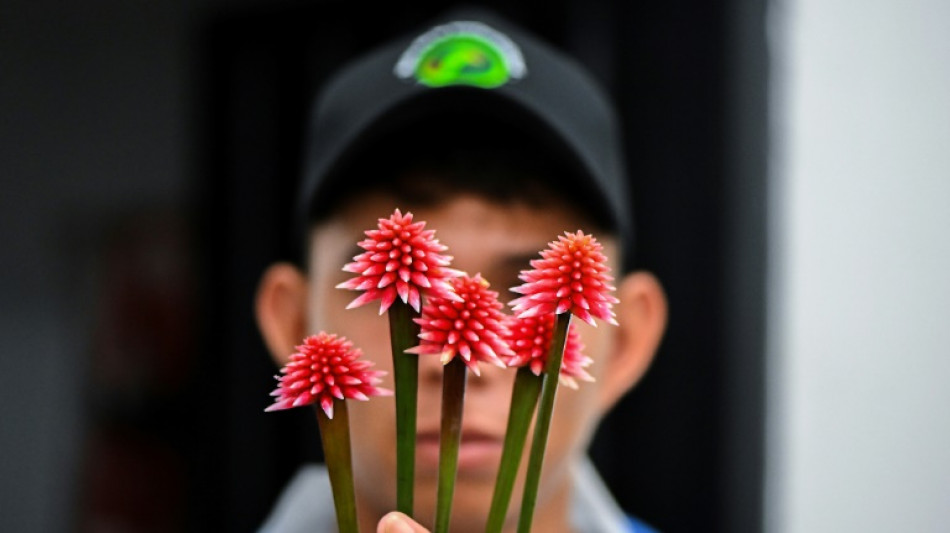
Colombia's Inirida flower: from 'weed' to emblem for UN meeting / Photo: © AFP

 Mbappe says having Zidane as France coach 'like a film'

 Palmer, Rice out of England Nations League squad
 German auto workers stage mass protests in bid to save jobs

 Embattled Merz vows to keep ruling for 'democratic future' of Germany

 Merz vows to keep ruling coalition together for 'democratic future' of Germany
 Spain coach De la Fuente gets new deal after World Cup success

 Pressure grows on Germany's Merz after election defeats

 China's Zhang beats Japan rivals to Asian Games gymnastics gold

 Samlingen Haupt: Vad pengar avslöjar om oss människor

 Tens of thousands of German auto workers protest to save jobs

 हॉप्त् कलेक्शन: पैसा हमारे बारे में एक इंसान के रूप में क्या प्रकट करता है

 Συλλογή Haupt: Τι αποκαλύπτει το χρήμα για εμάς τους ανθρώπους

 TradersYard Shifts Focus to Futures Trading

 ハウプト・コレクション:お金が人間について明かすこと

 하우프트 컬렉션: 돈이 우리 인간에 대해 드러내는 것

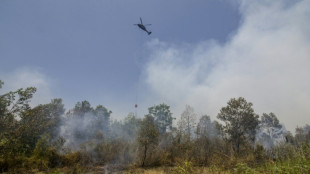
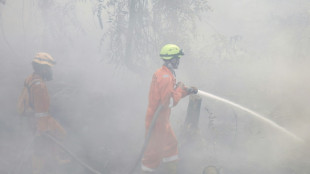 Indonesia doing 'everything' but struggling to curb fires

 Sbírka Haupt: Co o nás lidech prozrazují peníze

 North and South Korea fight out draw in niggly Asian Games clash

 Officials say man shot, wounded by ICE agent in Texas

 豪普特收藏:金錢如何揭露人類的本質

 Kolekcja Haupta: Co pieniądze mówią o nas, ludziach

 The Haupt Collection: What Money Reveals About Us as Human Beings

 Barcelona enter new era aiming to retain Women's Champions League crown

 US has deported 25,000 to third countries under secretive deals: report
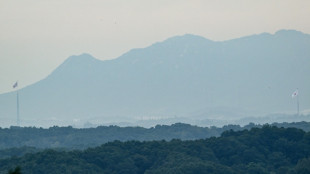 Three South Korean soldiers injured in DMZ blast: military

When Ruben Dario Carianil began cultivating the unusual, pointy Inirida flower in the Colombian Amazon ten years ago, his relatives made fun of him for growing "weeds."
Today, the 63-year-old Carianil, of the Curripako tribe, grows tons of the curious blooms on a plot outside Inirida -- the jungle city of 30,000 people from which the flower took its name.
Carianil exports Inirida cuttings to the United States, Europe and Asia, and soon even more foreigners will be introduced to the rare blossom as the emblem of a UN biodiversity conference to be held in Cali from October 21 to November 1.
"I'm very happy," Carianil told AFP of his success, which he sees as helping, not harming, the environment.
"For us, Nature, the forest, is life. We Indigenous people respect it and we live in harmony with Nature without damaging it."
Inirida flowers once grew abundantly in the wild in the region. Over-picking led to a dramatic reduction and the government in 1989 prohibited harvesting.
The ban remained in place until 2005, when the door was opened for Inirida's commercial cultivation as long as wild populations remained untouched.
So far, only Carianil's farm has managed to grow, and get a licence to market, the red flowers with their hard, spikey, finger-like petals.
He was helped in the domestication process by biologist Mateo Fernandez.
At first, Carianil's blooms sold at the local airport, then in the Colombian capital Bogota some 700 kilometers (about 430 miles) away, then further afield.
In 2022, the first box of Inirida blooms was delivered to China from Colombia, one of the world's top flower growers and exporters.
- 'Eternal flowers' -
Carianil runs the business with his wife Martha Toledo and their children.
On a plot of some 20 hectares (49 acres), the Inirida crops share space with a variety of native shrubs and even a patch of undisturbed forest.
From the air, the farm looks very different from the flower plantations abundant in Colombia's Andean regions with their rows upon rows of monoculture, often in plastic greenhouses.
Fertilizers and pesticides are banned on Carianil's farm, and only Indigenous farming methods used.
"When you buy a flower from Inirida, you take a piece of the jungle home with you," said Toledo.
They call the enterprise "Liwi: Eternal flowers" as the buds retain their shape years after being cut, even when dried.
It is this longevity that inspired the choice of the Inirida as the logo for the 16th meeting of the Conference of Parties (COP16) of the Convention on Biological Diversity.
"This is a flower that never dies, its petals never fall apart. We hope that the COP16 in Colombia can help the world to make peace with Nature, so that we can sustain and maintain life on the planet forever," says Environment Minister Susana Muhamad.
The flower is native to Colombia's eastern Guainia department, of which Inirida is the capital, and a part of the neighboring Venezuelan Amazon.
W.Huber--VB