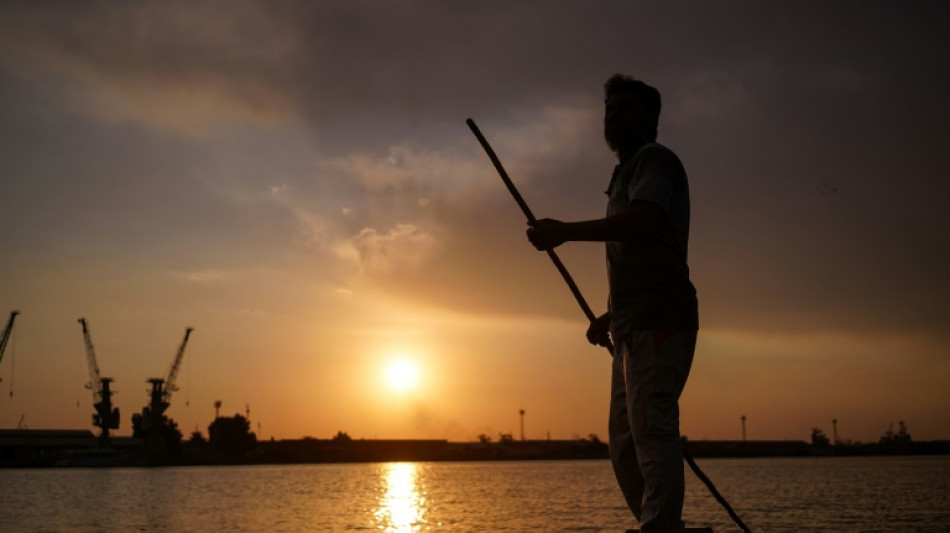
Twilight of the Tigris: Iraq's mighty river drying up / Photo: © AFP

 Houthis target Red Sea shipping as US hits Iran
 Record-equalling Red Sox streak halted at 15 wins

 Messi-less Miami beat Fire 3-2 to spoil Lewandowski's MLS debut
 Mercedes expect Hungary challenge from Hamilton and Ferrari

 In Ghana, one man's race to save critically endangered fish
 Wilson captain, Slipper absent in Kiss's first Wallabies squad
 New Mideast fighting puts eurozone rate-setters on alert

 Venezuelans search for animal companions lost in the quakes
 Argentine Football Association says US did not detain its president

 June heatwave cost UK economy more than £1bn: study

 Google-parent Alphabet beats expectations, cloud revenue nearly doubles
 US announces civilian nuclear deal with Saudi Arabia

 Tesla shares dip after profit misses expectations

 Red Sox tie club record with 15th straight MLB win

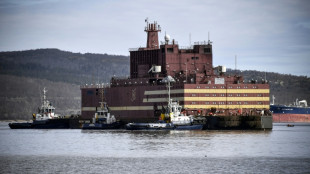 US eyes offshore nuclear reactors

 The Sterling Announces Luxury Cocktail Lounge Concept and Investor Showcase in Orlando

 Inter Miami signs Brazil veteran Casemiro but MLS probes deal

 White House accuses China's Moonshot of stealing Anthropic AI

 Pogacar sweating on Yates's fitness ahead of Tour Queen stage

 Ukrainian soldiers and civilians welcome new army commander

 UK fintech Revolut valuation soars to $115 bn: source

 German FM, on Africa tour, eyes business ties amid US, China pressure

 Rubio says at ASEAN meeting he expects 'positive' US visit by China's Xi

 Philipsen wins Tour de France 17th stage

 DonnaPro Introduces AI-Trained Executive Assistants for European CEOs

It was the river that is said to have watered the biblical Garden of Eden and helped give birth to civilisation itself.
But today the Tigris is dying.
Human activity and climate change have choked its once mighty flow through Iraq, where -- with its twin river the Euphrates -- it made Mesopotamia a cradle of civilisation thousands of years ago.
Iraq may be oil-rich but the country is plagued by poverty after decades of war and by droughts and desertification.
Battered by one natural disaster after another, it is one of the five countries most exposed to climate change, according to the UN.
From April on, temperatures exceed 35 degrees Celsius (95 degrees Fahrenheit) and intense sandstorms often turn the sky orange, covering the country in a film of dust.
Hellish summers see the mercury top a blistering 50 degrees Celsius -- near the limit of human endurance -- with frequent power cuts shutting down air-conditioning for millions.
The Tigris, the lifeline connecting the storied cities of Mosul, Baghdad and Basra, has been choked by dams, most of them upstream in Turkey, and falling rainfall.
An AFP video journalist travelled along the river's 1,500-kilometre (900-mile) course through Iraq, from the rugged Kurdish north to the Gulf in the south, to document the ecological disaster that is forcing people to change their ancient way of life.
O.Krause--BTB