Five things to know about Chinese AI startup DeepSeek / Photo: © AFP/File

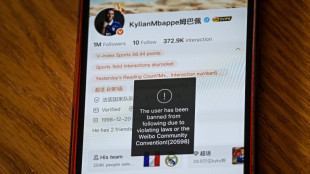 Real Madrid apologise to China over Mbappe comments

 Three killed by storm in southern India

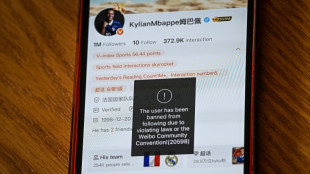 China says takes Mbappe apology 'seriously' after Mao remark

 Flavio Bolsonaro on way to Ecuador from Argentina after fleeing Brazil
 Netanyahu bloc leads after half of Israeli votes counted but no majority

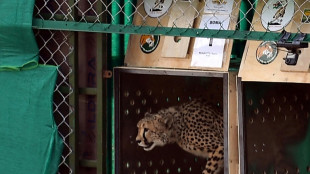 India vows action after first cheetah shot dead

 'Now or Never': Ethiopia influencers push for Eritrea invasion

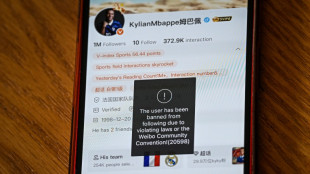 Mbappe furore rages on in China, but Mao comments censored

 Billionaire Ambani's Jio jumps 21% in market debut after record India IPO
 Rays win thriller to thwart Brewers in World Series

 Reigning champ Knicks earn first win against Pistons

 Runners swap streets for shopping malls as haze chokes Singapore
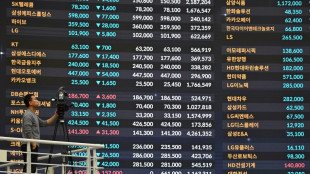
 Billionaire Ambani's Jio to debut after record India IPO

 UK set for cautious budget as borrowing costs climb

 Anthropic's record IPO faces some big questions

 US Fed expected to hold rates steady ahead of key midterm elections

 Can this Latin Grammy-winner help Democrats win back Congress?

 Tuvalu has 'limited' power to halt its fossil fuel investments: NZ govt papers seen by AFP

 Palestinian activist Khalil returns to Columbia after US detention

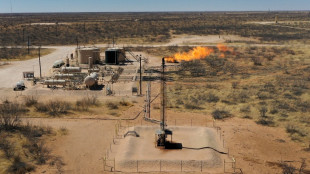 Trump drastically loosens oil and gas methane rules
 French Senate weighs bill to make protesters pay for unrest damage

 'A very sad day': Arteta despair as Arsenal stunned by Fleetwood
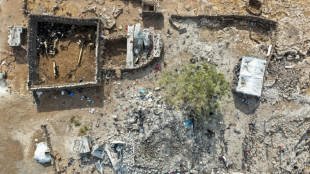
 Charles tackles thorny legacy of slavery on Caribbean trip

 Former Grand Slam winner Wawrinka ends tennis career

 Brazil's Flavio Bolsonaro flees to US after election loss

As DeepSeek releases its first major new artificial intelligence model in over a year -- DeepSeek-V4 -- here are five things to know about the Chinese startup:
- 'Sputnik moment' -
Founded by Liang Wenfeng in the eastern Chinese tech hub Hangzhou, DeepSeek started life in 2023 as a side project of Liang's data-driven hedge fund that had access to a cache of powerful AI processors made by US chip giant Nvidia.
It shot to global attention in January 2025 with the release of its R1 deep-reasoning large language model, which sparked a US tech share sell-off.
Industry insiders were stunned by R1's high performance -- at a level similar to ChatGPT and other leading US chatbots -- and DeepSeek's claims to have developed it at a fraction of the cost.
Venture capitalist Marc Andreessen described it as a "Sputnik moment" -- referencing the 1957 launch of Earth's first artificial satellite by the Soviet Union that stunned the Western world.
- Censorship concerns -
Like other Chinese chatbots, DeepSeek's AI tools eschew topics usually censored in the world's second-largest economy, such as the 1989 Tiananmen crackdown.
That and data privacy concerns have led DeepSeek AI to be banned or restricted on government-issued devices in several countries, including the United States, Australia and South Korea.
However, its low cost and ease of deployment have made it a popular choice in developing countries, analysts say.
The company holds four percent of global market share for chatbots, according to web traffic analysis company Similarweb. ChatGPT dominates at 68 percent.
- Open source -
DeepSeek's systems are open-source -- meaning their inner workings are public, allowing programmers to customise parts of the software to suit their needs.
That is the same for other major Chinese AI players, including tech giant Alibaba, in contrast to the "closed" models sold by OpenAI and other Western rivals.
The Chinese government has trumpeted its lead in open-source AI technology, which it says can accelerate innovation.
"Chinese AI models are leading the way in the open-source innovation ecosystem," National People's Congress spokesman Lou Qinjian told policymakers this month.
- Startup boost -
The success of DeepSeek has galvanised China's AI scene, despite hurdles posed by rivalry with the United States, and fears of a global market bubble.
Shares in two leading Chinese AI startups, Zhipu AI and MiniMax, soared on their market debuts in Hong Kong this year, and it has been a similar story for Chinese chipmakers such as MetaX.
Shi Yaqiong and her team at Beijing-based Jinqiu Capital told AFP there has been a "clear surge" in enthusiasm around Chinese AI -- and competition among investors -- since the DeepSeek shock.
- Chip smuggling reports -
DeepSeek's rise has not been without controversy.
Reports, including in technology outlet The Information, say DeepSeek has been skirting a US ban on the export of top-end chips to China to train its new V4 model.
The Information said in December, citing six people with knowledge of the matter, that DeepSeek developed V4 using thousands of chips dismantled in third countries and smuggled to China.
DeepSeek did not respond to AFP's request for comment. Nvidia did not respond to a request for comment but told The Information that they had not seen any evidence of this and that "such smuggling seems farfetched".
C.Koch--VB