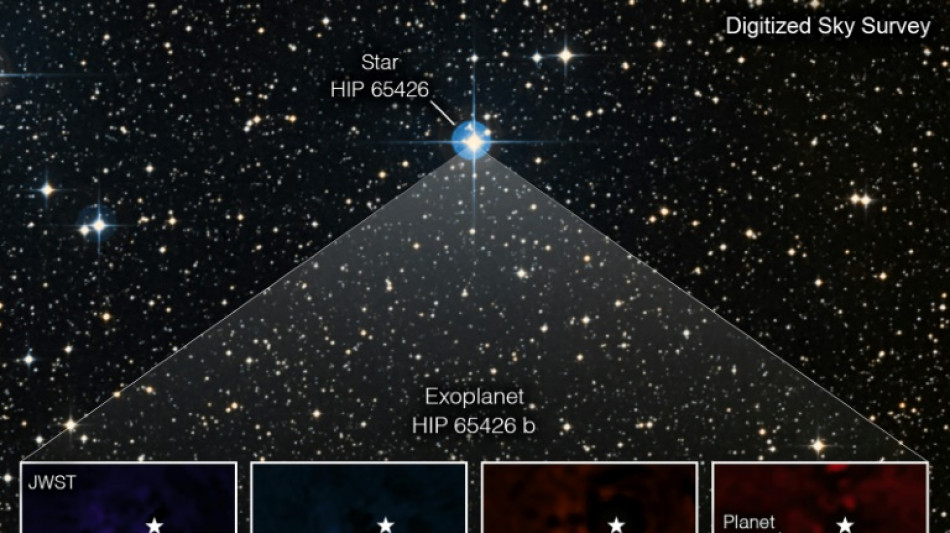
Webb telescope captures its first image of exoplanet / Photo: © NASA/ESA/AFP

 Houthis target Red Sea shipping as US hits Iran
 Record-equalling Red Sox streak halted at 15 wins

 Messi-less Miami beat Fire 3-2 to spoil Lewandowski's MLS debut

 Mercedes expect Hungary challenge from Hamilton and Ferrari
 In Ghana, one man's race to save critically endangered fish
 Wilson captain, Slipper absent in Kiss's first Wallabies squad
 New Mideast fighting puts eurozone rate-setters on alert

 Venezuelans search for animal companions lost in the quakes
 Argentine Football Association says US did not detain its president
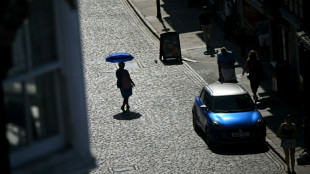 June heatwave cost UK economy more than £1bn: study

 Google-parent Alphabet beats expectations, cloud revenue nearly doubles
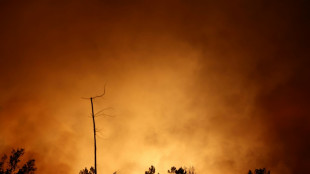
 US announces civilian nuclear deal with Saudi Arabia

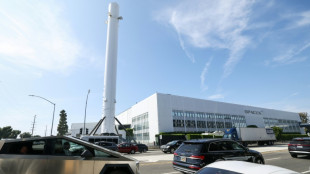 Tesla shares dip after profit misses expectations

 Red Sox tie club record with 15th straight MLB win
 US eyes offshore nuclear reactors

 The Sterling Announces Luxury Cocktail Lounge Concept and Investor Showcase in Orlando

 Inter Miami signs Brazil veteran Casemiro but MLS probes deal

 White House accuses China's Moonshot of stealing Anthropic AI

 Pogacar sweating on Yates's fitness ahead of Tour Queen stage

 Ukrainian soldiers and civilians welcome new army commander

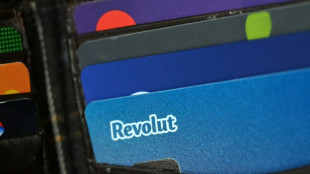 UK fintech Revolut valuation soars to $115 bn: source

 German FM, on Africa tour, eyes business ties amid US, China pressure

 Rubio says at ASEAN meeting he expects 'positive' US visit by China's Xi

 Philipsen wins Tour de France 17th stage

 DonnaPro Introduces AI-Trained Executive Assistants for European CEOs

The James Webb space telescope has taken its first image of an exoplanet -- a planet outside our solar system -- as astronomers hail the device's performance since its launch last year.
Images from the most powerful space telescope ever built have thrilled observers in recent months as it orbits the Sun a million miles (1.6 million kilometers) from Earth.
Its latest pioneering pictures show the exoplanet, called HIP 65426 b, is a gas giant with no rocky surface and could not be habitable.
"This is a transformative moment, not only for Webb but also for astronomy generally," said Sasha Hinkley, astronomy professor at the University of Exeter, who led the observation team.
Webb's infrared gaze and coronagraphs -- telescopic attachments that block out starlight -- enable it to take direct images of exoplanets.
"It was really impressive how well the Webb coronagraphs worked to suppress the light of the host star," Hinkley said in a NASA statement on Thursday.
The HIP 65426 b exoplanet is six to 12 times the mass of Jupiter and young -- about 15 to 20 million years old, compared to the 4.5-billion-year-old Earth.
The telescope, which only released its first images in July, has already revealed dazzling new detail of the Phantom Galaxy and of the planet Jupiter.
The Hubble space telescope previously captured direct exoplanet images, but in far less detail.
"I think what's most exciting is that we've only just begun," said Aarynn Carter, of the University of California. "We may even discover previously unknown planets."
The $10-billion Webb telescope is a collaboration between NASA, the European Space Agency and the Canadian Space Agency. It is expected to operate for approximately 20 years.
B.Shevchenko--BTB